
AI-Powered Transit: How Autonomous Systems Could Have Prevented SF's Sleeping Driver Disaster
A San Francisco light-rail driver dozed off, sending a train through stops at 50 mph. This incident exposes why AI-powered monitoring and autonomous backup systems aren't luxury—they're necessity for modern transit safety.

By News Desk, YEET Magazine
Published November 13, 2025
When a San Francisco light-rail operator fell asleep at the controls on September 24, a train accelerated to 50 mph through a curve, skipped stops, and threw passengers against walls. The SFMTA confirmed operator fatigue as the cause—but here's the real question: why doesn't transit tech detect and prevent human drowsiness before disaster strikes? Turns out, AI-powered monitoring systems exist today. They just aren't deployed widely enough. Real-time eye-tracking algorithms, biometric fatigue sensors, and autonomous speed governors could have stopped this before passengers hit the floor.
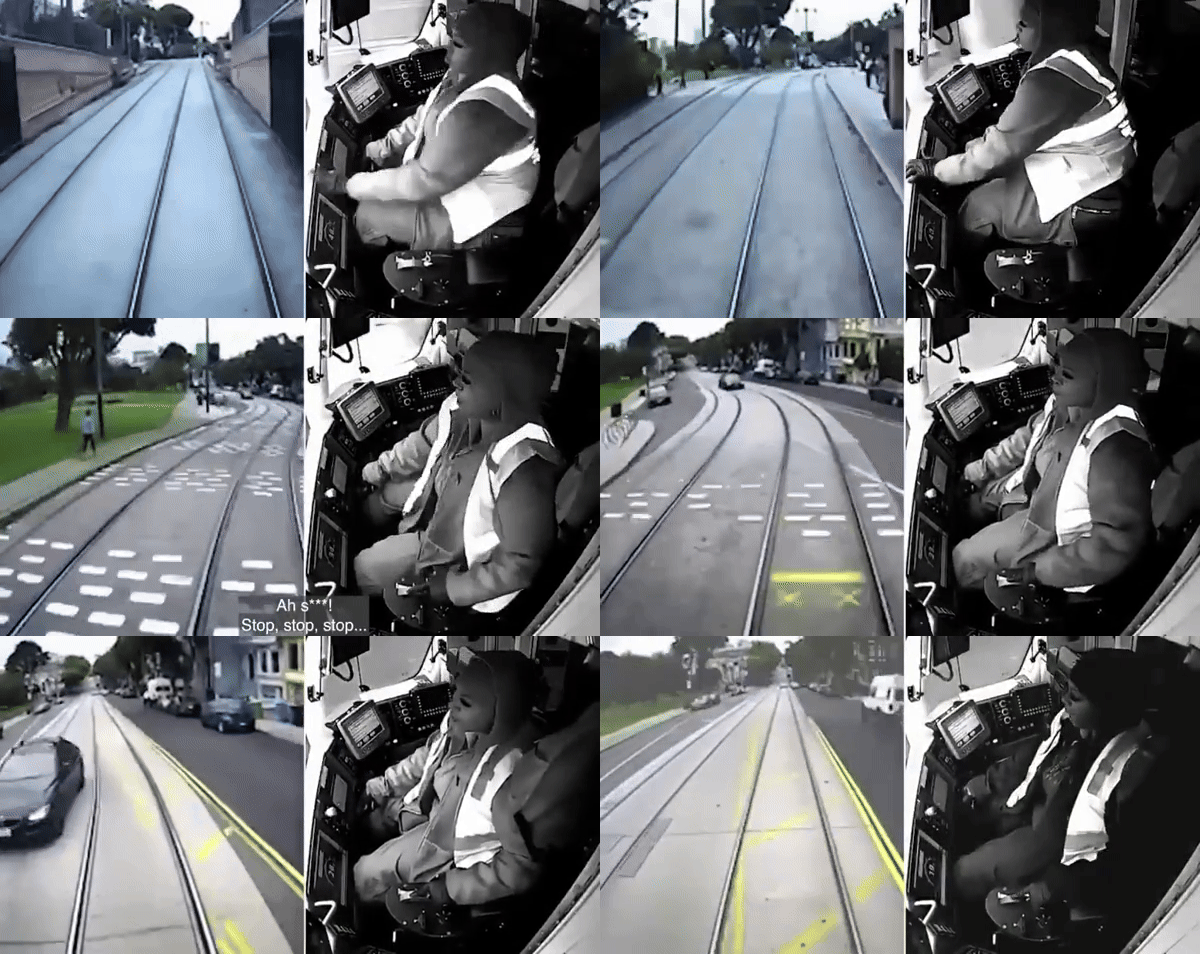
The incident happened at 8:37 a.m. on the N-Judah line. Video shows the driver slumping forward. Instead of braking for the Duboce Park curve, the train accelerated—hitting 50 mph in a zone where light-rail typically moves at 15-20 mph. Passengers described being thrown across seats. One rider suffered a concussion.
The SFMTA's investigation found zero mechanical failure. The brakes worked. The track was fine. The problem: a tired human at the controls made a critical error.
Here's where AI enters the picture. Computer vision systems can track eye closure, head position, and attention drift in real time. Some transit agencies in Europe and Asia already use these. Facial recognition algorithms flag micro-sleeps within milliseconds. Machine learning models trained on thousands of hours of driver footage can detect fatigue patterns before they become dangerous.
Biometric wearables go deeper—heart rate variability, skin temperature, and galvanic skin response all signal fatigue. Algorithms can predict alertness drops before they happen, triggering mandatory breaks or automated alerts.
The most aggressive safeguard? Speed-limiting algorithms. AI systems can enforce geofenced speed caps on high-risk curves and tunnel exits. If a driver fails to brake, the system does it automatically. Siemens Mobility is already working with SFMTA on software updates like this—but they're positioning them as Band-Aids, not fundamentals.
The real conversation is uncomfortable: should human drivers be making life-or-death decisions on critical infrastructure anymore? Autonomous trains exist. Several cities run driverless metros. They don't get tired. They don't have bad days. They follow algorithms that never deviate.
But here's the catch—the future of work means retraining, not replacement. Removing drivers entirely creates labor backlash and union resistance. The smarter play: hybrid automation. Keep drivers for community-facing roles and emergency override. Let AI handle precision speed control, stop accuracy, and fatigue monitoring. Distribute the cognitive load.
SFMTA says it's reviewing operator scheduling and fatigue protocols. But scheduling changes alone won't work if humans are just pushed harder. You need tech that catches what schedules can't—the moment someone's brain shuts down.
The data backs this up. The National Transportation Safety Board (NTSB) reports operator fatigue factors into roughly 20-30% of transit incidents. Most are near-misses that never make headlines. Add real-time monitoring, and that number should drop dramatically.
This isn't sci-fi. It's available, deployable, and cost-effective at scale. The barrier isn't technology—it's institutional inertia and budget cycles.
What would have stopped this?
A simple AI-powered eye-tracking system would have flagged the driver's attention lapse within 2-3 seconds of eyelid closure. An automatic alert to the driver—or a speed governor limiting acceleration on that curve—would have prevented the chaos.
Instead, passengers got a frightening ride and one traumatic head injury. All preventable.
The bigger picture: Transit agencies are sitting on liability and safety failures because they haven't automated what should never be automated away—the detection of human error. Drivers should be supported by intelligent systems, not competing against them.
Next moves for SFMTA: Deploy fatigue-detection cameras in all operator cabins. Test real-time biometric monitoring. Implement speed governors on all curve-heavy sections. Partner with AI vendors who specialize in transportation safety, not just vehicle mechanics.
Because the alternative is more incidents. More injured passengers. More erosion of trust in public transit.
And that's a cost algorithm that never balances.
Q: Can AI really detect if someone's falling asleep?
Yes. Eye-closure detection, head-nod tracking, and attention-span algorithms are 95%+ accurate in transit environments. Companies like Tobii and Seeing Machines have deployed these in trucking and commercial aviation for years.
Q: Would driverless trains solve this?
Completely. But labor unions resist, and public trust in full autonomy is still building. Hybrid automation—AI oversight with human emergency override—is the pragmatic middle ground.
Q: How much would fatigue-detection systems cost?
Hardware and software run $15K-40K per train. Over a 200-train fleet, that's a one-time $3-8M investment. Compared to liability from injuries, lawsuits, and reputation damage, it's pocket change.
Q: Are there privacy concerns with camera monitoring?
Yes, but transit agencies already record cabins for security. Adding attention-detection to existing feeds is a technical addition, not a privacy expansion. Unions and regulators need clear consent frameworks—but the tech itself is neutral.
Q: What about older drivers who might resist tech?
Training is key. Position fatigue-detection as a support tool, not a threat. Most drivers welcome systems that catch errors before they cause harm. The narrative matters—this is harm prevention, not surveillance.
Related:
How Autonomous Vehicles Are Reshaping the Future of Commercial Driving
AI in Aviation: Why Planes Trust Algorithms More Than Pilots
Predictive Health Tech: Can AI Detect Worker Burnout Before It Happens?
Biometric Monitoring at Work: Where Safety Tech Meets Privacy Concerns