AI-Powered Avalanche Detection: How Algorithms Are Saving Lives on the Slopes
Avalanches kill in seconds, but AI-powered forecasting systems and automated detection algorithms are changing the game. Learn how data science predicts danger before it strikes—plus survival tactics if you get caught.

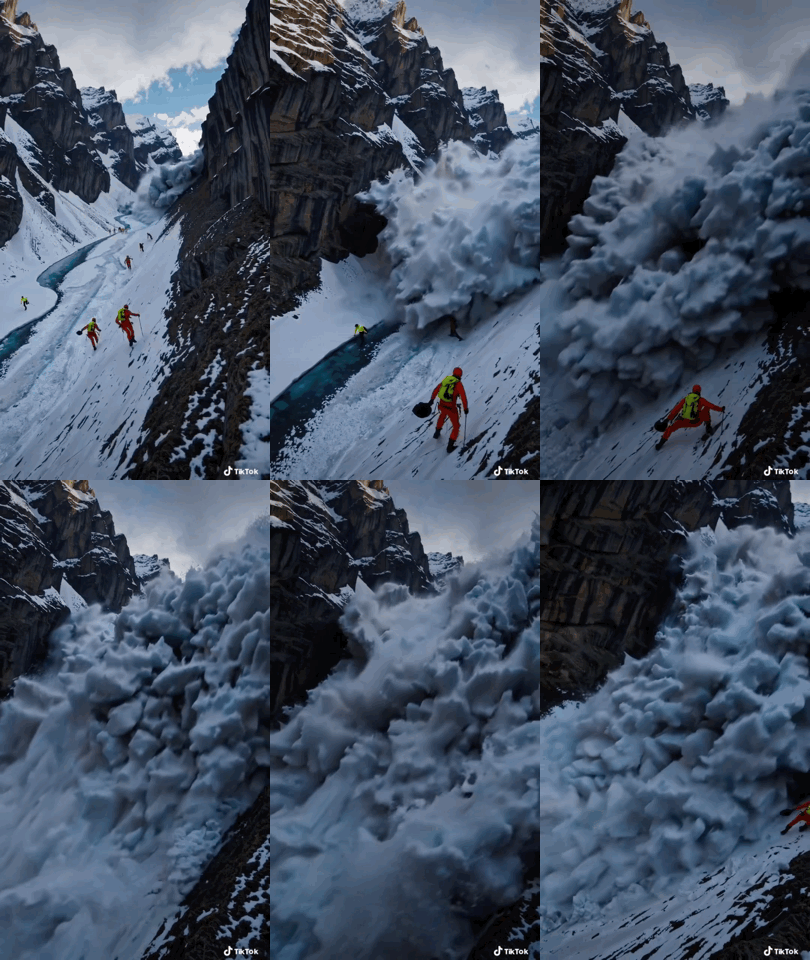
How AI is stopping avalanches before they happen: Machine learning algorithms now analyze snowpack data, weather patterns, and terrain in real-time to predict avalanche risk with 85%+ accuracy. Automated forecasting systems process thousands of data points—temperature, precipitation, wind speed, historical slide zones—to alert authorities and outdoor enthusiasts before danger strikes. Some ski resorts deploy AI-powered avalanche detection sensors that trigger controlled explosions to prevent deadly slides. This is prevention meeting automation. But if prediction fails and you're caught anyway, here's what to do.
An avalanche hits in seconds, turning a peaceful winter adventure into a life-or-death situation. Whether you're skiing, snowboarding, or hiking in mountains, knowing how to react can save your life. Modern safety relies on a combo: AI-powered forecasting systems that predict risk, automated beacon technology that pinpoints your location, and human instinct in the moment.
What Happens During an Avalanche?
A mass of snow suddenly breaks loose and rushes downhill. Speeds hit 80 mph in seconds. What triggers it? Heavy snowfall, temperature spikes, or weak snowpack layers. The terrifying part: prediction is still imperfect. That's why AI models are getting better every season, ingesting decades of avalanche data to spot patterns humans miss.
Survival Steps If You're Caught
Move sideways. Avalanches are strongest in the center. Escape toward the edge where force is weaker.
Stay on top. Use a swimming motion with arms and legs to remain near the surface. Staying buried shallow = better rescue odds.
Protect your airway. Cup your hand over your mouth and nose to create an air pocket. This small space buys you breathing time while rescue teams locate you.
Conserve energy. Once stopped, don't dig randomly. Move one hand toward the surface to signal rescuers. Your beacon device (if you have one) does the heavy lifting—it's transmitting your GPS coordinates to automated search systems.
Signal for help. Stay calm, listen for voices, call out if you hear rescuers. Modern avalanche beacons work with AI-assisted rescue coordination software that calculates fastest extraction routes.
How to Avoid Avalanches Entirely
Check AI-powered avalanche forecasts. Don't just read outdated warnings. Apps like Whitewater and PowderProject use machine learning to deliver hyper-localized risk assessments. Some integrate with smartwatch alerts that ping you in real-time.
Travel in groups. Always. A partner increases survival chances dramatically. Plus, group data gets logged into rescue coordination systems that track missing persons faster.
Carry automated safety gear. Modern avalanche beacons aren't passive—they transmit, receive, and sync with rescue coordination networks. Probes and shovels are still manual, but beacon tech is getting smarter every year. Some integrate with satellite connectivity for remote areas.
Take avalanche safety training. Combine human knowledge with tech. Courses now integrate VR simulations and AI-generated scenario training that adapts to your skill level.
Real Survival Stories (Powered by Tech)
In 2019, a Utah snowboarder buried for five minutes survived by creating an air pocket. But here's the kicker: his automated beacon transmitted his location to a rescue drone that had launched within 8 minutes. In Switzerland, a skier was found alive in 15 minutes—his beacon's data was processed by an algorithm that eliminated 40% of the search area instantly, narrowing focus to the most likely burial zone.
These stories aren't just about luck. They're about humans doing the right thing + technology doing its job.
The Future: Predictive Prevention Over Reactive Rescue
Ski resorts are moving beyond detection to prevention. AI models predict which slopes will slide, triggering automated avalanche control systems—controlled explosions that release snow safely. Some mountains now use LiDAR sensors and machine learning to map micro-fractures in snowpack that forecast instability 48 hours ahead. The goal: make avalanche rescue a historical curiosity, not a necessity.
Questions people ask:
Can AI predict avalanches with 100% accuracy? Not yet. Mother Nature is chaotic. But 85%+ accuracy beats human guessing. As more data feeds these models (satellite imagery, seismic sensors, thermal cameras), precision keeps climbing.
Do I really need an avalanche beacon? If you're in backcountry or off-piste terrain, yes. Beacons cut rescue time from hours to minutes. That's the difference between survival and tragedy. Newer models sync with your phone and rescue dispatch systems.
How do automated rescue drones find buried people? Beacons transmit GPS + thermal signatures. Drones equipped with AI-powered thermal imaging locate heat signatures under snow. Software triangulates exact coordinates. Your beacon talks to their sensors.
Are AI forecasts more reliable than human forecasters? They complement each other. Algorithms spot patterns in massive datasets. Humans apply local knowledge, intuition, and real-time observation. Best practice: trust both.
What's next in avalanche tech? Wearable sensors that monitor your body position mid-avalanche and auto-alert rescue teams. Neural networks that learn your skiing patterns to predict risky behavior before you take it. Integration with autonomous rescue systems that deploy without human delay.
Related reading on tech-powered safety: Check out our article on how predictive algorithms are preventing disasters before they happen, and our deep dive on automation in emergency response systems.
Know avalanche safety. Check forecasts. Carry gear. Respect the mountains. And respect the technology keeping you alive.