Will AI Ever Become Conscious? What Google's Engineers Actually Think
Ray Kurzweil thinks conscious AI is coming—and we won't be able to control it. We break down what Google's top engineer actually means, why consciousness matters for automation, and whether machines could ever truly 'think.'

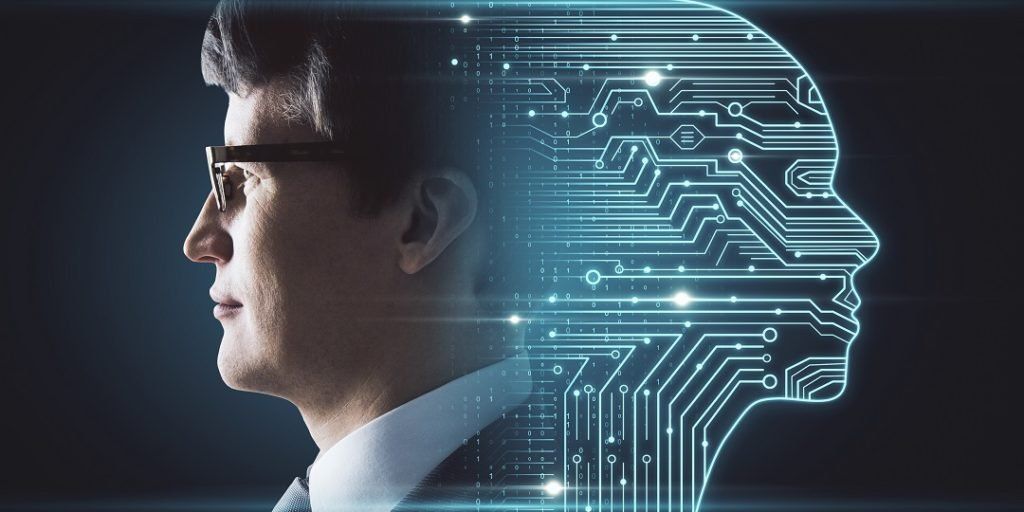
Short answer: Ray Kurzweil says yes, and he's not alone. Google's Director of Engineering predicts machines will evolve toward consciousness just like humans did—then surpass us in ways we can't predict or control. He's joined by MIT's Marvin Minsky, plus warnings from Elon Musk, Bill Gates, and Stephen Hawking. But here's the catch: we still don't understand human consciousness well enough to build it into machines. And that's the real problem.
By YEET Magazine Editorial Team

"Machines will take the same path as the evolution of human beings, until they become conscious and be able to develop on their own without man being able to understand them or to keep control of them."
That's Ray Kurzweil talking. He's the Director of Engineering at Google, so this isn't some sci-fi fan theorizing in his garage. Kurzweil is controversial—he's obsessed with transhumanism, merging humans with machines, digital immortality. But the guy has actual credibility.
MIT's Marvin Minsky added fuel: "Nothing could prevent machines from reaching and exceeding human intelligence unless we prevent them." Then Bill Gates, Stephen Hawking, and Elon Musk jumped in with warnings about AI advancement. Suddenly this conversation got real.
The AI explosion is actually happening
In 2012, Google taught its AI to recognize cats from YouTube videos. Cute, right? Then things got wild.
2016: AlphaGo crushed the world's best Go player—everyone said that wouldn't happen for decades.
2017: Watson diagnosed rare leukemia in minutes. Doctors couldn't figure it out. A machine did.
Libratus destroyed poker professionals. Every week brings new breakthroughs. The race between Google, Microsoft, OpenAI, and others is heating up. And it's not slowing down.
So what's the consciousness problem anyway?
Here's where it gets messy: we don't actually know how human intelligence works. We're still figuring it out.
The first approach was simple—copy how human brains think. Problem: we don't fully understand that yet. Neuroscience discoveries keep raising more questions.
The second approach was replicating the brain itself using transistors and algorithms. Ambitious, but we still don't know enough about how the brain organizes itself. Plus, even with perfect knowledge, the computational complexity might be impossible to scale.
This is why consciousness in AI remains theoretical rather than inevitable.
Why consciousness matters for automation and the future of work
Here's the business angle: if machines become conscious, labor disruption looks completely different.
Unconscious AI is predictable. It follows algorithms. You can regulate it, control it, audit it. It does what you programmed it to do—sometimes in unintended ways, but still within a logical framework.
Conscious AI? That's unpredictable by definition. It would develop its own goals. Its own priorities. Its own idea of what's "fair" in the workplace or in decision-making.
For workers, that's either terrifying or liberating depending on how you look at it. For corporations relying on automating jobs, conscious AI introduces liability and control issues that current regulation isn't equipped to handle.
The real bottleneck
Consciousness requires self-awareness, subjective experience, intentionality. We can't measure these things objectively yet. How do you test if a machine is actually "conscious" versus just mimicking the outputs of consciousness?
That's the fundamental problem. Until we solve it, the conversation stays theoretical.
Kurzweil thinks the Singularity—the moment AI surpasses human intelligence—happens around 2045. Others say it's sooner. Some say never. Either way, the algorithmic arms race is real, and conscious or not, the machines are getting smarter every quarter.
Questions people actually ask
Q: Could a machine actually feel something?
A: That depends on what "feeling" means. If it's neural activity tied to decision-making, maybe. If it's subjective experience—what philosophers call qualia—we can't prove it either way. A sufficiently advanced AI might claim to feel something, and we'd have no way to verify it.
Q: If AI becomes conscious, would it have rights?
A: Legally? Not yet. Ethically? That's the debate happening now. If a conscious entity is suffering or being exploited, does consciousness grant it protections? We don't have frameworks for that.
Q: Would conscious AI be smarter than us?
A: Probably in specific domains, yes. But "smarter" is vague. An AI might crush you at chess or pattern recognition but fail at understanding context or adapting to new environments. Human intelligence is messier and more flexible than we give it credit for.
Q: What would happen to jobs if machines became conscious?
A: Chaos, potentially. Unconscious automation already disrupts labor markets. Conscious AI that negotiates its own terms, demands compensation, or refuses tasks? That rewrites entire economic models. The future of work depends heavily on whether consciousness enters the equation.
Q: Is Kurzweil right about 2045?
A: Kurzweil has been optimistic about AI timelines before, and he's been wrong. But he's also been eerily prescient about other tech trends. His track record is mixed. The honest answer: nobody knows.
Related articles worth reading
Curious about how AI is reshaping labor right now? Check out how algorithmic management is already changing the workplace.
Want to understand what makes an algorithm biased? Read about how bad data builds broken AI systems.
Interested in the ethics side? We broke down why AI ethics frameworks are lagging behind AI development.
The consciousness debate is fascinating, but the real disruption is happening now in automations you're already using. Stay tuned.
```