
AI Flags Gold-Thread Acupuncture Risks: How Machine Learning Detects Hidden Medical Dangers
Hundreds of gold threads embedded in a woman's knees sparked a medical crisis—and exposed how AI diagnostic tools could catch dangerous alternative therapies before they cause harm. Machine learning is now flagging patterns doctors missed.

AI Flags Gold-Thread Acupuncture Risks: How Machine Learning Detects Hidden Medical Dangers
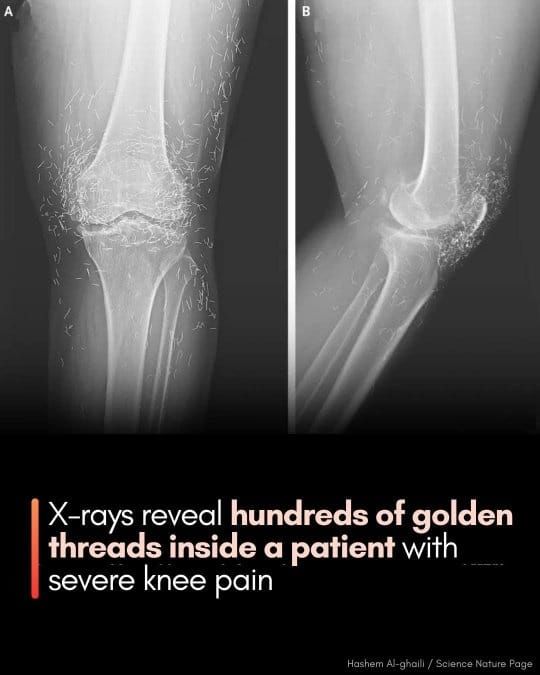
When a 65-year-old South Korean woman's X-ray revealed hundreds of tiny gold threads embedded in her knee tissues, radiologists were stunned—but AI diagnostic systems should have caught it. This case highlights a critical gap: most hospitals lack automated detection algorithms that flag foreign-object implants before they cause serious harm. Machine learning could identify these dangerous alternative therapies faster than human eyes alone, preventing infections, cysts, and tissue damage that compound over months or years of repeated treatments.
The woman had suffered from severe osteoarthritis. Standard painkillers caused stomach problems, so she turned to gold-thread acupuncture—a practice that implants tiny sterile gold wires under the skin, supposedly for continuous nerve stimulation. She increased sessions to several times a week over time. When X-rays finally revealed the metallic accumulation, doctors realized this unproven therapy had left her vulnerable to migration, infection, and complications during future MRI scans.
Here's the automation problem: human radiologists manually interpret thousands of X-rays daily. They often miss subtle metal artifacts, especially when they're scattered across joint tissue. Computer vision AI trained on medical imaging datasets could instantly flag anomalies—clustering patterns of foreign objects, calculating density, and alerting clinicians to intervention risks before patients develop cellulitis or abscess formation.
Why This Matters for Healthcare Data Systems
The case reveals three critical automation gaps in modern medicine:
1. Imaging Algorithm Blind Spots
Current diagnostic AI focuses on detecting tumors, fractures, and bone density. Few hospitals deploy algorithms specifically trained to identify intentionally-implanted foreign objects from alternative therapies. Gold, titanium, and stainless steel create different radiographic signatures—but without labeled training data from hundreds of similar cases, AI systems can't learn to recognize them at scale.
2. Patient History Data Silos
The woman's acupuncturist and her hospital operated completely separately. Electronic health records rarely integrate alternative medicine sessions. If EHR systems used natural language processing to flag "gold-thread treatment" mentions and automatically cross-reference them with imaging orders, doctors would know to look for complications before they appear on scans.
3. Predictive Risk Algorithms Missing
Medical literature documents infection risks from migratory gold threads—one patient developed recurring cellulitis when threads migrated from her back to her leg. Machine learning could build prediction models: if a patient shows gold-thread implants + osteoarthritis + high imaging frequency + medication side effects, risk scoring algorithms could alert providers to schedule preventive monitoring before serious infection develops.
The Automation Gap in Alternative Medicine Oversight
This case exposes why healthcare systems urgently need better data collection and algorithmic monitoring. Gold-thread acupuncture practitioners aren't intentionally harming patients—they genuinely believe in the therapy. But without centralized reporting databases and machine learning systems that connect alternative medicine records to hospital imaging, complications pile up silently until crisis moments force intervention.
Countries like South Korea could implement a national registry: practitioners report gold-thread procedures, hospitals flag X-ray and MRI findings automatically, and predictive algorithms assess infection risk based on thread density, location, and patient comorbidities. This isn't about banning alternative medicine—it's about using data science to make any therapy safer.
What Happened to Her
Doctors had to weigh removal options carefully. Extracting hundreds of tiny threads risks damaging surrounding tissue and nerves. She faces ongoing imaging complications: MRI scans are now riskier because metal threads could move and harm blood vessels under the machine's magnetic field. Her case is now being used to train radiologists on recognizing gold-thread signatures—the kind of human expertise that should eventually feed into better training datasets for computer vision AI.
Common Questions
Could AI have prevented this?
Yes. If her initial acupuncture clinic reported procedures to an integrated database, and hospital imaging AI was trained to flag cumulative metal density in joints, her doctors would have caught the buildup after 10-20 sessions instead of discovering hundreds of threads during crisis care.
Why don't hospitals use this technology now?
Most diagnostic AI is trained on common conditions (tumors, fractures). Alternative medicine complications are relatively rare in Western hospitals, so there's limited training data. Hospitals in Asia where these practices are more common should lead development of specialized detection algorithms—but that requires regulatory frameworks that don't yet exist.
Is gold-thread acupuncture FDA-approved in the US?
No. The FDA hasn't approved embedded gold-wire therapy. But even approved medical devices can cause complications that AI systems should monitor. The deeper issue is that many alternative practitioners operate outside formal medical networks, so their procedure data never enters healthcare AI systems at all.
Could machine learning predict which patients will seek risky alternatives?
Possibly. Patients who've had adverse medication reactions (like her stomach problems from NSAIDs) and those with chronic pain are statistically more likely to try unproven therapies. Predictive algorithms could flag these high-risk patients and connect them with evidence-based pain management earlier—before they escalate to experimental treatments.
What's the future of AI in alternative medicine oversight?
Expect integrated health platforms that pull data from acupuncturists, chiropractors, herbalists, and hospitals into unified diagnostic systems. Algorithms will correlate alternative treatments with imaging findings and adverse events, creating real-time safety signals. Practitioners who embrace this transparency will gain patient trust; those who resist will be associated with higher complication rates—a data-driven incentive to improve safety standards.
Related Reading
Explore more on how automation is reshaping medical oversight: How AI Algorithms Catch Medical Fraud Before Harm Happens | Why Machine Learning Still Misses Rare Complications | Predictive Medicine: How Algorithms Predict Patient Risk Years in Advance