How AI Image Recognition Is Exposing Celebrity Transformations: The Bianca Censori Algorithm Effect
AI-powered image recognition algorithms are automatically detecting and comparing celebrity photos across social platforms. We break down how machine learning spotlights physical transformations and what it means for privacy.

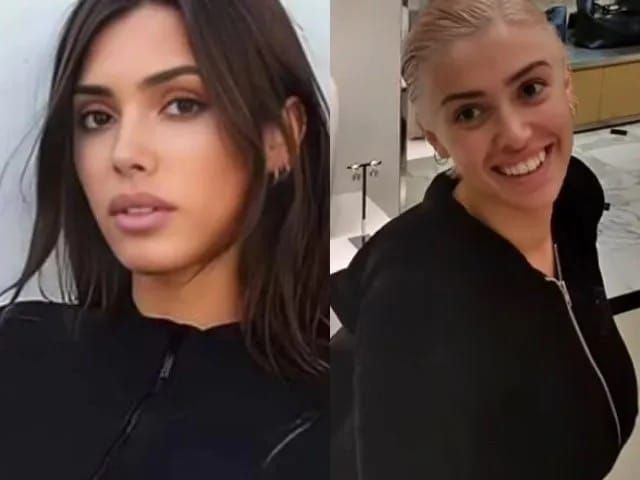
How AI Algorithms Are Automatically Detecting Celebrity Transformations
Resurfaced photos of Bianca Censori compared to her current public image sparked massive online buzz—but here's the tech angle: AI image recognition systems likely flagged and ranked these comparisons automatically. Facial recognition algorithms can now detect changes in bone structure, features, and appearance with uncanny accuracy, then surface similar images across platforms. This isn't just fans noticing; it's machine learning doing the heavy lifting. The algorithm identified "before" and "after" states, ranked similarity scores, and pushed the content to maximize engagement.
Social media platforms use AI to recommend content based on visual patterns. When old photos resurface, neural networks analyze facial landmarks—eyes, jawline, cheekbones—and match them against newer images. The system learns what "transformation" content performs well and amplifies it. TikTok, Instagram, and Twitter all employ these algorithms to decide what trends.
The real story isn't just that Censori changed her look. It's that machine learning systems made the comparison impossible to miss. Facial recognition doesn't judge; it categorizes. It doesn't have opinions; it has accuracy rates.
This raises hard questions about digital identity. Every photo you post becomes training data for facial recognition models. Platforms use this data to build behavioral profiles. Your appearance at 20 vs. 30 becomes a data point. Your style evolution becomes a trend vector.
Celebrity transformations hit different online because algorithms profit from the contrast. High engagement = algorithm boost = viral. The system rewards shock value. It's not conspiracy; it's just how recommendation engines work.
What This Means for Privacy and Data
Facial recognition technology has advanced to the point where identifying someone from old photos is nearly automated. Governments and corporations have massive facial databases. If you've taken a selfie, renewed a driver's license, or appeared in any tagged photo online, your face is probably in multiple datasets.
The Censori situation shows how quickly AI can surface old content and create narratives. Scale that to billions of photos online, and you're looking at a surveillance infrastructure powered by algorithms, not people.
The Creator Economy Angle
For creators and public figures, transformation content drives numbers. Before-and-after narratives are algorithmically rewarded. Fitness creators, beauty influencers, and celebrities all benefit when AI surfaces their transformations. The algorithm isn't neutral—it's optimized for dramatic change because drama = clicks.
This creates pressure to visibly transform. Whether that's fitness, fashion, or cosmetic, the incentive structure is there. AI amplifies the signal.
Can You Opt Out?
Not really. Your face is already in systems. Facial recognition is part of the infrastructure now. You can't unpost old photos from the internet's collective memory. Once images hit a certain threshold of distribution, they're archived, indexed, and searchable by machines.
What you can do: understand that your digital identity is being analyzed, compared, and ranked constantly. Every platform, every photo, every tag feeds algorithms that profile you.
The Future of Digital Identity
As deepfake technology improves alongside facial recognition, the line between "real" transformations and AI-generated ones will blur. We'll need better tools to verify authenticity. Blockchain verification, cryptographic signing, and immutable metadata might become standard for photos.
Right now, there's no easy way to prove a photo is actually you or that you consented to its use. That's a problem at scale.
Does AI care about celebrity drama? No. But it's optimized to amplify it. That's the real transformation story.
Related Reading
Deepfake Detection: How AI Spots Fake Celebrity Videos Before They Go Viral
Facial Recognition Bias: Why AI Gets Some Faces Wrong More Than Others
How Social Media Algorithms Decide What Goes Viral (And Why It's Never Random)
Your Face Is in a Database: A Guide to Facial Recognition Data Privacy
Quick Questions
How does facial recognition compare old and new photos? Algorithms extract facial landmarks (distances between eyes, nose-to-chin ratios, etc.) and create a mathematical "face print." The system then compares prints across images and calculates similarity scores. High score = likely the same person.
Can celebrities prevent their old photos from resurfacing? Not once they're public. Once images hit certain platforms or are screenshot, they're archived. Search engines and AI indexing systems don't forget. The best strategy is understanding that old content will resurface and planning for that possibility.
Is this data being sold? Facial data is valuable to advertisers, law enforcement, and researchers. Platforms collect it "for platform safety," but the secondary market exists. Your face is literally an asset in the data economy.
Will facial recognition get more accurate? Yes. Models improve yearly. False positive rates are dropping. Age estimation, emotion detection, and gait recognition are all advancing. Privacy erosion will accelerate unless regulations catch up.