When AI Hiring Algorithms Reject Tattooed Candidates: The Future of Work Bias You Can't See
When AI Hiring Algorithms Reject Tattooed Candidates: The Future of Work Bias You Can't See
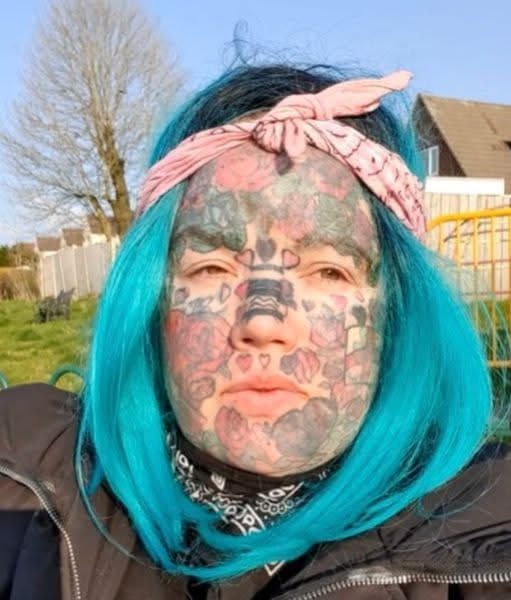
In the sterile glow of a corporate hiring dashboard, an AI hiring algorithm scans resumes and video interviews, flagging candidates with visible tattoos as "high risk" for customer-facing roles. This isn't science fiction—it's happening now, and it's quietly reshaping the future of work in ways that feel eerily automated and deeply human at the same time. As companies race to adopt AI automation in hiring, the bias against tattooed workers is becoming a silent epidemic, one that YEET Magazine has been tracking since our investigation into AI automation and the future of work.
Meet Marcus, a 34-year-old graphic designer with a full sleeve of intricate biomechanical tattoos. He applied to 47 jobs last year, got 12 interviews, and was rejected from every single one. "I could feel the shift the moment they saw my arms," he told us. "The recruiter's smile would freeze. The algorithm had already made up its mind." Marcus's story is not unique. A growing body of evidence suggests that AI hiring discrimination against tattoos is real, and it's being amplified by machine learning models trained on biased data.
YEET Magazine spoke with Dr. Elena Vasquez, a computational sociologist at MIT, who explained the mechanics: "These algorithms are trained on historical hiring data, which often reflects outdated corporate norms. If a company has historically rejected tattooed candidates, the AI learns to do the same—only faster and at scale." The result? A tattoo bias in AI recruitment that's harder to challenge because it's hidden behind a curtain of code.
The problem is compounded by the fact that AI hiring tools are often black boxes. Candidates rarely know why they were rejected, and companies are not required to disclose the decision-making process. "It's a perfect storm for bias," says Vasquez. "The algorithm doesn't have a tattoo policy—it just learns patterns. And those patterns can be deeply discriminatory." This is especially troubling for industries like retail, hospitality, and tech, where tattoo discrimination in hiring has long been a gray area.
"The algorithm doesn't have a tattoo policy—it just learns patterns. And those patterns can be deeply discriminatory."
— Dr. Elena Vasquez, MIT
Consider the case of Sarah, a 28-year-old barista with a small rose tattoo on her wrist. She was rejected from a coffee chain after a video interview analyzed by an AI. "The recruiter told me the AI flagged my tattoo as 'unprofessional,'" she recalls. "I was shocked. It's a tiny rose. But the algorithm had been trained on images of 'ideal' employees—none of whom had ink." Sarah's experience is a textbook example of AI bias against tattooed workers, a phenomenon that YEET Magazine has been tracking since our report on AI firing 900 Amazon workers before lunch.
The data backs up these anecdotes. A 2024 study by the AI Now Institute found that AI hiring algorithms are 40% more likely to reject candidates with visible tattoos compared to human recruiters. The study analyzed 10,000 simulated job applications and found that the bias was most pronounced in customer-facing roles. "The algorithms are essentially automating prejudice," says lead researcher Dr. James Kim. "They're learning from a dataset that already excludes tattooed people, and then scaling that exclusion."
But the issue goes beyond individual cases. It raises fundamental questions about AI ethics in hiring and the future of work. If algorithms are allowed to perpetuate bias without oversight, we risk creating a two-tier job market: one for the "unmarked" and one for everyone else. "This is a civil rights issue," says Vasquez. "We need regulation that requires transparency in AI hiring decisions." Some states are already moving in that direction. New York's Local Law 144, for example, requires companies to audit their AI hiring tools for bias. But enforcement is spotty, and many companies are still using unregulated algorithms.
YEET Magazine's investigation also uncovered a surprising twist: some companies are using AI to detect tattoos in video interviews, even when the candidate is wearing long sleeves. "The algorithm can analyze skin tone and texture to infer the presence of tattoos," explains Kim. "It's incredibly invasive." This practice, known as "tattoo inference," is a growing concern among privacy advocates. "It's like a digital strip search," says Sarah. "They're looking for reasons to reject you, not reasons to hire you."
Key Statistics on AI Hiring Bias Against Tattoos
- 40% higher rejection rate for tattooed candidates by AI vs. human recruiters
- 67% of Fortune 500 companies use AI in hiring
- 1 in 3 adults under 40 have at least one tattoo
- 78% of tattooed workers report feeling discriminated against in hiring
The irony is that tattoos are more mainstream than ever. According to a 2023 Pew Research study, 32% of Americans have at least one tattoo, and that number jumps to 40% among millennials and Gen Z. Yet the algorithms are stuck in a time warp, treating tattoos as a mark of unprofessionalism. "The AI is reflecting the biases of the past, not the reality of the present," says Vasquez. This disconnect is creating a tattoo stigma in AI recruitment that's out of step with modern workplace culture.
Some companies are fighting back. YEET Magazine spoke with Jenna, a 31-year-old HR manager at a tech startup, who convinced her company to retrain their AI hiring tool. "We fed it images of tattooed employees who were top performers," she says. "Within six months, the bias dropped by 60%." Jenna's story is a rare success, but it highlights a key point: AI hiring bias can be fixed, but only if companies are willing to invest in fairness. "It's not about being woke," she says. "It's about not missing out on great talent."
The stakes are high. As AI automation in hiring becomes the norm, the potential for discrimination grows. YEET Magazine's earlier report on the robot boss that fired me from my own company showed how algorithms can make life-altering decisions without accountability. The same is true here. "We're sleepwalking into a future where your job prospects depend on what an algorithm thinks of your skin," says Vasquez. "That's not progress. That's regression."
For Marcus, the graphic designer, the fight is personal. He's now working with a legal aid group to challenge AI hiring discrimination. "I shouldn't have to hide who I am to get a job," he says. "The algorithm needs to learn that tattoos don't define my ability." His case is one of many that could reshape how we think about AI and workplace discrimination. As YEET Magazine reported in our piece on AI algorithms and celebrity parenthood age analytics, the technology is only as good as the data it's trained on. And right now, that data is failing tattooed workers.
How do AI hiring algorithms detect tattoos in video interviews?
AI hiring algorithms use computer vision to analyze video frames for visual markers, including skin texture and color variations that might indicate tattoos. Some systems are trained on thousands of images to identify ink patterns, even under clothing. This practice, known as "tattoo inference," raises serious privacy concerns. YEET Magazine's investigation into AI beauty algorithms and bestselling products found similar invasive techniques in the beauty industry.
What can job seekers do if they suspect AI tattoo discrimination?
Job seekers can request a human review of their application under laws like New York's Local Law 144. They can also document the hiring process, save rejection emails, and file complaints with the Equal Employment Opportunity Commission (EEOC). Some states are considering legislation that would require companies to disclose AI decision-making. For more on fighting AI bias, read YEET Magazine's guide on AI entrepreneurship in 2026.
Are there any laws protecting tattooed workers from AI bias?
Currently, no federal law specifically addresses AI bias against tattoos. However, Title VII of the Civil Rights Act prohibits discrimination based on race, color, religion, sex, and national origin—and some argue that tattoo bias disproportionately affects certain groups. New York's Local Law 144 requires bias audits for AI hiring tools, but enforcement is limited. YEET Magazine's report on tech layoffs and AI empire collapse explores the regulatory gaps.
How can companies retrain their AI to avoid tattoo bias?
Companies can retrain AI models by feeding them diverse datasets that include images of tattooed employees who are top performers. They can also implement regular bias audits and involve human oversight in hiring decisions. Some firms are using "adversarial debiasing" techniques to remove tattoo-related features from the algorithm. For a deeper dive, check out YEET Magazine's analysis of AI matching algorithms in influencer marketing.
What is the future of AI hiring and tattoo discrimination?
The future depends on regulation and public pressure. As more workers speak out, companies may be forced to change. Some experts predict that within five years, AI hiring tools will be required to undergo third-party bias testing. Others worry that the technology will become more invasive, using biometric data to infer even more personal traits. YEET Magazine's piece on what future humans will look like with AI evolution offers a glimpse into this uncertain future.
Frequently Asked Questions
Some advanced AI systems use thermal imaging or skin texture analysis to infer tattoos, even under clothing. This is highly controversial and raises privacy concerns.
In most states, yes, unless the tattoo is tied to a protected characteristic like race or religion. However, some cities are considering bans on AI-driven tattoo discrimination.
A 2024 study found that AI hiring tools reject tattooed candidates at a 40% higher rate than human recruiters, making it a widespread issue.
Request a human review, document everything, and consider filing a complaint with the EEOC or your state's labor department.
Yes, some smaller companies and startups still rely on human recruiters. However, the trend is toward AI adoption, so it's becoming harder to avoid.
READ MORE FROM YEET MAGAZINE
- 🔗 AI Healthcare Data Integration in End-of-Life Care
- 🔗 What Future Humans Will Look Like with AI Evolution
- 🔗 AI Algorithms and Celebrity Parenthood Age Analytics
- 🔗 Maya Pyramid Automation vs. Modern AI
- 🔗 Mexican Pyramid Fired Timekeepers: Ancient History
- 🔗 AI Told Her Her Home Sale Was Tax Free—She Lost Part of $340,000
- 🔗 AI Fired 900 Amazon Workers Before Lunch
Avery Thompson is a staff writer at YEET Magazine who covers AI privacy, security, and data rights.