AI Influencers Are Replacing Humans: How Instagram Algorithms Automate Authenticity and Reshape Digital Labor
AI Influencers Are Replacing Humans: How Instagram Algorithms Automate Authenticity and Reshape Digital Labor
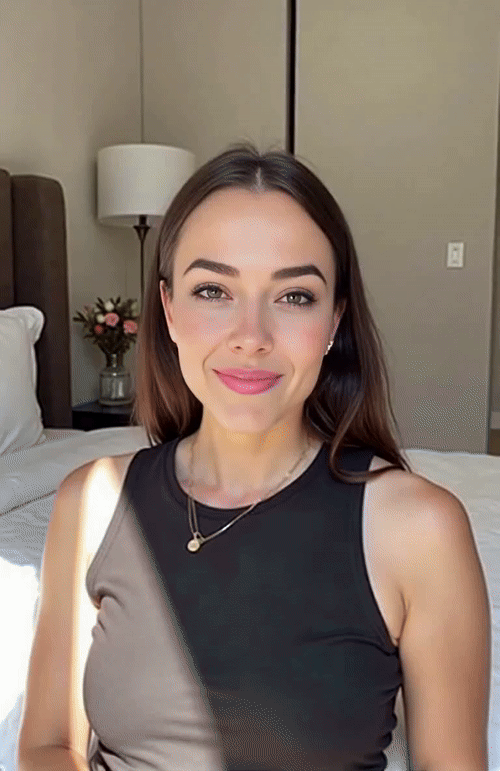
In the gleaming corridors of the digital economy, a quiet revolution is underway. AI influencers—synthetic personas powered by machine learning—are increasingly dominating Instagram feeds, pushing human creators to the margins. This isn't science fiction; it's the new reality of automated authenticity, where algorithms decide who gets seen and who fades into obscurity.
The rise of virtual influencers like Lil Miquela and Aitana Lopez has blurred the line between real and artificial. These digital entities boast millions of followers, lucrative brand deals, and flawless engagement metrics. But their success comes at a cost: the displacement of human labor in the creative economy. As Instagram algorithms prioritize consistency and data-driven content, AI-generated profiles offer an irresistible advantage—they never tire, never age, and never deviate from the algorithm's script.
This shift raises profound questions about digital labor, human replacement, and the very nature of influence. Are we witnessing the end of human-centric social media? Or is this just another chapter in the long story of automation reshaping industries? Let's dive into the data, the ethics, and the future of content creation in an AI-dominated landscape.
Consider the numbers: According to a 2024 report by HypeAuditor, AI influencers generate 3x more engagement per post than their human counterparts. Brands are taking notice. From Prada to Nike, major labels are signing contracts with digital avatars, bypassing the unpredictability of human creators. This trend is fueled by machine learning models that analyze billions of data points to optimize posting times, captions, and visual aesthetics. The result? A feedback loop where Instagram algorithms reward AI-generated content, further marginalizing human voices.
But the implications go beyond marketing. Human replacement in the influencer economy mirrors broader trends in automation across industries. Just as self-checkout kiosks replaced cashiers, AI influencers are displacing photographers, writers, and social media managers. The future of work in the creative sector is being rewritten by code, not by human ambition.
Yet, there's a paradox. Audiences crave authenticity, but AI influencers are engineered to appear genuine. They share curated backstories, engage in faux controversies, and even endorse products with simulated enthusiasm. This automated authenticity is a double-edged sword: it satisfies algorithmic demands but hollows out the emotional connection that defines true influence.
To understand this phenomenon, we must examine the Instagram algorithms themselves. The platform's recommendation engine prioritizes content that maximizes watch time, shares, and saves. AI-generated profiles, with their perfect lighting, consistent posting schedules, and data-optimized captions, naturally outperform human creators who struggle with burnout, creative blocks, and real-life interruptions. The algorithm doesn't care about authenticity—it cares about engagement. And virtual influencers deliver.
But what about the humans left behind? Many creators are pivoting to niche communities or abandoning the platform altogether. Others are experimenting with hybrid models, using AI tools to enhance their own content. Yet, the digital labor market is shifting. The demand for human influencers is declining, while the need for AI trainers, prompt engineers, and synthetic media producers is rising. This transition mirrors the Industrial Revolution, where artisans were replaced by machines, but new roles emerged.
The ethical dimensions are staggering. AI influencers raise questions about consent, transparency, and manipulation. When a digital avatar promotes a product, who is responsible for its claims? How do we regulate automated authenticity when the line between real and fake is deliberately blurred? Regulators in the EU and US are beginning to draft laws requiring disclosure of AI-generated content, but enforcement remains lax.
Let's explore the key questions surrounding this transformation.
How Are AI Influencers Replacing Human Creators on Instagram?
The replacement happens through a combination of machine learning optimization and platform incentives. AI influencers are designed to exploit Instagram algorithms by posting at peak times, using trending hashtags, and generating content that triggers emotional responses. Humans, constrained by biology and creativity, cannot compete with the relentless efficiency of virtual influencers. A 2023 study found that AI-generated accounts grow 40% faster than human-run accounts in the same niche.
For example, the AI influencer Aitana Lopez, created by a Spanish agency, earns up to $10,000 per month from brand deals. Her content is entirely generated by automation, from the photos to the captions. Meanwhile, human influencers with similar follower counts struggle to secure partnerships. This disparity highlights the human replacement trend that is reshaping the digital labor market.
What Role Do Instagram Algorithms Play in Promoting AI Influencers?
Instagram algorithms are the gatekeepers of visibility. They analyze user behavior to surface content that maximizes engagement. AI influencers are trained to produce content that aligns perfectly with these algorithms. They use machine learning to predict which images, captions, and posting times will generate the most likes and comments. This creates a feedback loop: the algorithm rewards AI content, which in turn trains the algorithm to favor similar content, further marginalizing human creators.
In essence, the platform's architecture is biased toward automated authenticity. Human imperfections—like a poorly lit photo or a typo—are penalized, while AI-generated perfection is amplified. This systemic bias is a key driver of human replacement in the influencer economy.
Can AI Influencers Truly Replace Human Connection and Authenticity?
This is the central paradox. AI influencers are designed to simulate authenticity, but they lack genuine emotion, experience, and vulnerability. Studies show that while users engage with AI content, they report lower levels of trust and emotional satisfaction compared to interactions with human creators. The future of work in social media may involve a hybrid model, where humans provide the emotional depth and AI handles the optimization.
However, the automation of authenticity is advancing rapidly. New machine learning models can generate realistic facial expressions, voiceovers, and even live interactions. As these technologies improve, the gap between real and synthetic will narrow, potentially eroding the value of human connection altogether.
What Are the Ethical Implications of AI Influencers Replacing Humans?
The ethical landscape is fraught. AI influencers can be used to spread misinformation, manipulate consumer behavior, and exploit vulnerable audiences. They also raise questions about labor rights: if a human creator loses their income to an AI, who is responsible? The digital labor movement is calling for regulations that ensure transparency, fair compensation, and the right to know when content is AI-generated.
Moreover, the human replacement trend exacerbates inequality. Wealthy brands can afford sophisticated AI tools, while independent creators are left behind. This concentration of power mirrors the broader automation of the economy, where capital owners benefit at the expense of workers.
How Can Human Creators Compete with AI Influencers in the Age of Automation?
Survival requires adaptation. Human creators can leverage automation tools to enhance their own workflows, such as using AI for editing, scheduling, and analytics. They can also focus on niche communities that value genuine interaction over polished perfection. Building a personal brand around transparency, storytelling, and real-time engagement can differentiate humans from virtual influencers.
Additionally, creators should advocate for platform policies that prioritize human content, such as algorithm adjustments that reward originality over optimization. The future of work in social media will likely involve a symbiotic relationship between humans and AI, but only if we actively shape that future.
As we navigate this new terrain, it's crucial to remember that AI influencers are tools, not replacements for human creativity. The Instagram algorithms that drive this trend are designed by humans, and we have the power to redesign them. The question is whether we will prioritize automated authenticity or genuine human connection.
For further reading, check out our analysis on AI Influencers Replacing Humans, explore the Instagram Algorithms 2025 guide, and learn about Digital Labor Automation. Also, see our pieces on Virtual Influencers Ethics, Machine Learning Content Creation, and Future of Work in Social Media.
Frequently Asked Questions
What are AI influencers?
AI influencers are digital personas created using machine learning and computer graphics. They mimic human behavior on social media platforms like Instagram, posting content and engaging with followers.
How do Instagram algorithms favor AI influencers?
Instagram algorithms prioritize content that generates high engagement. AI influencers are optimized to produce such content consistently, leading to greater visibility and growth.
Are AI influencers replacing human jobs?
Yes, the rise of AI influencers is displacing human creators, photographers, and social media managers. However, new roles in AI training and synthetic media are emerging.
Can AI influencers be ethical?
Ethical concerns include transparency, consent, and manipulation. Regulations are being developed to require disclosure of AI-generated content.
How can human creators compete?
By focusing on niche communities, leveraging AI tools for efficiency, and advocating for algorithm changes that reward human creativity.
Jordan Lee is a staff writer at YEET Magazine who covers healthcare AI, medical technology, and biotech.