AI Job Automation: Which 6 Career Paths Are Disappearing by 2030
AI is automating 14% of jobs globally, with another 32% facing major transformation by 2030. Manufacturing, retail, transportation, and customer service roles are most vulnerable. Here's what you need to know to stay employed in the AI era.

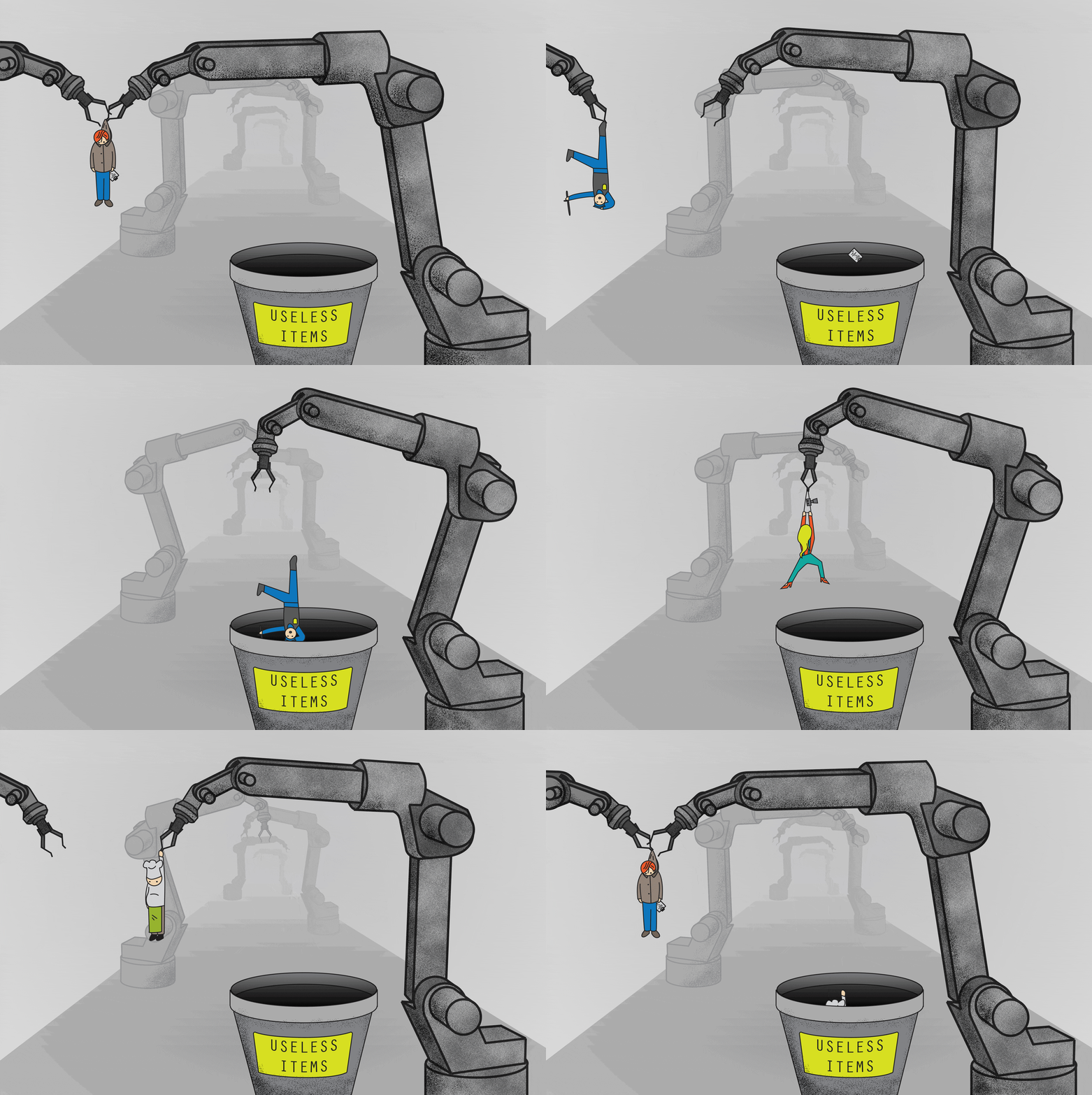
Quick answer: Repetitive, rule-based jobs are vanishing fast. Manufacturing, retail, transportation, finance, data entry, and call centers are bleeding positions to AI and automation. The OECD says 14% of jobs are easily automatable right now, with 32% facing serious disruption. McKinsey estimates 400–800 million jobs could be displaced globally by 2030. But here's the thing: AI is also creating new roles. The key is adapting before your job becomes a legacy position.
Why AI is eating jobs. Machines don't get tired, don't need benefits, and don't make mistakes on repetitive tasks. When a job involves following rules, processing data, or handling routine interactions, AI can do it cheaper and faster. That's why robots replaced factory workers decades ago—and why chatbots are nuking customer service departments right now.
The six job categories getting wrecked.
Manufacturing and industrial labor: Robots have been doing assembly line work since forever. Now AI-driven predictive maintenance systems figure out when machines break before they actually break. Human monitors? Surplus to requirements.
Retail and cashiers: Self-checkout kiosks are everywhere. Amazon Go stores literally don't need humans to run them—AI tracks inventory and customers automatically. Traditional retail employment is already gasping.
Transportation and delivery: Self-driving vehicles are coming. Waymo, Tesla, and Uber are all racing to replace truck drivers and delivery people. This affects millions of jobs across logistics and trucking.
Administrative and data entry: AI chatbots handle scheduling. Automated systems process documents. Junior employees who used to spend weeks on data entry? Their entire job category is evaporating.
Banking and finance: Robo-advisors manage money. AI algorithms trade stocks. Loan processing is automated. Financial analysts and bankers are feeling the squeeze as algorithms outperform humans.
Customer service and call centers: Natural Language Processing is good enough now. Chatbots can handle most customer problems without a human agent. The entire call center industry is shrinking fast.
Who gets hurt the hardest. Low-skilled workers in routine jobs feel it first. Older workers struggle to retrain. Entry-level positions—the ones that taught people real skills—are increasingly automated, which means fewer pathways into careers.
The timeline matters. This isn't some distant sci-fi scenario. Changes are already happening. By 2030, roughly one-third of current jobs will either disappear or transform beyond recognition. We're looking at a decade, not generations.
How to not become obsolete. Learn AI literacy and data analysis. Pick up programming or digital marketing skills. Pivot toward roles that need human creativity, empathy, and emotional intelligence—therapists, teachers, writers, strategic thinkers. AI struggles with genuine problem-solving that requires intuition and deep judgment.
The silver lining. AI destroys jobs, but it also creates them. The World Economic Forum predicts 97 million new jobs in AI-related fields by 2025. Robot maintenance, AI ethics, cybersecurity, and hybrid roles (human + AI) are emerging fast. The jobs being created are usually better-paid and more interesting than what they're replacing.
Real talk: Automation is inevitable. The future belongs to people who can work alongside AI, not compete with it. Start reskilling now. Your current job title might not exist in 2030, but your career absolutely can.
Common questions people actually ask.
Q: Will AI create more jobs than it destroys?
Probably yes, eventually. But the transition is brutal. New jobs won't automatically go to displaced workers. A truck driver can't just become a cybersecurity engineer overnight. That's the painful reality nobody talks about enough.
Q: How long do I have before my job disappears?
Depends on your role. Customer service? 2–5 years. Accounting and finance? 3–7 years. Creative and human-facing work? Longer, but not immune. Start preparing now.
Q: Which jobs are safest from AI?
Anything requiring deep human connection, creativity, or nuanced judgment: therapy, teaching, nursing, creative writing, strategy, leadership. Trades that involve complex physical problem-solving (plumbing, electrical work) also stick around longer because they're harder to automate.
Q: Should I go back to school?
Maybe not a traditional degree. Bootcamps, certifications, and online courses in tech, data, and digital skills move faster than universities and cost way less. Learn practical, immediately employable skills.
Q: Is my industry on the chopping block?
If your job is: processing data, following scripts, handling routine customer interactions, or doing predictive work based on historical patterns—yes, it's vulnerable. If it requires judgment calls, creative thinking, or real human relationships—you've got more time.
Q: What's the government doing about this?
Not much, honestly. Some countries are exploring universal basic income and retraining programs, but most governments move slower than tech companies. You can't count on policy to save your career. Adapt yourself.
What to read next: How to Reskill for an AI-Driven Job Market and The Rise of Hybrid Jobs: Humans + AI Working Together both dig deeper into survival strategies. Also check out Which Entry-Level Positions Are Getting Automated First if you're starting your career and wondering if it's even worth the effort.
The future of work isn't scary—it's just different. Get ahead of it.