AI Remote Cashiers in the Philippines: How Automation Is Redefining Offshoring and the Future of Work
AI Remote Cashiers in the Philippines: How Automation Is Redefining Offshoring and the Future of Work
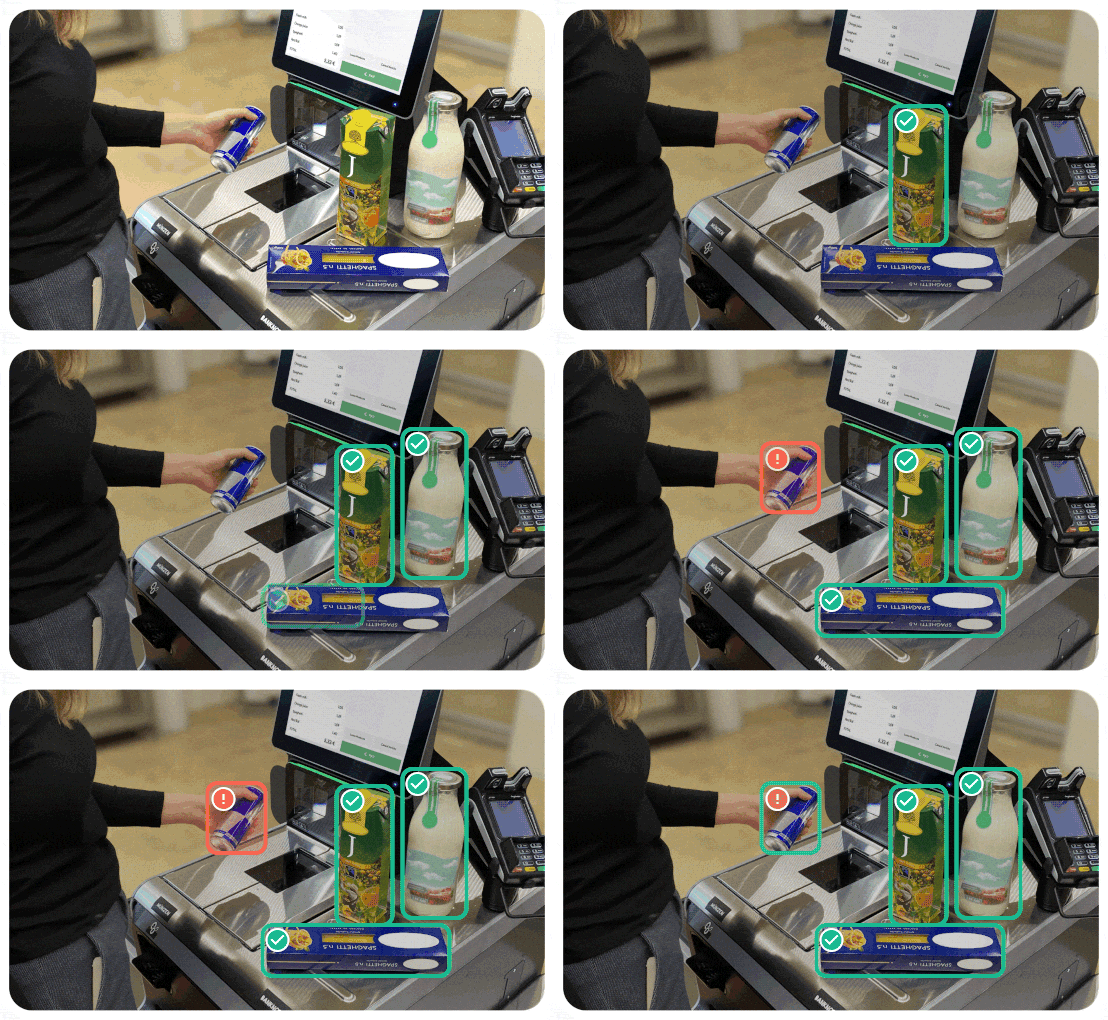
The rise of AI remote cashiers in the Philippines marks a pivotal shift in the global offshoring landscape. As businesses seek cost-effective solutions, artificial intelligence is automating tasks once reserved for human workers, blending remote work with cutting-edge technology. This transformation is not just about efficiency—it's about reimagining the future of work in a digital age.
In recent years, the Philippines has become a hub for BPO automation, with companies leveraging AI to handle customer transactions. Remote cashiers, powered by machine learning algorithms, now process payments, manage inventories, and interact with customers from thousands of miles away. This trend is accelerating, driven by advances in natural language processing and cloud computing.
But what does this mean for the Filipino workforce? While some fear job displacement, others see an opportunity for upskilling. The key lies in understanding how AI-driven offshoring can coexist with human talent, creating a hybrid model that maximizes productivity without sacrificing employment.
Consider the case of a major retail chain that replaced its in-store cashiers with remote AI systems based in Manila. The result? A 30% reduction in operational costs and faster transaction times. Yet, the transition required retraining staff to manage AI exceptions and customer escalations, highlighting the need for continuous learning.
As automation spreads, the concept of offshoring automation is evolving. No longer just about cheap labor, it's about accessing specialized AI skills. The Philippines, with its strong English proficiency and tech-savvy population, is poised to lead this new wave.
However, challenges remain. Data security, latency issues, and cultural differences can hinder performance. Companies must invest in robust infrastructure and ethical AI practices to ensure success. The future of remote cashier jobs depends on balancing innovation with human-centric design.
How Are AI Remote Cashiers Changing the Offshoring Landscape in the Philippines?
The integration of AI in offshoring is reshaping the BPO sector. Traditional call centers are giving way to automated systems that handle routine queries, while human agents focus on complex issues. This shift is particularly evident in retail, where AI cashier systems manage point-of-sale operations remotely.
For instance, a Philippine-based company now provides virtual cashier services to US grocery chains. Using AI, these cashiers can process hundreds of transactions per hour with minimal errors. The technology also enables real-time inventory tracking and fraud detection, adding value beyond simple transaction processing.
What Skills Are Needed for Remote Cashier Jobs in the Age of AI Automation?
As AI automation takes over repetitive tasks, the demand for soft skills is rising. Remote cashiers now need problem-solving abilities, emotional intelligence, and technical literacy. Training programs in the Philippines are evolving to include AI management, data analysis, and customer experience design.
Moreover, AI remote work requires familiarity with collaboration tools and cloud platforms. Workers must be comfortable with AI interfaces that learn from their interactions. This shift is creating new career paths, such as AI trainers and automation specialists.
Can AI Remote Cashiers Replace Human Workers in the Philippines Entirely?
While AI cashier automation is efficient, complete replacement is unlikely. Human oversight remains crucial for handling exceptions, building customer rapport, and making ethical decisions. The optimal model is a partnership where AI handles routine tasks and humans focus on value-added activities.
In the Philippines, this hybrid approach is already taking shape. Companies are hiring remote AI operators who monitor systems and intervene when needed. This not only preserves jobs but also enhances job satisfaction by reducing monotony.
What Are the Economic Impacts of AI-Driven Offshoring on the Philippines?
The economic implications are profound. AI offshoring can boost the Philippines' GDP by attracting high-value contracts. However, it also risks widening the skills gap. Government initiatives are focusing on STEM education and digital literacy to prepare the workforce for an AI-driven economy.
Additionally, automation in BPO is driving innovation in other sectors, such as healthcare and finance. The Philippines is becoming a testbed for AI applications, from remote diagnostics to automated accounting.
How Will AI Remote Cashiers Shape the Future of Work Globally?
The trend of AI remote cashiers in the Philippines offers a blueprint for the future of work. As automation becomes ubiquitous, the line between physical and digital labor blurs. Companies worldwide are watching this experiment to understand how to balance efficiency with human dignity.
Ultimately, the success of AI offshoring depends on collaboration between governments, businesses, and workers. By investing in education and ethical AI, we can create a future where technology empowers rather than displaces.
As we look ahead, the role of AI in remote cashiering will only grow. From predictive analytics to voice-activated systems, the possibilities are endless. The key is to embrace change while safeguarding human values.
For those interested in the technical side, AI automation tools like TensorFlow and PyTorch are enabling these innovations. Developers in the Philippines are already building custom solutions for global clients, showcasing the country's potential as an AI hub.
In conclusion, AI remote cashiers represent a new chapter in the story of offshoring. By combining the best of human and machine intelligence, we can create a more efficient, inclusive, and sustainable future of work.
Read more: AI in Retail: Automation Trends | Future of Work: Remote Jobs | Philippines BPO Automation | AI Ethics and Workforce | Upskilling in the AI Era | Remote Work Technology
Frequently Asked Questions
Q: What are AI remote cashiers? A: They are AI-powered systems that handle cashier tasks remotely, often used in offshoring setups.
Q: How does AI offshoring benefit companies? A: It reduces costs, improves efficiency, and provides access to global talent.
Q: Will AI replace all cashier jobs? A: No, human oversight is still needed for complex tasks and customer service.
Riley Martinez is a staff writer at YEET Magazine who covers social media algorithms and influencer tech.