The 25 AI Tools Actually Changing Work Right Now (Not Hype)
AI isn't tomorrow's problem anymore—it's reshaping how we work right now. From content creation to video editing to code generation, these 25 AI platforms are actively automating tasks and boosting productivity across industries.

By Paola Bapelle | YEET MAGAZINE | Updated October 16, 2025, 10:00 AM
The 25 AI Tools Actually Changing Work Right Now (Not Hype)
AI isn't a future scenario. It's actively automating workflows, replacing repetitive tasks, and forcing every industry to rethink how work gets done. In 2025, thousands of companies are cutting labor costs and speeding up production using the tools below. Whether you're a freelancer, team lead, or creator, these AI platforms are the actual infrastructure reshaping employment and creativity.
🧠 AI for Communication & Research
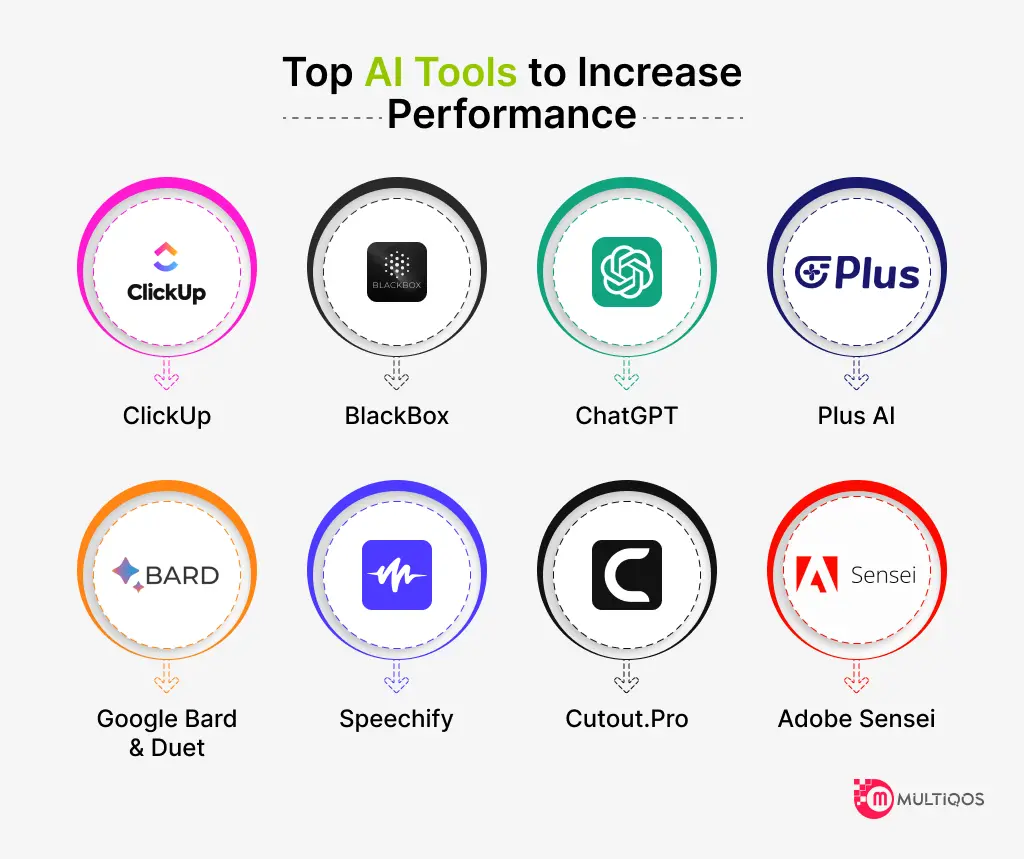
ChatGPT
The most obvious automation win: instant answers, draft content, code snippets, and explanations without waiting for human researchers or writers. Enterprises are literally replacing junior analyst roles with API integrations. It's fast, it's cheap, and it's everywhere.
Perplexity.ai
Research gets faster when an AI aggregates sources and delivers cited answers. Cuts research time by half. Academic institutions and newsrooms are already using it to speed up fact-checking and background gathering.
🎬 AI for Video & Audio Production
Runway.ml
Video editing used to require trained technicians. Now AI handles background removal, scene transitions, and effects in seconds. Video production pipelines that took weeks now take days. That's automation replacing skilled labor.
ElevenLabs.io
Voice cloning used to require studio time and voice actors. Now text becomes realistic voiceovers in 60 seconds. Audiobook production, e-learning, and virtual assistants are all being automated at scale.
Fliki.ai
Text-to-speech that doesn't sound robotic. Multiple languages, multiple accents. Global content creation suddenly doesn't require hiring voice talent in each market. That's algorithmic cost-cutting.
🎨 AI for Design & Creativity
Krea.ai
Logo design used to mean hiring a designer. Now algorithms generate 50 options in minutes based on your industry and preferences. Design studios are already automating client work and keeping the revenue.
PicWish.com
Photo editing without Photoshop knowledge. Background removal, enhancement, upscaling—all automated. Marketing teams that needed designers for every asset now let AI handle baseline edits.

LumaLabs.ai
3D modeling used to be a months-long process. AI now generates 3D models from images or text in hours. Gaming studios, architecture firms, and VR developers are automating prototyping cycles.
Pika.art
Static images become animated videos automatically. Marketing teams can produce 10x more content with fewer animators. The algorithm is replacing production staff, not assisting them.
🖥️ AI for Productivity & Organization
Gamma.app
Presentations used to require design decisions and hours of formatting. AI generates layouts, suggests visual hierarchies, and builds decks from text dumps. Consulting firms are cutting presentation production time by 70%.
Suno.ai
Music composition is now algorithmic. Content creators don't need to hire composers or pay licensing fees. Original tracks generated on-demand. The music production pipeline is being disrupted from the inside.
Relume.io
Web design scaffolding is automated. Junior web developers used to build boilerplate layouts. Now AI generates responsive templates and components. Less grunt work, same output, fewer hires.
Descript.com
Podcast and video production compressed into one interface. Transcribe, edit by text, auto-caption. What used to take audio engineers 8 hours now takes creators 1 hour. Audio labor is being automated.
Tome.app
Slide decks generated from a prompt. No more blank-page paralysis. Sales teams iterate faster, marketing generates collateral at scale. Fewer people needed to produce the same volume.
🌐 AI for Translation & Accessibility
Translation is no longer a bottleneck. Localization teams that used to manage global content in 15 languages now use algorithms. The same applies to captioning, subtitles, and accessibility—automation is democratizing global reach while eliminating translator roles.
Why This Matters for Your Work
Every tool above represents a workflow automation opportunity. If your job involves creating, editing, designing, writing, analyzing, or organizing—an AI platform exists to automate 30-80% of it. Companies adopting these tools aren't trying to replace humans entirely; they're cutting overhead and redeploying talent to higher-value work (or just cutting headcount). The job market is bifurcating: roles that use AI are staying, roles that compete with AI are disappearing.
The question isn't whether AI will change your industry. It already has. The question is whether you'll use these tools to multiply your output or wait until your job description gets automated.
Questions People Actually Ask
Are these AI tools going to replace my job? Not overnight. But they're replacing repetitive tasks. If your job is 80% repetition, yeah, you're vulnerable. If you adopt these tools first, you become harder to replace because you're outputting 3x the work.
How much do these cost? Most have free tiers. ChatGPT free tier, Perplexity free tier, Runway free credits. The enterprise versions cost $20-500/month depending on usage and features. Still cheaper than hiring.
Is the quality actually good? Depends on the tool and the task. AI-generated copy still needs human editing. AI voiceovers still need pacing adjustments. But the 80% solution is done in seconds, not hours. That's the real efficiency win.
What's the biggest risk? Data privacy. Most of these platforms train on your inputs. If you're uploading proprietary work, read the terms. Enterprise accounts usually have better data handling commitments.
Should I learn these tools or will they be obsolete next year? Learn the workflow, not the specific tool. Understanding how to use AI for writing, design, video, and research is more valuable than knowing ChatGPT 4.0 specifically. The platforms will evolve; the principles won't.
Related: Check out our deep dive on how AI automation is reshaping employment and explore the future of work in an algorithmic economy.