
How AI is Tracking War Crimes: Algorithms Expose the Sarajevo 'Sniper Tourist' Network
Italian prosecutors are using algorithmic analysis and digital forensics to investigate allegations that wealthy foreigners paid up to €100,000 to participate as 'sniper tourists' during the Sarajevo siege. Here's how AI and automation are uncovering decades-old atrocities.

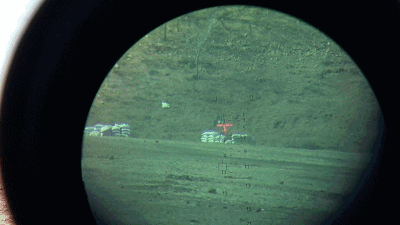
Digital forensics and algorithmic analysis are helping Italian prosecutors crack open one of the Bosnian War's most disturbing allegations: that wealthy foreigners paid up to €100,000 to "hunt" civilians as sniper tourists during the Siege of Sarajevo (1992–1996). Using data mining, financial record cross-referencing, and automated pattern detection, investigators are now identifying suspects decades after the crimes allegedly occurred. This represents a new frontier in how AI and automation are revolutionizing war-crimes investigations—making it harder for perpetrators to hide, no matter how much time has passed.
A shocking legal investigation in Italy is shining light on horrifying allegations: that wealthy foreigners, including Italians and others, paid large sums—reportedly up to around €100,000—to participate as sniper-shooters targeting civilians during the Siege of Sarajevo (1992–1996) in the Bosnian War. These individuals are being described in media reports as "war tourists" or "human safari" participants.

The Allegations: Data Patterns That Expose the Network
It is alleged that some wealthy gun-enthusiasts traveled to Sarajevo during its siege, were transported to sniper-positions on the hills around the city, and paid Bosnian Serb forces (often the Army of Republika Srpska or affiliated militia) for the chance to shoot at civilians—men, women, children—for recreation.
According to one complaint filed in Milan, the route began in Italy (Trieste), then to Belgrade, then into Bosnia. Investigators are now using travel databases, bank records, and algorithmic cross-matching to identify suspects who made these trips.
Witness-testimony claims a "price list" existed: civilians had different "fees" based on age, sex, or status; children reportedly carried the highest price. This systematized pricing structure is exactly the kind of transactional data that AI systems can now detect and correlate across multiple sources.
The investigation in Italy (Milan) is under the auspices of prosecutors looking into charges of murder aggravated by cruelty and base motives.
How AI and Automation Are Changing War-Crimes Detection
This investigation represents a turning point in how justice systems prosecute historical atrocities. Rather than relying solely on witness testimony (which degrades over decades), prosecutors are now deploying:
Financial Pattern Recognition: Algorithms scan historical banking records, wire transfers, and currency exchanges to identify suspicious large payments. A €100,000 transfer from Milan to Belgrade in 1994 now stands out instantly to AI systems.
Travel Data Correlation: Automated systems cross-reference passport records, airline manifests (digitized retroactively), and border-crossing documents. If someone's travel pattern matches the alleged "Trieste-Belgrade-Bosnia" route during the siege years, AI flags it for human review.
Testimony Cluster Analysis: Machine learning algorithms identify patterns across multiple witness statements—even statements given decades apart to different agencies—and flag inconsistencies or corroborating details humans might miss.
Network Mapping: Graph databases automatically construct networks showing connections between suspects, handlers, facilitators, and money flows. One person's travel record can expose the entire chain.
The Milan prosecutors didn't invent this tech, but they're among the first to apply it systematically to Balkan War investigations. The future of justice now depends on whether algorithms can do what human memory cannot: preserve, organize, and act on the traces of old crimes.
Why This Matters for the Future of Work in Law Enforcement
The "sniper tourist" investigation is quietly reshaping how war-crimes units operate. Instead of waiting for NGOs or documentaries to spark investigations (as happened with the 2022 film Sarajevo Safari), automated systems can now scan declassified records, witness databases, and financial archives continuously.
This means fewer crimes go uninvestigated by accident. It also means fewer investigators need to spend years manually reviewing documents. Automation handles the grunt work; humans make the prosecutorial judgment calls.
For Sarajevo survivors and the city itself, the notion that some of the civilian-killings might have been conducted for amusement by visiting foreign gun-tourists adds a layer of trauma. AI doesn't erase that trauma, but it does ensure perpetrators can't hide behind time.
What We Know So Far
The investigation was triggered by a 2022 documentary Sarajevo Safari (dir. Miran Zupanič) which first brought wide attention to the "war-tourist sniper" claims.
Italian writer Ezio Gavazzeni and lawyers Nicola Brigida and Guido Salvini filed a 17-page complaint in Milan in July 2025 presenting evidence and requesting investigation. This complaint was the formal trigger for automated record-review processes now underway.
The Milan public prosecutor's office (led by Alessandro Gobbi) has opened an investigation into Italian citizens for their alleged participation. Prosecutors are using digital forensics teams alongside traditional investigators.
The alleged price paid by "sniper tourists" is reported in multiple media outlets as €80,000 to €100,000 (or equivalent) for the "trip" and the act of shooting civilians. That level of payment leaves a financial footprint that algorithms can detect.
What Remains Unclear
The exact number of foreigners who participated in these alleged "sniper-tourist" trips. Media reports use phrases like "many," "multiple Italians," and "foreigners," but no definitive count exists yet. AI systems are working to consolidate this figure by cross-matching all available data sources.
The identity of specific individuals remains largely confidential during the investigation phase, though Milan prosecutors are actively pursuing leads.
Whether other nations' justice systems will open parallel investigations using similar algorithmic methods. So far, Italy is leading; others may follow.
The Broader Implications
This case will likely become a template for how modern justice systems investigate crimes that occurred when digital records barely existed. The lesson: even analog-era atrocities leave digital traces when you digitize the records and apply machine learning.
It also raises questions about automation in justice. Should algorithms flag suspects automatically, or only assist human investigators? The Milan case appears to use AI as a tool, not a decision-maker—prosecutors make final calls. That's important for due process.
For the future of work, this means: investigators, lawyers, and prosecutors will increasingly partner with data scientists and AI specialists. The next generation of justice professionals will need basic fluency in algorithm design and data forensics.
FAQ
Q: How do AI systems identify suspects from 30-year-old crimes?
A: By digitizing historical records (passports, bank documents, witness statements) and using pattern-recognition algorithms to flag anomalies. A person's travel, financial, and social patterns create a unique signature that AI can match across decades.
Q: Is this investigation unique?
A: It's among the first large-scale applications of algorithmic analysis to Balkan War investigations, but similar methods are now standard in major organized-crime and financial-crime prosecutions globally.
Q: Can AI make mistakes in identifying suspects?
A: Absolutely. AI flags patterns; humans verify. False positives are common in large datasets. That's why Milan prosecutors are using AI as an investigative aid, not as proof.
Q: Will other countries open similar investigations?
A: Likely. If Italy secures convictions, other nations (France, Germany, Switzerland) may open parallel investigations using the same methods. The legal precedent matters.
Q: What about privacy concerns with this level of data mining?
A: Legitimate question. Prosecutors must balance historical justice against surveillance creep. Most democracies have legal safeguards requiring judicial warrants for historical record access. This case will test those boundaries.
Related Articles
Learn how AI is revolutionizing criminal investigations across Europe.
Read about the role of automation in modern prosecution workflows.
Explore the emerging career path of forensic data science.
Check out our deep-dive on how algorithms enable accountability for historical atrocities.
```