How AI-Powered Nanotechnology Will Automate Car Repairs: Inside Audi's A9 e-tron
Audi's A9 e-tron concept eliminates the need for body shop workers by deploying AI-powered nanotechnology that automatically repairs damage and changes color. This shift toward autonomous vehicle maintenance is reshaping the automotive repair industry.

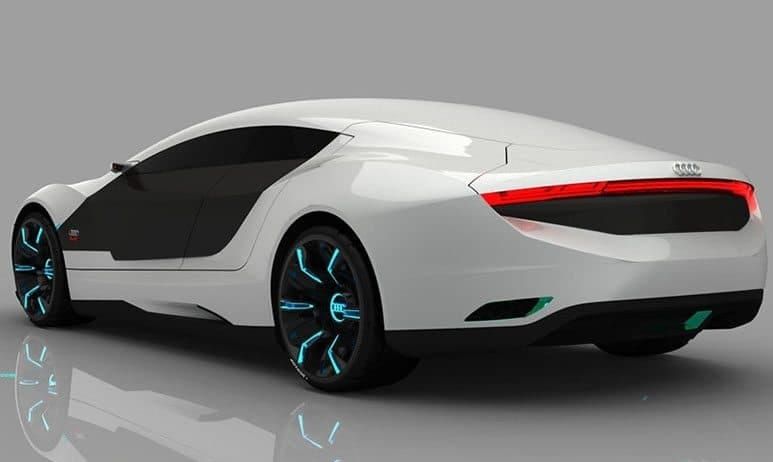
How AI-Powered Nanotechnology Automates Car Repairs: The Audi A9 e-tron's Self-Healing Revolution
Audi's A9 e-tron concept car uses AI-driven nanotechnology to automatically repair scratches and dents without human intervention. The car's exterior is made from smart nanomaterials that detect damage in real-time and self-heal autonomously. This tech doesn't just fix cars—it eliminates entire job categories in automotive repair, marking a major shift in how maintenance will be automated in the future of work. The vehicle also features color-changing surfaces controlled by algorithms, making cosmetic customization instantaneous.
Spanish designer Daniel García created this 2025 vision by combining futuristic architectural principles with cutting-edge nanotechnology. The A9 e-tron represents what happens when AI meets materials science: a car that requires almost zero human repair intervention.
The AI Behind Self-Repairing Surfaces
Here's where it gets interesting. The nanomaterial in the A9 e-tron's body uses embedded sensors and algorithms to detect micro-damage before it becomes visible to the human eye. The system triggers automated molecular repair sequences that heal scratches within minutes. No shop visit. No labor cost. No human technician needed.
This is automation's next frontier. Instead of disrupting factory work, AI is now disrupting the repair and maintenance sector. Traditional body shops employ millions globally—this technology threatens that entire ecosystem.
Color-Changing Tech: When Algorithms Control Aesthetics
The A9 e-tron's color-shifting exterior uses electrochromic technology controlled by machine learning algorithms. Push a button (or let the car's AI decide automatically), and the paint changes. No repainting required. No painter's labor. This alone could eliminate countless hours of manual body shop work.
The algorithm learns driver preferences and can even adjust colors based on environmental conditions or traffic patterns. It's cosmetic automation.
Electric Performance Specs That Matter
Beyond the self-repair gimmick, the A9 e-tron packs serious specs:
- Three electric motors (1 front, 2 rear): 320 kW standard / 370 kW boost mode
- 0-100 km/h in 4.6 seconds
- Top speed: 210 km/h (130 mph)
- 95 kWh battery: 500 km range per charge
- Rapid charging: 150 kW (80% in 50 minutes via CCS)
- Home charging: 11 kW AC induction system
The battery partnership with LG and Samsung uses predictive algorithms to optimize charging cycles and extend cell lifespan—more automation eliminating manual battery maintenance.
Data-Driven Maintenance: The Real Game-Changer
The A9 e-tron generates massive amounts of sensor data. Every tiny scratch, every surface micro-fracture, every charge cycle—all logged. Machine learning algorithms analyze this data to predict failures before they happen. This shifts repair from reactive (fix it when it breaks) to predictive (fix it before it breaks).
Again, fewer repair technicians needed. More algorithmic intervention. Pure automation.
Market Positioning & Competition
Audi expects the A9 e-tron to launch in 2025, priced around $85,000–$100,000 to compete with:
- Tesla Model S (also data-heavy, AI-optimized)
- Mercedes EQS (traditional luxury with AI features)
- Audi e-tron GT (Audi's current EV flagship)
- Kia EV6 (affordable AI-augmented alternative)
Every competitor is racing toward autonomous repair tech. The first to scale it wins.
What This Means for the Future of Work
Body shop workers, mechanics, and paintless dent repair specialists face real disruption. A car that fixes itself eliminates demand for their labor. This isn't distant sci-fi—it's launching in 2025.
The flip side: new jobs emerge. Someone has to program the algorithms. Someone has to monitor the sensors. Someone has to manage the data. But there will be fewer total jobs, and they'll require completely different skills.
Common Questions About Self-Healing Cars
Is the self-repair technology ready for production? Not yet. The A9 e-tron is still a concept. Nanotechnology at this scale is expensive and unproven at volume. Expect real-world versions in 3–5 years.
What happens if damage is too severe for the nanotech to handle? The sensors report critical damage to the algorithm, which alerts the owner and recommends service. Human intervention becomes a last resort, not the default.
How much data does the car collect? Constantly. Every sensor input feeds machine learning models. This is both a feature (predictive maintenance) and a privacy concern (who owns that data?).
Will insurance change? Absolutely. Self-repairing cars mean fewer claims. Insurance algorithms will adjust premiums based on the car's real-time sensor data, not just driving history.
Can you actually change the car's color with a button? In theory, yes. In the prototype, it's a manual feature. Future versions could let AI decide colors automatically based on traffic, time of day, or owner mood (via smartphone integration).
Related Reading on Future of Work & Automation
Check out our coverage of how AI is reshaping labor markets across industries and predictive algorithms in manufacturing. For more on autonomous systems, read self-driving technology and employment disruption.
Bottom Line
The Audi A9 e-tron isn't just a cool concept car. It's a blueprint for automating repair work via AI and nanotechnology. The tech eliminates human labor while creating new dependencies on algorithms and data. By 2025, expect the first generation of self-healing vehicles to hit the market—and watch traditional repair shops scramble to adapt.