
ChatGPT Atlas: The New AI Web Browser Guide
ChatGPT Atlas, ChatGPT browser, Agent Mode, AI web browser, use ChatGPT as browser, OpenAI browser download, AI task automation.

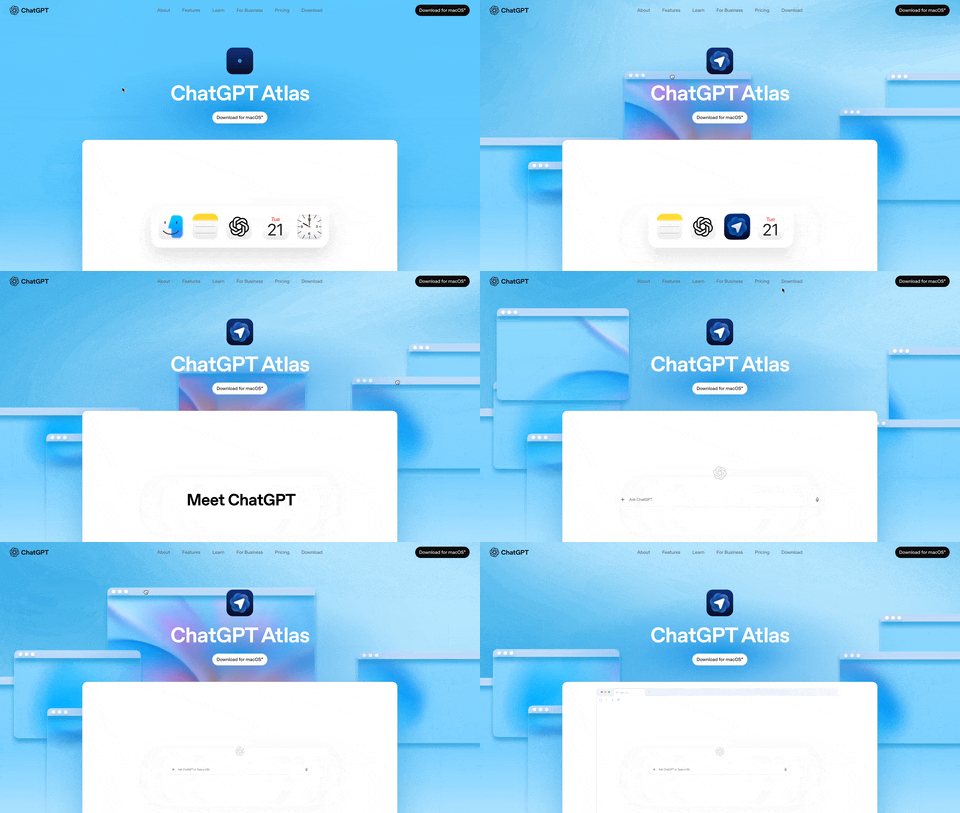
What Is ChatGPT Atlas Browser and Why It Could Change How You Use the Internet
ChatGPT Atlas is OpenAI's new browser that embeds ChatGPT directly into your web browsing experience, and it could be the biggest shift in how we use the internet since the Chrome era began. ChatGPT Atlas browser, OpenAI web browser, AI-powered browser, ChatGPT integration, Atlas features, and internet browsing AI — these are the topics dominating tech discussions right now. OpenAI CEO Sam Altman described Atlas as "a rare once-in-a-decade opportunity to rethink what a browser can be about." The company launched Atlas for macOS on October 21, 2025, positioning it as a direct challenge to Google Chrome, which currently holds about 71% of the browser market. Read more about ChatGPT Atlas →
Atlas is built on the Chromium engine—the same open-source foundation that powers Google Chrome. This means it supports all your Chrome extensions, imports bookmarks and passwords, and retains the familiar feel of a traditional browser. But that's where the similarities end. The core philosophy of Atlas is to replace the traditional address bar and internet search box with a conversation with ChatGPT. As Sam Altman stated, "The way that we hope people will use the internet in the future—and that we're starting to see—is the chat experience." Read more AI trends →
Experience the Future of Browsing
Get the best accessories and gear for your AI-powered browsing experience.
Shop Tech Gear →Key Features That Make Atlas Different
Atlas introduces several features that set it apart from traditional browsers like Chrome or Safari, creating a more integrated and potentially more powerful way to interact with the web.
ChatGPT Sidebar and Cursor Chat
One of the most praised features is the ChatGPT sidebar. Accessible via a button in the top-right corner of any webpage, this sidebar allows you to ask ChatGPT questions about the content you're viewing, get summaries, or analyze data without leaving the page. This is seen as a more natural and less intrusive integration compared to the AI features in some competing browsers, which can feel like disruptive pop-ups. Additionally, "Cursor Chat" lets you highlight text in any field—like an email draft—and ask ChatGPT to rewrite or edit it inline, eliminating the need for copying and pasting.
Browser Memories
Atlas includes a feature called "browser memories." When enabled, ChatGPT can remember key details from sites you visit to improve chat responses and offer smarter suggestions. For example, you could ask ChatGPT to "find all the job postings I was looking at last week and create a summary of industry trends." This feature is optional and fully controllable, allowing you to view, archive, or delete memories at any time. Clearing your browsing history also deletes any associated memories.
Agent Mode
Agent mode is perhaps Atlas's most powerful and talked-about feature. Available in preview for ChatGPT Plus, Pro, and Business users, this mode allows the AI to perform multi-step tasks on your behalf. In demos, it has been shown to research a recipe, add all the necessary ingredients to a grocery delivery cart, and even navigate to the checkout page. It can also book restaurant reservations, compile research into briefs, and more. While its speed is still being improved, this feature represents a significant leap from passive browsing to active, AI-driven task completion.
Boost Your Productivity
Ergonomic gear and accessories for working with AI-powered browsers and tools.
Shop Productivity Gear →Why It Could Change How You Use the Internet
Atlas has the potential to change the internet in several fundamental ways. By integrating AI directly into the browser, it could reduce the traditional "search, click, and read" cycle, making information consumption more efficient. An AI agent that can perform tasks on your behalf could automate routine online chores, freeing up time for more meaningful work. Furthermore, by circumventing traditional search engines, OpenAI could gather direct user data to improve its AI models, potentially creating a new internet ecosystem centered on AI interactions rather than website visits.
The browser has received mixed reviews. Some have praised its clean design and convenient AI features, with Tom's Guide highlighting four specific advantages over Chrome. However, others have found the agent mode to be unreliable and slow, and there are ongoing concerns about privacy and the potential for AI to summarize paywalled content, potentially reducing traffic to original publishers. The browser also lacks some features that users have come to expect, such as multiple profile support, which can be a significant inconvenience for users managing work and personal accounts.
FAQ: ChatGPT Atlas Browser
Q: What is ChatGPT Atlas?
A: ChatGPT Atlas is a free web browser from OpenAI that integrates ChatGPT into the browsing experience, offering features like an AI sidebar, browser memories, and an AI agent.
Q: Is ChatGPT Atlas free?
A: Yes, Atlas is free to download and use. However, advanced features like Agent mode require a paid ChatGPT subscription (Plus, Pro, or Business).
Q: What platforms is ChatGPT Atlas available on?
A: Atlas is currently available for macOS. Versions for Windows, iOS, and Android are in development.
Q: How does ChatGPT Atlas compare to Chrome?
A: Atlas offers deeper AI integration with features like the ChatGPT sidebar, browser memories, and agent mode. It is built on Chromium, so it supports Chrome extensions and feels familiar. However, some reviewers have found the agent mode unreliable and note it currently lacks features like multiple profile support.
Q: What are the privacy concerns with ChatGPT Atlas?
A: Atlas collects data on your browsing habits to power its features. While OpenAI states that browsing content is not used to train models by default, and features like browser memories are optional, the potential for a consolidated user profile raises privacy considerations.
Related Stories
- ChatGPT Atlas: Complete Guide
- OpenAI News: Latest Developments
- AI Trends 2026: What's Next
- Browser Wars: AI vs Traditional
- Tech News: Latest Updates