DeepSeek's Algorithm Disruption: How Chinese AI is Automating the Cost of AI Development
DeepSeek isn't just cheaper—it's algorithmically different. Using modular models and resource-efficient automation, this Chinese startup is rewriting how AI scales. At $0.55 per million tokens vs ChatGPT's $15-60, DeepSeek proves the future of work includes doing more with less.

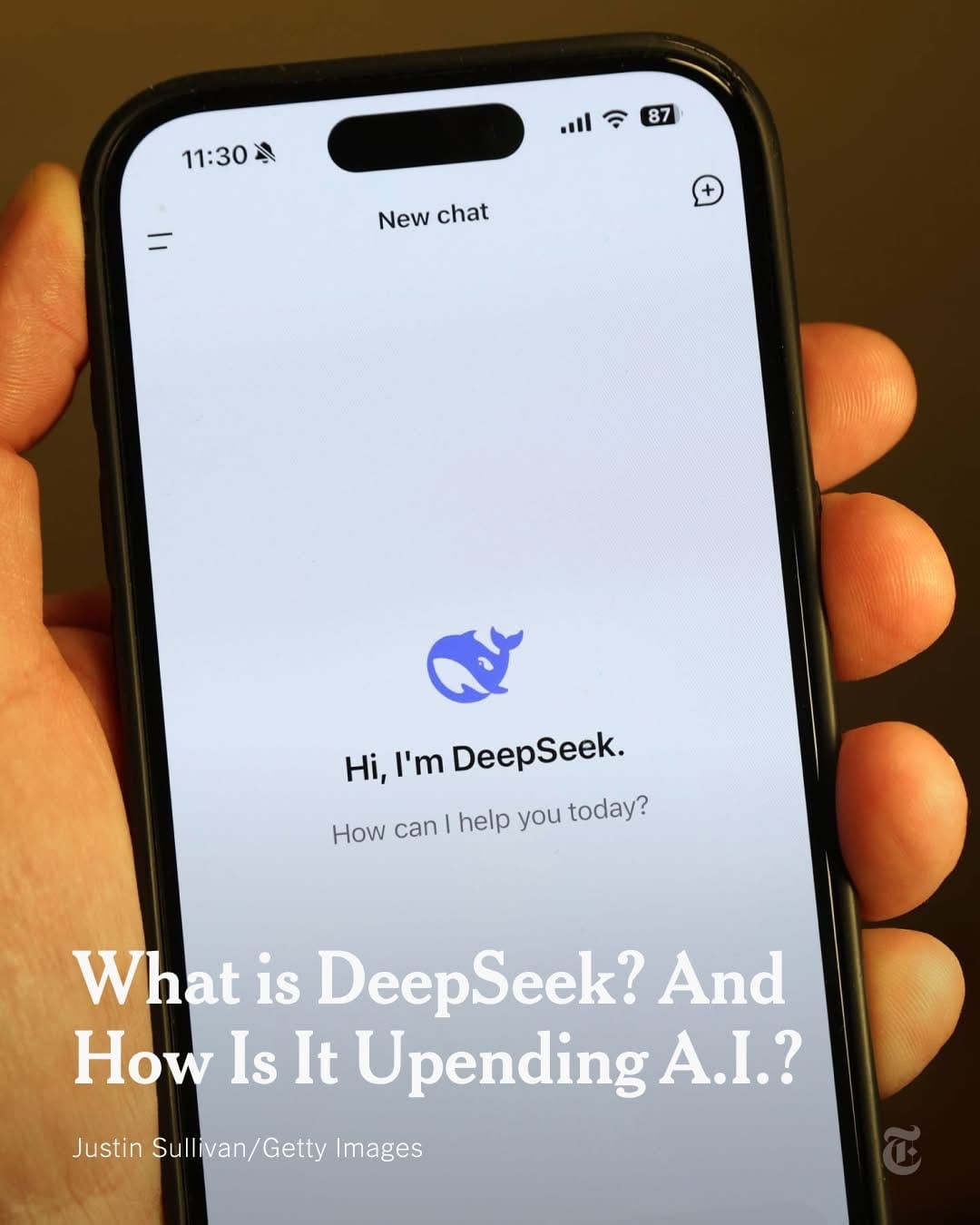
Article by Paola Bapelle | YEET MAGAZINE | Published: January 28, 2025, 10:00 AM | Updated: January 28, 2025, 2:00 PM
DeepSeek proves that algorithmic efficiency beats raw compute power. This Chinese startup has cracked a code that major AI players overlooked: you don't need expensive GPUs and bloated models to automate intelligence. By using modular algorithms and task-specific automation, DeepSeek delivers AI API calls for $0.55 per million tokens—while ChatGPT charges $15-60. The result? A seismic shift in how businesses approach the future of work and AI adoption at scale.
What Is DeepSeek AI?
DeepSeek is a Chinese AI startup that's hacking the economics of artificial intelligence. Instead of competing on raw processing power like OpenAI and Google, DeepSeek built modular algorithms designed to run on cheaper hardware. This automated approach to efficiency means smaller companies and startups can finally afford enterprise-grade AI without venture capital backing.
Think of it this way: OpenAI built a Ferrari. DeepSeek built a Honda Civic that goes just as fast on the highway.
How DeepSeek's Algorithm Automation Works
DeepSeek's real innovation isn't the AI—it's the algorithm architecture. Instead of one bloated model trying to handle everything, DeepSeek uses modular, task-specific algorithms that automate efficiency by only spinning up the compute they need.
Most AI companies waste resources on generalized models. DeepSeek's automation philosophy: solve specific problems with precision. Less data movement, less GPU dependency, lower latency, lower cost.
The technical magic: their algorithms are optimized for inference (the cheap part) rather than training (the expensive part). This automated efficiency model means businesses pay less for everyday AI work.
The Cost Disruption: Why DeepSeek Is Eating Everyone's Lunch
Here's the brutal truth: DeepSeek's pricing isn't just lower—it's a different economic category.
- DeepSeek API: $0.55 per million input tokens
- ChatGPT API: $15-60 per million tokens
That's not a 10% discount. That's a 99% cost reduction for the same automation and AI capability.
For businesses automating customer service, content generation, or data processing, this algorithm-first approach means the future of work just became profitable at a different scale. Startups that couldn't afford ChatGPT's costs can now automate entire workflows.
DeepSeek vs. ChatGPT: The Algorithm Face-Off
Task Specificity (DeepSeek Wins)
DeepSeek's modular algorithm design excels at automation in focused domains: coding, math, specialized data processing. Each task gets its own optimized algorithm.
ChatGPT is the generalist—better at open-ended tasks, creative work, and complex reasoning across multiple domains. But that versatility comes with automation overhead (and cost overhead).
Resource Efficiency (DeepSeek Wins)
DeepSeek's algorithms automate efficiency by running on cheaper hardware. ChatGPT needs high-end GPUs. For the future of work, this means DeepSeek scales to edge devices, smaller servers, and lower infrastructure budgets.
Real-Time Automation (ChatGPT Wins)
ChatGPT handles unpredictable, nuanced queries better. DeepSeek sometimes struggles with queries it wasn't algorithmically trained for. For automation systems that need flexibility, ChatGPT still has the edge.
Training Data & Algorithm Bias (It's Complicated)
DeepSeek uses different training data and algorithms than Western AI models. Performance varies by use case. Neither is universally "better"—they're differently optimized.
How to Actually Use DeepSeek
Free Access
DeepSeek's free chatbot lets you test their algorithms at zero cost. Sign up and start automating queries immediately.
API Integration
Developers can integrate DeepSeek's API into apps, automation workflows, and data pipelines. At $0.55 per million tokens, even high-volume automation stays cheap.
DeepSeek Coder
Their code-generation algorithm specializes in automating software development. If your workflow is 80% code generation and debugging, DeepSeek Coder automates the job cheaper than alternatives.
The Future of Work Angle: What This Means for Your Job
DeepSeek's algorithm efficiency model signals a major shift in how businesses approach automation. When AI costs drop 99%, companies stop treating it as a premium tool and start embedding it everywhere.
This automation wave affects knowledge workers most directly: customer service, basic copywriting, data analysis, coding assistance. Roles that survive will be those that combine AI with human judgment, creativity, or complex problem-solving.
For builders and entrepreneurs, DeepSeek just made it economical to automate workflows that weren't worth the ChatGPT bill.
Why China Beat Silicon Valley on This One
DeepSeek's advantage wasn't better algorithms in a vacuum—it was starting from first principles. Western AI companies optimized for maximum capability. DeepSeek optimized for maximum efficiency.
Different constraints, different solutions. Now that solution is undercutting everyone's business model.
FAQ: DeepSeek Algorithm & Automation Questions
Is DeepSeek's AI actually good, or just cheap?
It's genuinely good at specific tasks—coding, math, task automation. For open-ended creative work, ChatGPT still wins. The algorithm design trades flexibility for efficiency.
Can I use DeepSeek for business automation?
Yes. With API access and near-zero costs, automation at scale becomes viable. Start with the free tier, measure ROI, then scale.
Is DeepSeek's data secure?
It's a Chinese company, which raises geopolitical and data residency concerns. If you're automating sensitive business processes, that matters. Review their privacy policy.
Will ChatGPT lower prices because of DeepSeek?
OpenAI might offer cheaper tiers eventually. But ChatGPT's moat is general capability, not price. They'll compete on quality, not cost.
What happens if DeepSeek's APIs go down?
Like any infrastructure dependency, you need a fallback. Build redundancy into your automation workflows.
Related Articles on AI & Automation
Explore more on how AI is reshaping the future of work and automation economics: