
Generation Beta: The First Humans Raised by AI (2026+)
Generation Beta (born 2026+) will be the first humans for whom AI isn't a feature—it's the invisible foundation of everything. From AI tutors to predictive homes, here's how automation will reshape childhood and the future workforce.

By YEET Magazine Staff, YEET Magazine
Published December 7, 2025
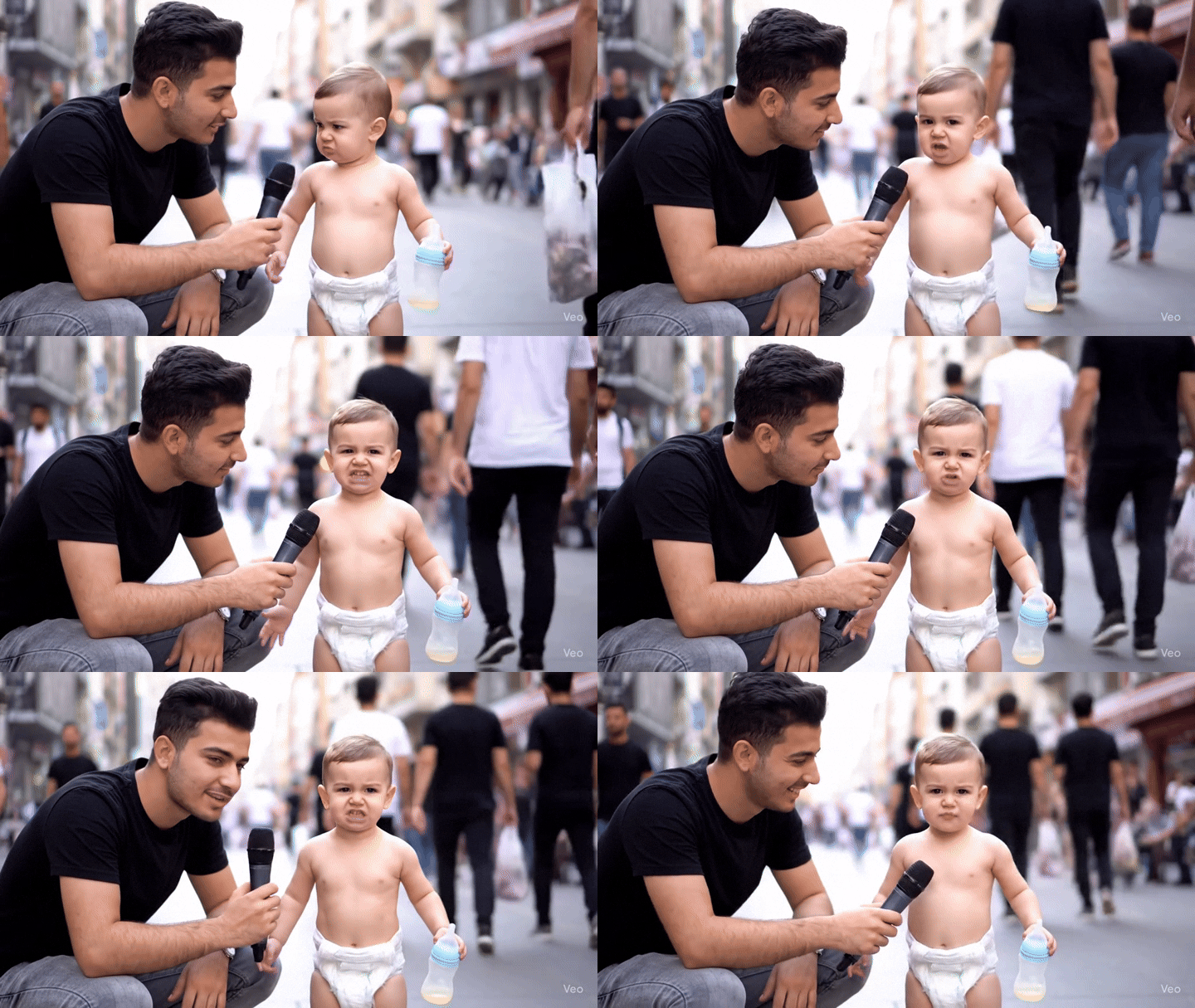
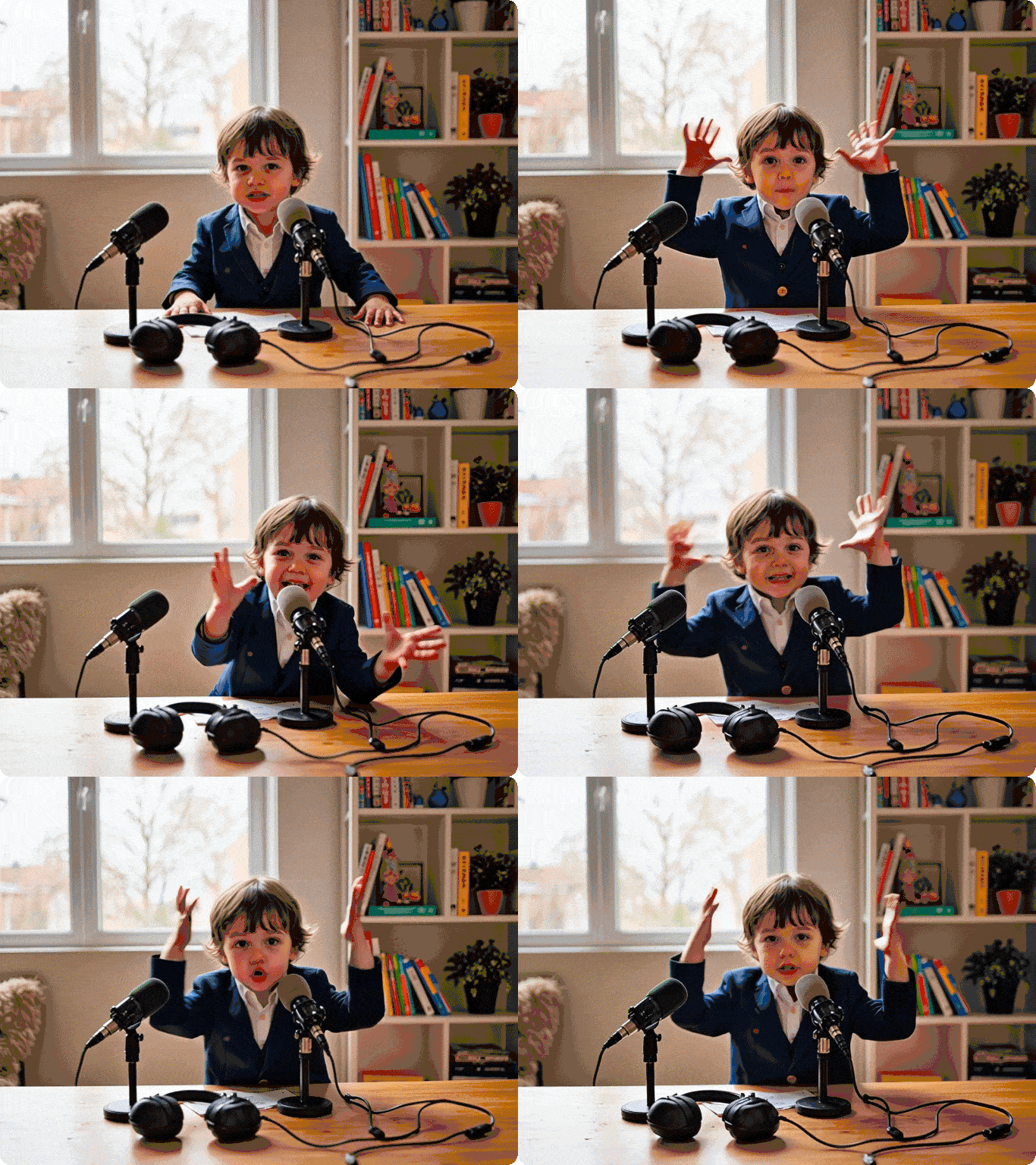
Babies born starting January 1, 2026 will be called Generation Beta—and they'll be the first humans raised in a world where AI isn't just a feature, it's the foundation. We're talking AI tutors before kindergarten, homes that predict your needs, and robots as common as microwaves. Gen Alpha grew up with tablets. Gen Beta will grow up with intelligence baked into everything they touch. This isn't sci-fi anymore. It's just childhood, version 2.0.
Why 2026 Is the Breaking Point for AI Integration
Demographers don't pick generational cutoff dates randomly. They look for inflection points—moments when the world fundamentally shifts.
For Generation Beta, that shift is automation going from "cool new thing" to "invisible infrastructure."

By 2026, AI will handle everything from diagnosing your kid's cough to customizing their math homework. Self-driving cars will be normal. Smart homes won't need your input—they'll just know when you're cold or hungry.
Generation Alpha (2010-2025) had to learn how to use technology. Generation Beta won't remember a time when technology wasn't already thinking for them.
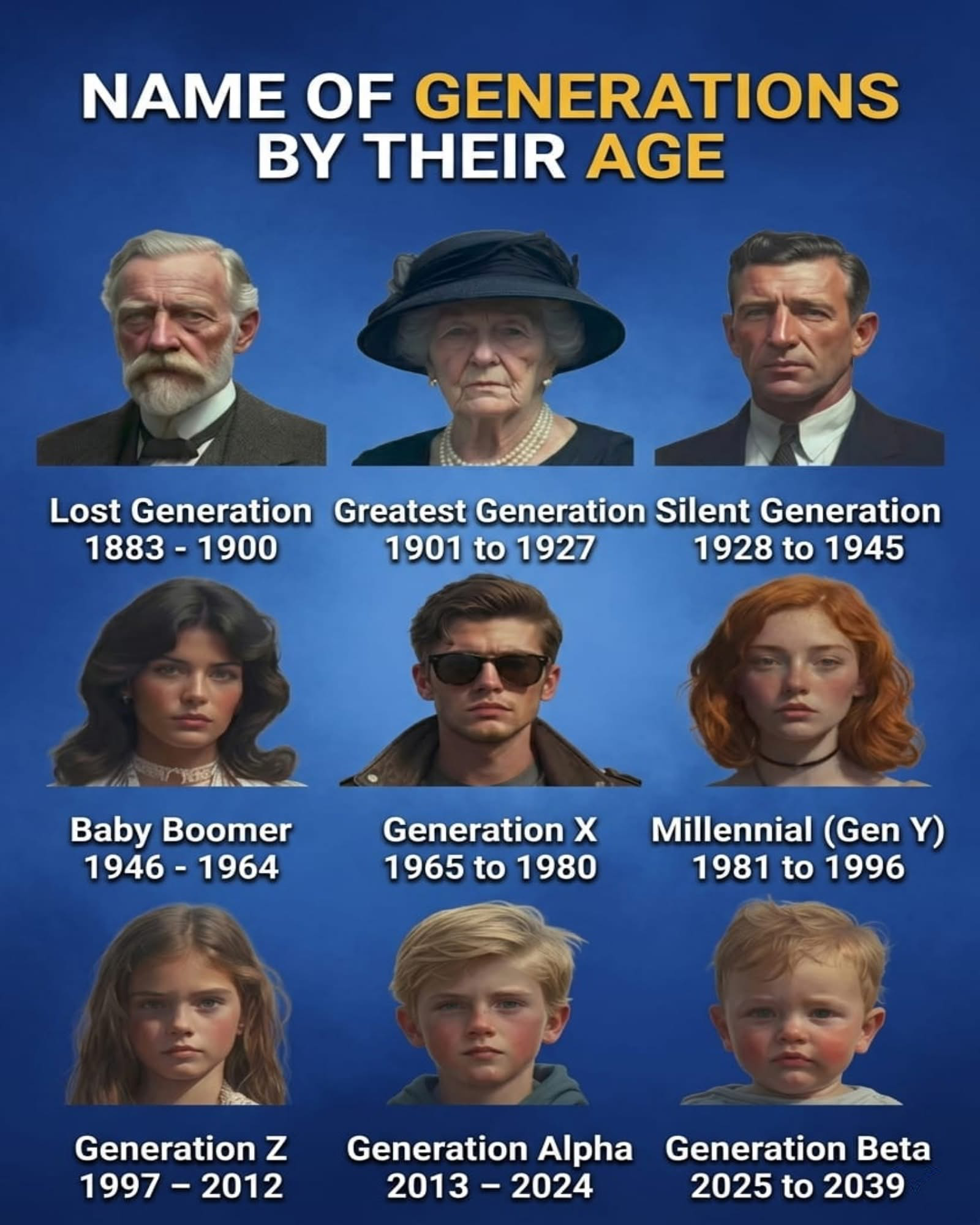
"We name generations to track cultural shifts. Generation Beta will grow up fully immersed in artificial intelligence and sustainable technologies in ways no previous generation has," said Dr. Hope Jenkins, a population studies researcher.
What Makes Gen Beta Different: AI-First Everything
Here's what the world will look like for a kid born in 2026:
Their education will be automated and personalized. Forget one-size-fits-all curriculums. AI tutors will adapt to each kid's learning style in real-time. Struggling with fractions? The system adjusts. Bored with basic reading? Here's advanced material. Algorithms will know what your kid needs before teachers do.
Their homes will anticipate their needs via ambient intelligence. Lights, temperature, meal suggestions, entertainment—all handled by ambient AI that learns family patterns. Parents won't program routines. The house will figure it out through data collection and predictive algorithms.
Their future jobs will be invented by AI. Most careers Gen Beta will have don't exist yet. They'll work alongside AI systems, managing automated processes, or doing deeply human work that machines can't replicate—creative strategy, emotional intelligence, ethical decision-making. The algorithm will be their colleague.
Their social lives will blur physical and digital through spatial computing. Augmented reality won't be a gimmick. It'll be how they play, learn, and connect. Imagine playdates where kids in different countries share the same virtual playground powered by machine learning.
"By 2026, AI won't be a tool—it will be the background of everyday life," said Matteo Ruiz, an educational technology analyst. "Gen Beta will not 'learn' technology; they'll simply live in it."
The Automation Paradox: More Tech Means More Human Skills Win
Here's the weird part: as automation takes over more tasks, the most valuable skills become deeply human.
Gen Beta kids will need to master things AI still sucks at—creative problem-solving, empathy, ethical reasoning, and building genuine human connections.
Behavioral futurist Lena Qualls puts it bluntly:
"The biggest challenge will be emotional. When AI becomes invisible, human connections become more valuable. Generation Beta will have to work harder to protect their own humanity."
But she's optimistic too:
"Kids born in 2026 will have more tools, more information, and more global awareness than any generation before them. They could be the most adaptable humans ever born."
The Future Workforce: Gen Beta in 2045
Let's fast-forward. Gen Beta enters the workforce around 2044-2045.
By then, most routine cognitive work will be automated. Data entry, basic analysis, standard customer service, even some creative tasks—handled by AI and robotics.
What's left? Jobs that require:
- Complex human judgment in unpredictable situations
- Emotional intelligence and relationship building
- Creative innovation that combines disparate ideas
- Ethical oversight of AI systems and algorithms
- Physical work in dynamic environments (until robotics catches up)
- Managing human-AI collaboration workflows
Gen Beta won't compete with AI. They'll orchestrate it.
They'll be AI managers, prompt engineers, human-AI interface designers, automation ethicists, data privacy specialists, and jobs we literally can't imagine yet because the technology doesn't exist. The future of work belongs to those who can direct the machines, not replace them.
How Algorithms Will Shape Gen Beta's Development
Here's something that keeps parents up at night: Gen Beta's behavior, preferences, and personality will be shaped by recommendation algorithms from infancy.
What shows they watch, what songs they hear, what stories they read—all filtered through AI systems designed to maximize engagement and predict behavior.
This isn't judgment-free. It's just the reality: Gen Beta will grow up in a fully algorithmically-mediated environment.
Some researchers worry this creates filter bubbles and reduced serendipity. Others think it means kids get exactly what they need when they need it. Probably both are true.
FAQ: Generation Beta and the AI-Driven Future
Q: When exactly is Generation Beta?
A: Babies born January 1, 2026 and onward. The generation cutoff hasn't been officially locked in yet, but 2026 is the consensus inflection point when AI becomes truly ubiquitous infrastructure.
Q: Will Gen Beta kids be smarter than previous generations?
A: Different, not necessarily smarter. They'll have AI augmentation from birth—faster access to information, personalized learning. But wisdom, creativity, and emotional intelligence can't be outsourced. Gen Beta will need to develop those even more intentionally because everything else is automated.
Q: What skills should I teach my Gen Beta kids?
A: Focus on uniquely human abilities: critical thinking, emotional intelligence, creativity, ethical reasoning, and adaptability. Technical skills will become obsolete faster. Human skills are timeless. Also teach them how to work alongside AI, not against it.
Q: Will Gen Beta have jobs?
A: Yes, but different ones. Routine jobs will be automated. Gen Beta will work in hybrid human-AI roles, managing systems, making judgment calls, and doing deeply creative or relational work. The future of work is collaboration, not competition with machines.
Q: Is raising kids in an AI-saturated world dangerous?
A: There are real risks—algorithmic bias, reduced human connection, privacy concerns, mental health impacts from constant optimization. But humans are adaptable. Previous generations worried about TV, video games, and the internet. Gen Beta will develop resilience and coping mechanisms we're only starting to understand.
Q: What's the biggest difference between Gen Alpha and Gen Beta?
A: Gen Alpha learned to use technology as a tool. Gen Beta won't remember a time when technology was optional or separate from daily life. For them, AI is just air—invisible, everywhere, essential.
Related Reads on AI, Automation, and the Future
How ChatGPT Is Rewriting Job Descriptions Before Humans Notice
The Algorithm Economy: How AI Will Replace Middle Management by 2030
Automation Ethics: Who's Responsible When AI Makes the Wrong Call?
From Gen Alpha to Gen Beta: How Generational Tech Addiction Is Actually Changing Our Brains
The Skills No AI Can Steal (Yet): What Gen Beta Should Learn Instead of Code