Macrohard vs. Microsoft: How Elon Musk's AI-First Software Company Could Automate the Enterprise and Reshape the Future of Work
Macrohard vs. Microsoft: How Elon Musk's AI-First Software Company Could Automate the Enterprise and Reshape the Future of Work
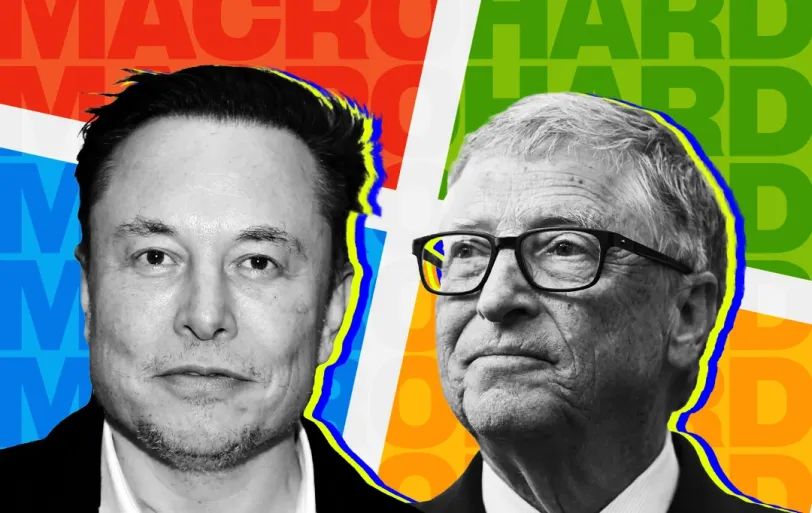
Elon Musk has never been one to play by the rules. From electric cars to space travel, his ventures have consistently disrupted established industries. Now, with the rumored launch of Macrohard, an AI-first software company, Musk is setting his sights on the enterprise tech throne currently occupied by Microsoft. This isn't just another startup; it's a potential paradigm shift in how businesses operate, driven by AI automation and the future of work. The question isn't if Musk can challenge Microsoft, but how quickly he can make the old guard obsolete.
Imagine a world where your operating system isn't just a platform for applications, but an intelligent agent that anticipates your needs, automates your workflows, and even negotiates with other AI systems on your behalf. That's the vision behind Macrohard. According to insiders, the company is developing a suite of tools that leverage generative AI to replace traditional software interfaces with conversational commands and autonomous processes. This could render the familiar Microsoft Office suite as archaic as a typewriter.
The implications for the enterprise software market are staggering. Microsoft has spent decades building a fortress around its Office 365 and Azure ecosystems. But Musk's approach is different: instead of layering AI on top of existing software, Macrohard is building an AI-native operating system from the ground up. This means every function—from email to data analysis to project management—is designed to be handled by AI agents that learn and adapt. This isn't just an upgrade; it's a replacement.
One of the most compelling aspects of Macrohard is its potential to redefine the future of work. In a recent interview, a former Microsoft executive who now advises Macrohard said, "The goal is to eliminate the 'swivel chair' effect—where employees spend 80% of their time moving data between different apps. Macrohard will do that automatically." This aligns with Musk's broader vision of a world where humans focus on creativity and strategy, while AI handles the drudgery. But it also raises the specter of massive tech layoffs as entire job categories become automated.

Consider the story of Sarah Jenkins, a project manager at a mid-sized tech firm who participated in a beta test of Macrohard's core platform. "I was skeptical at first," she says. "But within a week, the AI had taken over my entire scheduling, resource allocation, and even client communication. It felt like I had a team of 10 assistants working for me. But then I realized: my company might not need those 10 assistants anymore." This anecdote highlights the double-edged sword of AI automation in the workplace. While it boosts productivity, it also threatens to displace millions of workers.
"Macrohard isn't just a product; it's a declaration of war on the traditional enterprise software model. The question is whether the world is ready for a boss that never sleeps."
— Dr. Anya Sharma, AI Ethics Researcher at MITAdvertisement
The battle between Macrohard and Microsoft is more than a corporate rivalry; it's a clash of philosophies. Microsoft has been integrating AI into its products, like Copilot for Office 365, but it's doing so incrementally. Musk, true to form, is going all-in. Macrohard's system is designed to be self-learning, meaning it improves with every interaction. This could give it a significant advantage in the AI software market, especially as businesses look for ways to cut costs and increase efficiency in a volatile economy.
However, the road to disruption is paved with challenges. Microsoft's entrenched position means that switching costs for enterprises are enormous. Companies have invested billions in training employees on Microsoft products and integrating them into their workflows. Macrohard will need to offer a seamless migration path, or risk being relegated to a niche player. Additionally, concerns about AI safety and data privacy are paramount. Musk himself has warned about the dangers of uncontrolled AI, so Macrohard will have to walk a fine line between autonomy and oversight.
Key Statistics: The Enterprise AI Battle
- Microsoft's annual revenue from Office 365 and Azure: Over $100 billion
- Projected growth of the global AI software market by 2028: $1.5 trillion
- Percentage of enterprise tasks that could be automated by AI: 60-70%
- Estimated number of jobs at risk from AI automation in the next decade: 300 million
Another critical factor is the AI talent war. Both companies are poaching top researchers and engineers. Macrohard has reportedly offered unprecedented compensation packages, including equity in the company and a stake in future AI patents. This has created a frenzy in Silicon Valley, with some calling it the "Musk effect." The outcome of this talent battle will likely determine which company can innovate faster and bring products to market more quickly.
For businesses, the choice between Macrohard and Microsoft may come down to a simple question: Do you want to evolve your existing systems, or start from scratch? The answer will depend on your industry, size, and risk tolerance. But one thing is clear: the enterprise AI revolution is here, and it's being led by two of the most powerful figures in tech. As Musk himself might say, "The future is not something you enter. The future is something you create." And with Macrohard, he's creating a future that could make Microsoft's dominance a thing of the past.
How will Macrohard's AI-first approach change the way businesses operate?
Macrohard's AI-first approach means that every software function is built around AI agents that can learn, adapt, and automate tasks. This could eliminate the need for multiple software subscriptions, as the AI handles everything from email to data analysis. Businesses could see a dramatic reduction in operational costs and a significant increase in productivity, but they will also need to retrain their workforce to work alongside AI systems.
What are the biggest risks of using Macrohard's AI software for enterprise data?
The biggest risks include data privacy breaches, as the AI would have access to sensitive company information. There's also the risk of AI bias in decision-making, which could lead to unfair outcomes in hiring, promotions, or resource allocation. Additionally, over-reliance on AI could make companies vulnerable to system failures or cyberattacks. Macrohard will need to implement robust security protocols and transparency measures to mitigate these risks.
Can Macrohard really compete with Microsoft's established enterprise ecosystem?
Competing with Microsoft is a monumental task, but Macrohard has several advantages. First, it's building from scratch, which means it can avoid the technical debt that plagues legacy systems. Second, Musk's brand and reputation for disruption could attract early adopters. Third, the AI-first architecture could offer capabilities that Microsoft's incremental approach cannot match. However, Microsoft's deep integration with enterprise IT systems and its vast partner network will be tough to overcome.
What jobs are most at risk from Macrohard's AI automation tools?
Jobs that involve repetitive, data-intensive tasks are most at risk. This includes roles like data entry clerks, customer service representatives, project coordinators, and even some middle management positions. The future of work will likely see a shift towards roles that require creativity, emotional intelligence, and strategic thinking. Macrohard's tools could also create new jobs in AI oversight, training, and ethics, but the transition will be painful for many workers.
When will Macrohard's software be available to the public, and what will it cost?
While no official release date has been announced, industry insiders expect a beta launch within the next 12-18 months. Pricing is expected to be subscription-based, with tiers for small businesses, mid-market companies, and large enterprises. Macrohard may also offer a freemium model to attract individual users and startups. The cost could be competitive with Microsoft's offerings, but the value proposition will be based on the AI's ability to automate tasks and save time.
Frequently Asked Questions
READ MORE FROM YEET MAGAZINE
- 🔗 AI Automation and the Future of Work: What You Need to Know
- 🔗 Tech Layoffs and the AI Empire: A History of Collapse
- 🔗 The Robot Boss That Fired Me From My Own Company
- 🔗 Is AI Entrepreneurship Worth It in 2026?
- 🔗 Self-Driving Trucks in the USA: The Autonomous Freight Revolution
- 🔗 AI Fired 900 Amazon Workers Before Lunch: The Human Cost
- 🔗 ChatGPT Medical Diagnoses: AI Outperforming Doctors
Avery Thompson is a staff writer at YEET Magazine who covers AI privacy, security, and data rights.