The Neo-Humanoid Robot Revolution: How AI Automation Is Redefining Home Help and the Future of Work
The Neo-Humanoid Robot Revolution: How AI Automation Is Redefining Home Help and the Future of Work
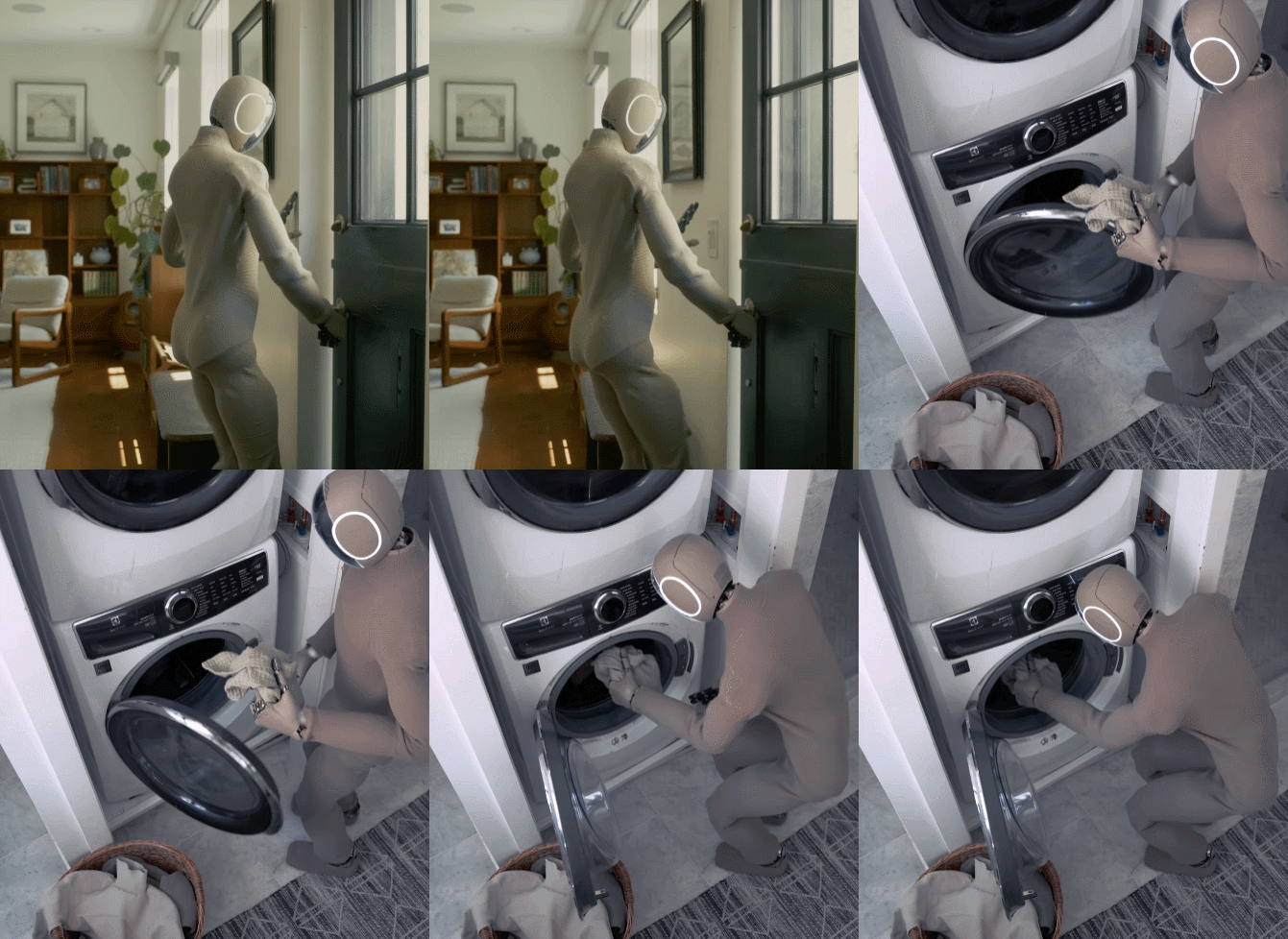
The dawn of the neo-humanoid robot era is upon us, and it is fundamentally altering the landscape of AI automation in our daily lives. These advanced machines, designed to mimic human form and function, are no longer science fiction. They are becoming integral to home help, promising to revolutionize how we manage domestic tasks, care for the elderly, and even reshape our own human anatomy through prolonged interaction. As we stand on the brink of this technological leap, the future of work is being rewritten, with robots taking on roles that were once exclusively human.
From vacuuming floors to providing companionship, the AI home assistant is evolving rapidly. The latest generation of humanoid robotics incorporates sophisticated sensors, machine learning algorithms, and natural language processing, enabling them to understand and anticipate our needs. This shift is not just about convenience; it represents a profound change in the automation trends that will define the next decade. The robotic caregiver is becoming a reality, offering support to aging populations and individuals with disabilities, thereby addressing critical labor shortages in the healthcare sector.
However, this integration comes with questions. How will our bodies adapt to a world where physical labor is increasingly outsourced to machines? Early studies suggest that human anatomy change may occur as we rely less on certain muscle groups and more on fine motor skills for robot interaction. The AI workforce is expanding, and with it, the need for new skills and adaptations. The neo-humanoid robot is not just a tool; it is a catalyst for evolutionary change in how we live and work.
The implications for the future of work are staggering. As AI automation takes over repetitive tasks, humans are freed to focus on creative and strategic endeavors. Yet, this transition is not seamless. The robotic caregiver and home help robot are creating new job categories while rendering others obsolete. The key is to embrace automation trends that enhance human potential rather than replace it. The neo-humanoid robot is a partner, not a competitor, in the journey toward a more efficient and compassionate society.
One of the most fascinating aspects of this revolution is the feedback loop between humans and machines. As we design humanoid robotics to better serve us, we are also learning more about our own human anatomy and cognitive processes. The AI home assistant is becoming a mirror, reflecting our behaviors and preferences, and in turn, shaping them. This symbiotic relationship is at the heart of the neo-humanoid robot phenomenon.
Consider the AI workforce in manufacturing and logistics. Robots have already transformed these industries, but the new wave of home help robot is bringing that efficiency into our living rooms. The robotic caregiver can now perform tasks like medication reminders, mobility assistance, and even emotional support, all powered by AI automation. This is not just about technology; it is about redefining the very essence of care and companionship.
As we delve deeper, the future of work will likely involve a hybrid model where humans and humanoid robotics collaborate seamlessly. The AI home assistant will manage schedules, control smart home devices, and even perform minor repairs, while humans focus on higher-level decision-making. This shift requires a rethinking of education and training, emphasizing skills that complement AI automation rather than compete with it.
The automation trends we are witnessing today are just the beginning. The neo-humanoid robot market is projected to grow exponentially, driven by advances in AI, materials science, and battery technology. The robotic caregiver segment, in particular, is seeing rapid innovation, with companies developing robots that can learn from their environments and adapt to individual user needs. This is a testament to the power of AI automation to improve quality of life.
However, we must also consider the ethical implications. As human anatomy change becomes a reality, questions about privacy, autonomy, and identity arise. The AI workforce must be governed by robust ethical frameworks to ensure that home help robot technologies serve humanity without compromising our values. The robotic caregiver must be designed with empathy and respect for human dignity.
In conclusion, the neo-humanoid robot revolution is here, and it is reshaping everything from our homes to our bodies. The future of work will be defined by our ability to integrate AI automation in ways that enhance human potential. The AI home assistant and humanoid robotics are not just innovations; they are partners in our journey toward a more efficient, compassionate, and adaptable society. As we embrace these changes, we must do so with foresight and responsibility, ensuring that the automation trends of today lead to a brighter tomorrow.
For more insights, explore our articles on AI Ethics in Robotics and Future of Work Trends. Also, check out Robotic Caregiver Innovations and Home Automation Guide. Don't miss our feature on Human-Robot Collaboration and AI Workforce Strategies.
What are the key benefits of neo-humanoid robots in home help?
Neo-humanoid robots offer 24/7 assistance, reduce caregiver burden, and provide companionship. They can perform tasks like cleaning, cooking, and monitoring health, all powered by AI automation.
How will AI automation affect the future of work?
AI automation will automate routine tasks, freeing humans for creative and strategic roles. It will create new job categories in robot maintenance, AI ethics, and human-robot collaboration.
Can human anatomy change due to robot interaction?
Prolonged use of robots may lead to changes in muscle use and posture, but these are adaptive rather than harmful. The human body is highly adaptable, and ergonomic designs mitigate risks.
What are the ethical concerns with robotic caregivers?
Key concerns include privacy, data security, and the potential for reduced human contact. Ethical frameworks are being developed to ensure robots enhance rather than replace human care.
How do I choose the right AI home assistant?
Consider factors like task compatibility, ease of use, AI capabilities, and cost. Read reviews and compare features to find a robot that fits your lifestyle and needs.
Taylor Chen is a staff writer at YEET Magazine who covers consumer AI, gadgets, and daily automation.