
New York City Turns Into a River: Terrifying Flood Videos Show Streets Underwater
Terrifying videos show New York City streets transformed into rivers as flooding leaves roads underwater and residents facing dangerous conditions.

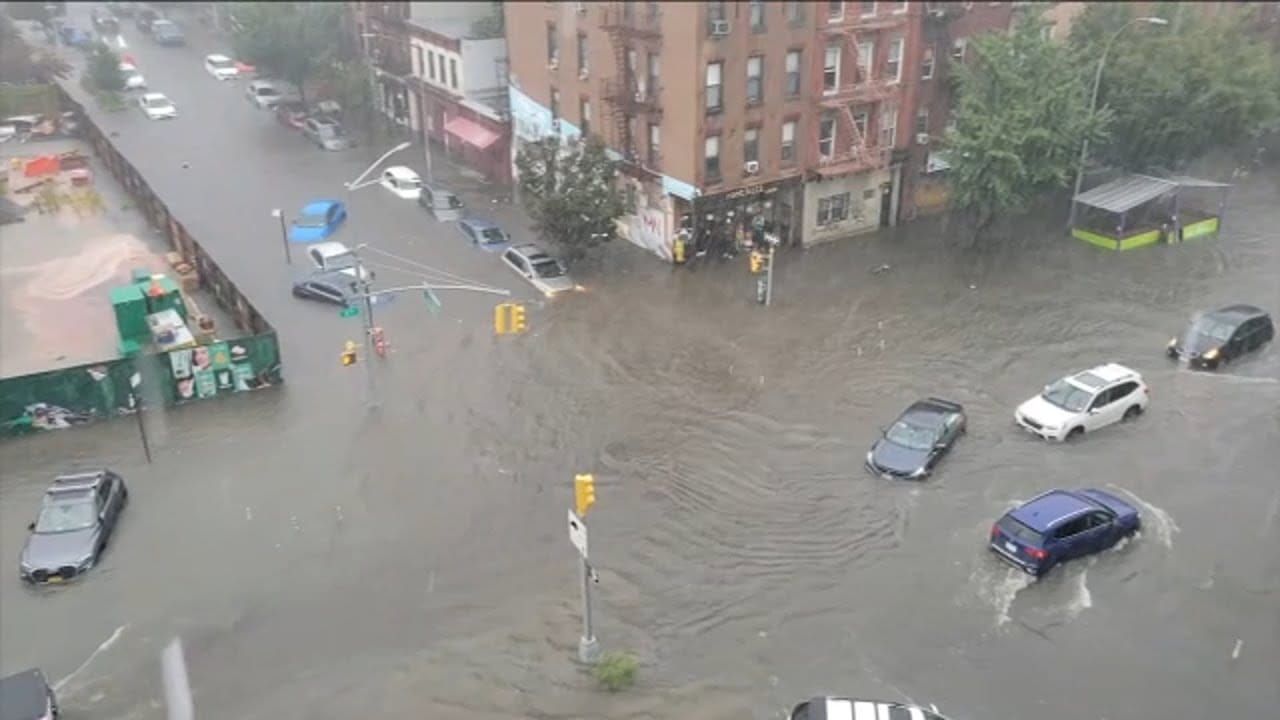
'People Are Literally Swimming': New York City Turns Into a River as Terrifying Flood Videos Show Streets Underwater
New York City turned into a river on Saturday as terrifying flash flood videos showed streets underwater across multiple boroughs. New York City flooding today, NYC flood videos, streets underwater in New York, what caused the NYC flooding, why is New York City flooding, flash flood New York City, New York storm damage — these are the searches dominating as residents and the world watch the aftermath unfold. "People are literally swimming," one woman can be heard saying in a video posted by Instagram account @subwaycreatures. In another video, posted by creator Taylor Prokes, people can be seen wading through SoHo with trash bags over their legs and water reaching their knees.
Emergency Preparedness Kits
Prepare for extreme weather with emergency kits, waterproof gear, and safety supplies for your family.
Shop Emergency Kits on Amazon →The National Weather Service reported that parts of the metropolitan area received between two and four inches of rain in a single hour, overwhelming drainage systems and flooding streets. The heaviest rainfall concentrated over lower Manhattan, western Brooklyn and parts of Queens, prompting emergency officials to urge residents in basement apartments to seek higher ground.
What Happened in New York City Flooding?
The New York City flooding happened on Saturday, July 18, 2026, after days of extreme heat and unhealthy air from Canadian wildfire smoke. Rain pummeled the five boroughs in the early afternoon, and the National Weather Service issued a flash flood warning for Manhattan, Brooklyn, Queens and surrounding areas. At one point during the storm, JFK Airport received 1.35 inches of rain, while Battery Park in Lower Manhattan was hit with a whopping 3.28 inches.
Videos showed trash cans and outdoor restaurant umbrellas floating down flooded avenues, with water rising past car tires and turning neighborhood streets into makeshift streams. Commuters navigating the subway system filmed water cascading down entrance staircases, including at the Canal Street station, where water also broke through the ceilings to create waterfalls pouring directly onto platforms.
What Caused the NYC Flooding?
Why is New York City flooding? The answer is a combination of extreme weather and aging infrastructure. After days of sitting under a blanket of wildfire smoke, the Northeast was hit by thunderstorms that were flushing out the acrid air but also threatening the area with strong winds and heavy flooding rains.
Forecasters with the National Weather Service said the biggest concern with these storms was winds over 70 miles per hour in an area that spread from Cleveland to New York City to Washington. When storms hit, NYC's aging drainage system gets overwhelmed instantly because it just isn't built for these intense climate shifts. Why did NYC streets flood so quickly? The rainfall rates reached up to 1 to 2 inches per hour, far exceeding the capacity of the city's drainage systems.
The severe weather left drivers stranded on highways in Queens and streets in a number of different neighborhoods flooded. The poor weather conditions left planes departing out of John F. Kennedy, Newark and LaGuardia airports with massive flight cancellations and delays.
What Areas of New York City Are Flooded?
Where is flooding in NYC today? The hardest-hit areas included SoHo in Manhattan, where the intersection of West Broadway and Grand Street was completely inundated. In Queens, the Roosevelt Ave.-Jackson Heights subway station entrance was flooded, sending water pouring into the station. The Clearview Expressway and Long Island Expressway were temporarily blocked in both directions, while flooding also forced closures on the Brooklyn-Queens Expressway.
Flash flood warnings were issued for most of central Queens and northern Brooklyn, with a separate flood advisory for the Bronx. NYC Emergency Management urged residents and visitors to stay off the roads unless necessary.
How Bad Is the Flooding in New York City?
How bad is the flooding in New York City? Social media footage captured the scale of the disruption. In one dramatic scene, an FDNY truck raced through flood waters in Queens to rescue stranded drivers who needed to be brought to safety. On a roadway above the Brooklyn-Queens Expressway, multiple vehicles were left entirely submerged, forcing some people to wade through waist-high water.
All lanes of the Long Island Expressway at 188th Street were temporarily blocked in both directions. The Metropolitan Transportation Authority reported major service disruptions across the subway network, with multiple lines affected by water on the tracks. Several subway stations experienced severe flooding and cascading waterfalls of rain that fell onto trains, tracks and platforms.
Flooding also caused severe delays at the region's airports. Major flight cancellations and delays affected LaGuardia, John F. Kennedy International and Newark Liberty International airports. According to the Federal Aviation Administration, some arriving flights at JFK faced average delays of more than an hour and a half.
Flood Safety and Emergency Gear
Protect yourself during extreme weather with flood safety gear, waterproof bags, and emergency supplies.
Shop Flood Safety Gear →When Did the NYC Flooding Happen?
When did the NYC flooding happen? The flooding began Saturday afternoon, July 18, 2026, as thunderstorms swept through the city. The National Weather Service placed the city under a flood watch from 10 a.m. Saturday till 2 a.m. Sunday. The storms were expected to be at their most severe between 4 p.m. and 8 p.m.
An emergency flash flood alert was issued to New York City residents at 12:30 p.m. Saturday, warning of a "dangerous" risk to life. By late Saturday and into Sunday, many streets that were closed or flooded reopened to traffic, though officials warned of lingering delays.
Who Was Affected by the NYC Flooding?
Who was affected by the NYC flooding? Thousands of residents and commuters across the five boroughs were impacted. In Queens, a firetruck had to drive through water deep enough to float an SUV so firefighters could rescue drivers stranded on the hood of a truck. Homeowners, including those in Kissena Park, Queens, experienced property damage and downed trees.
Former England goalkeeper Joe Hart shared a video of himself walking barefoot through the flooded streets. "Shoes are off, trainers are ruined," he said in the post on Instagram. Both Spain and Argentina had to postpone training on Saturday due to the thunderstorms, just hours before the World Cup final at MetLife Stadium in New Jersey.
Mayor Zohran Mamdani provided an update, saying the storms have passed but New Yorkers attending the World Cup final should still plan extra time. "The storms we saw yesterday have cleared up overnight. And we're hopeful that dry skies will stick around for kickoff," the mayor said.
Weather Radio and Emergency Alerts
Stay informed during severe weather with emergency radios and alert systems for your home.
Shop Emergency Radios →How Is New York Responding to Flooding?
How is New York responding to flooding? City officials urged residents to avoid travel as emergency crews responded to flooded underpasses, stalled vehicles and hazardous road conditions. The FDNY conducted water rescues in Queens and other affected areas. NYC officials encouraged residents and businesses to report storm damage to help the city assess impacts and coordinate recovery efforts.
Gov. Kathy Hochul urged residents to remain cautious, warning that the severe weather could still cause power outages, downed trees and further road closures through the weekend. "Lingering effects of smoke from wildfires in Canada and Minnesota may still impact portions of the state on Sunday," she said. "I encourage New Yorkers to stay informed by checking trusted sources for air quality and weather forecasts."
New Yorkers can report property damage at reportdamage.nyc.gov.
FAQ: New York City Flooding
Q: What happened in New York City flooding?
A: Heavy thunderstorms on July 18, 2026, dumped 2 to 4 inches of rain on New York City in just hours, causing flash flooding across Manhattan, Brooklyn, Queens and the Bronx. Streets were submerged, subways flooded and hundreds of flights were canceled.
Q: What caused the NYC flooding?
A: Extreme rainfall rates of 1 to 2 inches per hour overwhelmed NYC's aging drainage system. The storms followed days of extreme heat and Canadian wildfire smoke that had blanketed the region.
Q: What areas of New York City are flooded?
A: The hardest-hit areas included SoHo in Manhattan, central Queens, northern Brooklyn and parts of the Bronx. The Clearview Expressway, Long Island Expressway and Brooklyn-Queens Expressway were all affected.
Q: How bad is the flooding in New York City?
A: The flooding was severe enough to submerge vehicles, trap drivers, flood subway stations with waterfalls pouring onto platforms, and cause hundreds of flight cancellations at JFK, LaGuardia and Newark airports.
Q: When did the NYC flooding happen?
A: The NYC flooding began on Saturday, July 18, 2026, starting around midday and continuing through the evening. A flood watch was in effect from 10 a.m. Saturday until 2 a.m. Sunday.
Home Flood Protection and Cleanup Supplies
Protect your home from flood damage with sandbags, water pumps, and cleanup supplies.
Shop Flood Protection →Explore Topics
NYC Flooding New York City Flooding Flash Flood NYC NYC Flood Videos Streets Underwater NYC Manhattan Flooding Brooklyn Flooding Queens Flooding Subway Flooding NYC Extreme Weather New York Storm World Cup Final Breaking News Severe WeatherAs an Amazon Associate, YEET Magazine earns from qualifying purchases.