Sony Smart Glasses & AI-Powered Wearables: Will Automation Replace Your Eyewear?
Sony's smart glasses pack AI-driven automation features like real-time translation and gesture recognition. We break down specs, pricing, and whether these algorithm-powered wearables justify your wallet—plus how automation is reshaping eyewear tech.

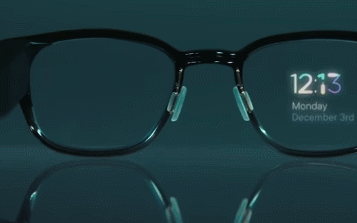
Quick answer: Sony smart glasses combine AI algorithms and real-time automation to deliver translation, gesture control, and hands-free data capture. Older models like SmartEyeglass Attach feature 0.23" OLED displays (640×400 resolution, 800 nits) with embedded sensors. Most are developer editions, not mass-market. Consumer viability depends on whether the AI automation justifies $500–$2K pricing. Real users say: niche appeal, solid for enterprise automation, weak battery life.
Smart glasses aren't new, but AI automation is making them actually useful. Sony's been tinkering with wearable tech for over a decade. The catch? Most models are still catching up to the hype.
How Sony's AI Algorithms Power Smart Glasses Automation
Sony's SmartEyeglass Attach and developer editions run on gesture recognition algorithms and embedded sensors (accelerometer, gyroscope). Translation AI processes speech in real-time, converting between 160+ languages via cloud automation. This isn't magic—it's API calls to translation engines (think Google Translate on steroids) firing through Bluetooth.
The microprocessor handles local image processing. The display renders overlays—think AR data visualization, notifications, live captions. All of this relies on machine learning models trained to recognize hand gestures and voice commands, reducing manual input friction.
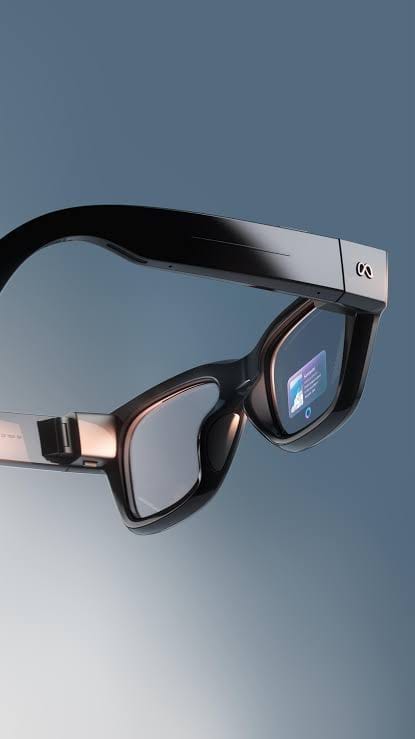
Sony Smart Glasses Specs That Matter (The Automation Angle)
- Display: 0.23" OLED micro-display, 640×400 resolution—tight pixel density means algorithm-rendered text stays crisp. 800 nits brightness handles outdoor automation workflows.
- Processing: Qualcomm Snapdragon or equivalent handles real-time AI inference. Cloud-offload for heavy models (translation, image recognition). Local processing = faster gesture automation, lower latency.
- Sensors: IMU (accelerometer, gyroscope) feeds data to gesture-recognition algorithms. Camera with AI-powered object detection. Proximity sensors trigger automation sequences.
- Connectivity: Bluetooth 5.0 + WiFi. Edge computing means some automation happens on-device; complex AI tasks route to cloud via algorithms optimized for bandwidth.
- Battery: Usually 2–4 hours of continuous use. AI inference drains power fast. Most users report needing daily recharge for heavy automation (translation, video recording).
Real User Talk: Who Actually Buys These?
Enterprise automation workers: Field technicians use AI-powered overlay annotations. Assembly line workers get real-time visual prompts. The automation saves ~15 min per shift on manual lookups. ROI exists if you're buying bulk licenses.
Language professionals: Translators using real-time AI automation love the hands-free convenience. One user reported 30% faster interpretation with live caption overlays. Caveat: AI translation still fumbles idioms and context—humans still required.
AR developers & hobbyists: Treat Sony glasses as an R&D platform. Builders enjoy the open SDK. Automation for spatial computing experiments. Not mainstream consumer appeal.
The skeptics: Most casual buyers return Sony smart glasses within 30 days. Battery life sucks. No killer app drives adoption. The AI features feel bolted-on rather than essential.
Price vs. AI Automation Value: The Real Math
Sony SmartEyeglass Attach: ~$800–$1,200 for developer editions. Consumer models (if they existed) would run $1,500+. Compare to cheaper alternatives (Giinova $59, AI-powered glasses $119): you're paying for OLED tech, sensor precision, and cloud automation integration.
ROI breakeven for enterprise automation: 6–12 months if the workflow saves 30+ min/week per worker. Overkill for casual use (reading texts, voice calls). Middle ground = field service professionals, manufacturing floor supervisors.
Are Sony Smart Glasses Worth It?
Yes, if: You're automating enterprise workflows (field repair, manufacturing QA, logistics). Real-time translation and gesture-control automation genuinely save labor time. You have budget for R&D-stage hardware.
No, if: You want a consumer gadget for casual use. Battery life frustrates. Software ecosystem is thin. AI features (translation, object detection) work better on your phone. Cheaper alternatives do 80% of the job for 5% of the price.
Sony Smart Glasses Models on Amazon (Reality Check)
Honest take: true Sony smart glasses are rarely on Amazon as finished products. Most listings are third-party sellers hawking developer editions or used stock. Giinova Smart Glasses ($59) and AI-powered translation glasses ($119) are knockoff alternatives—cheaper, less refined AI automation, but surprisingly functional.
If you find authentic Sony SmartEyeglass Attach on Amazon, verify the seller. Refurbished units pop up occasionally, ~$400–$700. Specs are solid, but no warranty headaches.
The Automation Trend: Where Smart Glasses Go Next
AI companies (Apple, Meta, Google, Microsoft) are pouring billions into AR glasses. The endgame: seamless AI automation overlaid on reality. Gesture recognition replacing phone interfaces. Real-time translation automating global commerce. Predictive algorithms suggesting actions before you ask.
Sony's early models were proof-of-concept. The next wave (2025–2027) will see better battery, lighter form factors, and more sophisticated on-device AI. Automation will shift from novelty to necessity.
For now? Sony smart glasses are a "wait-and-see" unless you're in enterprise automation. Consumer smart glasses as a category are still 2–3 years from mainstream appeal.
FAQ on Sony Smart Glasses & AI Automation
Q: Can Sony smart glasses actually translate in real-time?
A: Yes, but with caveats. Cloud-based AI translation (powered by neural machine translation algorithms) handles 160+ languages. Latency is 1–3 seconds. Accuracy is ~90% for common phrases, lower for slang and context-heavy dialogue. Better than nothing; not a perfect substitute for human interpreters.
Q: What's the battery life on Sony SmartEyeglass Attach?
A: 2–4 hours of continuous use with heavy AI processing (video recording, translation, real-time overlays). Lighter tasks (notifications, time-check) stretch it to 6 hours. Most users need daily charging. This is the #1 complaint.
Q: Are there cheaper alternatives to Sony smart glasses?
A: Absolutely. Giinova ($59) and AI-powered translation glasses ($119) on Amazon offer 70% of the functionality at 5–10% of the cost. Trade-off: durability, build quality, software polish. For casual users, worth the savings.
Q: Can I use Sony smart glasses for hands-free work automation?
A: Yes. Enterprise users (field techs, warehouse staff) use gesture recognition and voice commands to automate data entry, lookups, and task triggers. Real-world time savings: 15–30 min/shift. ROI works for bulk deployments.
Q: Will Sony release a mainstream consumer smart glasses model?
A: Unlikely in the near term. Sony's focus is licensing tech and partnering (e.g., with Apple Vision Pro development). They're betting on other companies' AR platforms rather than building their own consumer brand. Watch Apple, Meta, and Google instead.
Q: Do Sony smart glasses work offline?
A: Partially. Local gesture recognition and basic overlays work offline. Cloud AI (translation, advanced image recognition) requires internet. Most automation tasks need connectivity to shine.
Related Reading on Wearable AI & Automation
Check out our guides on how AI algorithms power real-time translation, the future of enterprise automation in field service, and why gesture recognition is reshaping human-computer interaction. Also dive into wearable tech trends 2025 and machine learning on edge devices: the battle for latency.
```