Steve Jobs' AI-Free Epiphany: Why Even Tech Visionaries Can't Code Humanity
Steve Jobs' private 2010 email exposes the hard truth: even the greatest tech innovators depend entirely on human systems they didn't create. In an age of AI hype, his vulnerability reminds us what algorithms will never automate—our collective humanity.

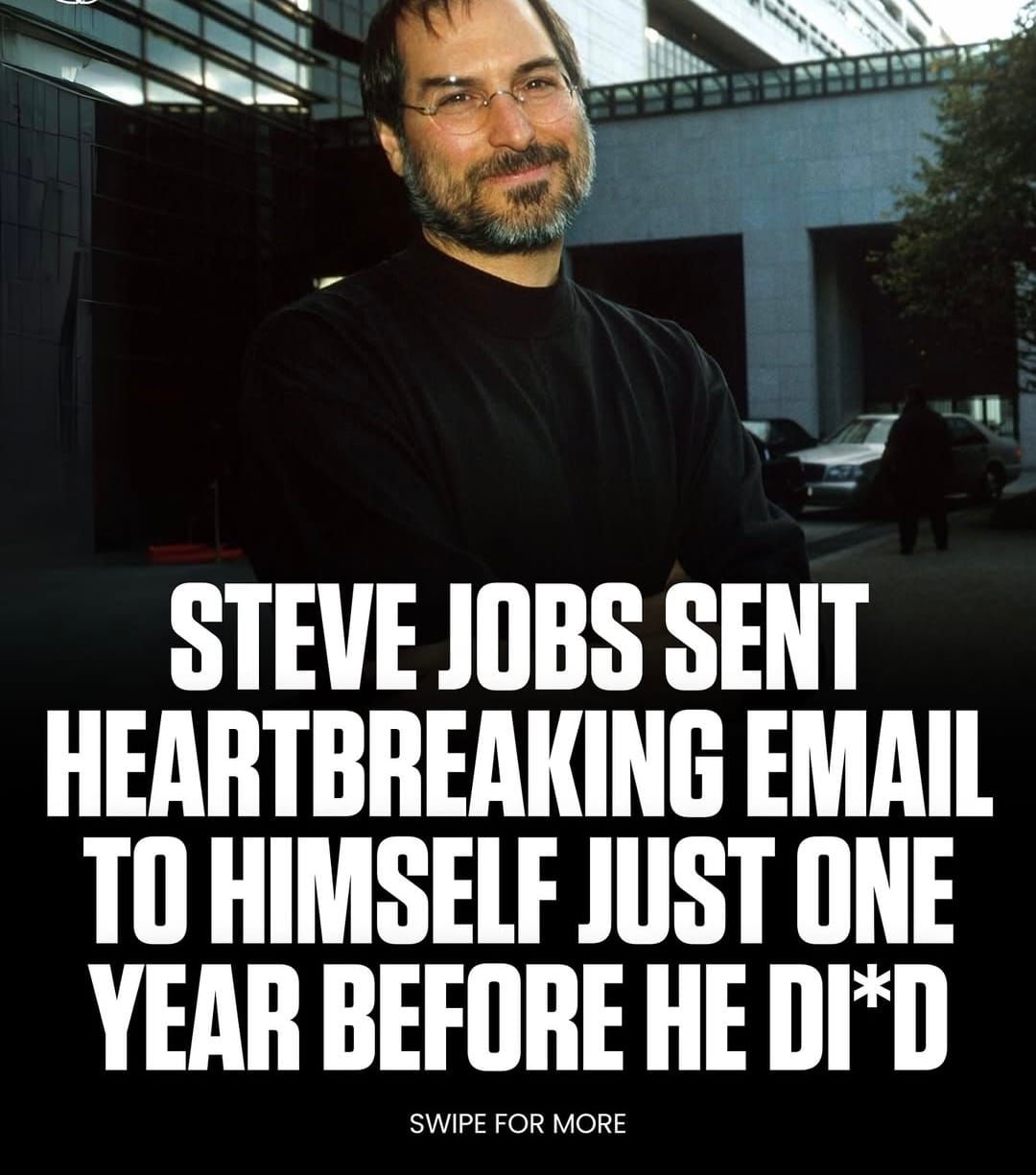
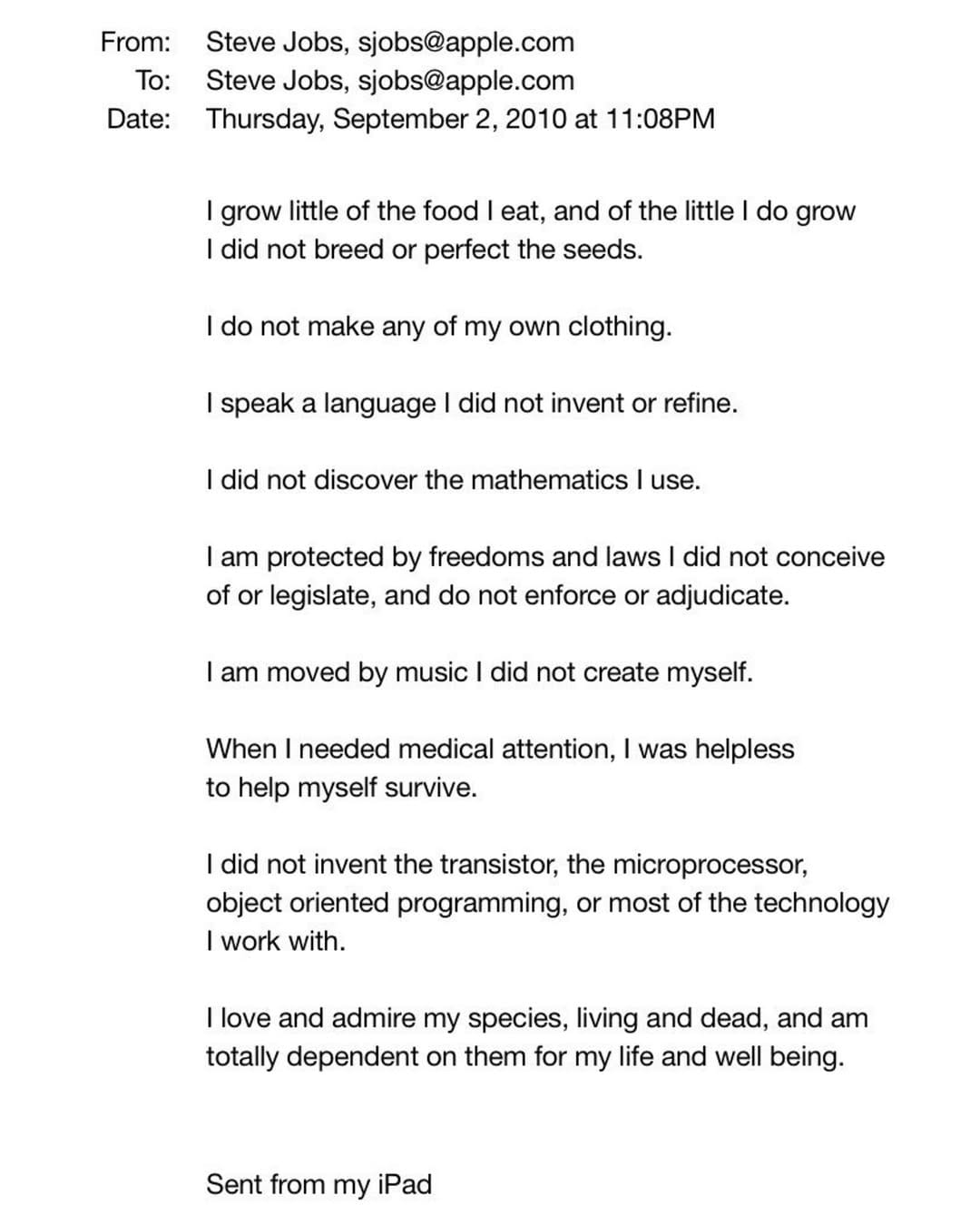
Here's what Steve Jobs understood that most AI evangelists miss: no algorithm writes the language you speak, no machine learning model invents the math you use, and no automation system creates the technology you depend on. In 2010, one year before his death, Jobs emailed himself a raw confession—he was powerless without everyone else. That's the opposite of the tech narrative we hear today.
Jobs admitted he didn't create language, mathematics, or technology. He relied on the collective human effort baked into every tool he wielded. Even at peak genius, he was downstream of thousands of years of human innovation. When illness hit, all his intelligence meant nothing. Doctors had skills he'd never have. That's humbling.
Why This Matters Now (More Than Ever)
We're drowning in AI hype. Automation will "solve everything." Algorithms will optimize away all friction. But Jobs' email from 2010 destroys that fantasy. The infrastructure that matters—language, meaning, trust, care—can't be automated. It's built on human judgment and relationship. A chatbot can't replace a doctor. Recommendation algorithms can't replace wisdom. Automation can amplify human effort, but it can't originate it.
His vulnerability was radical for a tech icon. He didn't pretend to be self-made. He acknowledged dependency as strength, not weakness. That mindset is exactly what's missing from our current AI-first culture. We're obsessed with what machines can do. We should be obsessed with what humans uniquely contribute.
The Real Work Isn't Coded
Jobs valued "the human spirit that made it all possible." Translation: the actual creative work—solving problems nobody's solved, imagining products nobody imagined, caring for people who need care—that's irreducibly human. Machines execute. Humans innovate. The future of work isn't about replacing humans with AI. It's about humans using AI to amplify what only they can create.
His email survived him by a decade. The technology he built? Updated constantly, deprecated, replaced. But his honest reflection on dependence, on the limits of individual brilliance, on the power of collective effort—that's timeless. That's what no algorithm will ever improve on.
What Jobs Wouldn't Say But Knew
If Jobs emailed himself today, he'd probably laugh at the "AI will do everything" crowd. He'd point out that every innovation he touched was built on layers of human work he inherited. He didn't invent electronics. He didn't invent software. He combined existing pieces in ways that felt alive. That creative synthesis? Still requires a human brain making judgment calls an algorithm can't make.
The takeaway isn't that technology doesn't matter. It's that technology without human intentionality is just noise. Jobs knew that better than almost anyone.
The Questions You're Probably Asking
Did Jobs actually write this email to himself, or is it fabricated?
The email is real, but details vary across sources. Jobs was introspective and did reflect on human dependency and mortality, especially as his health declined. What matters more than exact wording is the philosophy it represents—something Jobs genuinely believed.
How does this relate to AI and the future of work?
Jobs' insight directly challenges the "AI will automate away human jobs" narrative. He demonstrated that human creativity, judgment, and emotional intelligence remain irreplaceable. In the age of ChatGPT and automation, his email is a reminder that human-centered design and meaning-making can't be outsourced to algorithms. The future of work is about humans and AI collaborating, not AI replacing humans.
What would Jobs say about current AI hype?
Probably that automation is a tool, not a destiny. He'd likely advocate for using AI to amplify human creativity, not replace it. He'd push back against the fantasy that algorithms can think or feel or care—the very things that made his products beloved.
Can algorithms create meaning the way humans do?
No. Algorithms execute patterns. Humans create meaning. A language model can generate text; it can't decide what's worth saying. An optimization algorithm can find efficiency; it can't decide what's worth optimizing for. Jobs understood this distinction intuitively.
How do we apply this to modern product development?
Start with humans first. Let data and automation serve human insight, not replace it. Build teams where technologists work alongside designers, writers, and people who understand the actual problems being solved. That's the Jobs model.
Worth Reading Next
Check out our piece on why AI can't replace creative judgment for more on what machines still can't do. Or explore human-centered automation to understand how to build tech that actually serves people instead of replacing them.