
Why Is Jensen Huang Back in the Spotlight and What Does It Mean for Nvidia?
Nvidia CEO Jensen Huang is dominating search and news cycles again. Here’s why his latest moves are drawing global attention.Huang’s influence over the AI chip market continues to make every public appearance and statement a global news event.

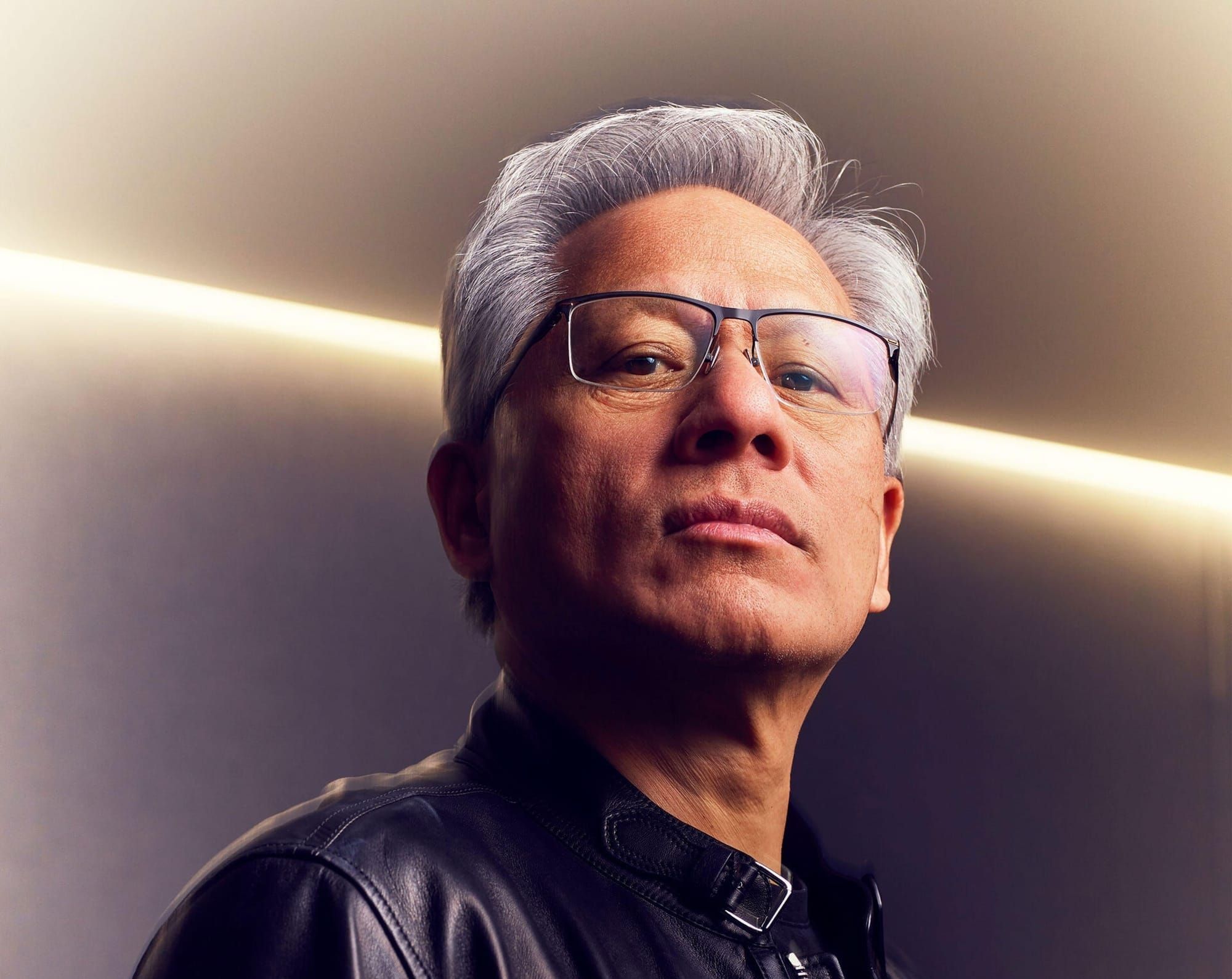
Why Is Jensen Huang Back in the Spotlight and What Does It Mean for Nvidia?
Jensen Huang is back as Nvidia's chief executive, but his return has not ended the controversy surrounding the world's most influential AI-chip company. Nvidia's board reinstated its co-founder on November 23, just 11 days after he resigned. The reversal followed an extraordinary dispute involving Alice Huang, Singapore-based Megaspeed International, U.S. concerns about advanced Nvidia chips reaching China, President Donald Trump and lawmakers demanding answers. A separate Reuters report published November 25 said the U.S. Justice Department had not formally investigated Jensen Huang and that investigators had found no evidence he acted for China or knowingly transferred sensitive technology. The central question now is bigger than who runs Nvidia: it is whether the company can maintain its global AI leadership while facing political, regulatory and corporate-governance scrutiny.
- Why Jensen Huang is back in the news
- The people, companies and institutions involved
- Key dates: the Jensen Huang and Nvidia timeline
- Who are Alice Huang and Megaspeed International?
- What the Justice Department has and has not established
- Why the dispute matters for U.S.-China chip policy
- What is happening inside Nvidia's business
- What happens next?
- Frequently asked questions
Why Is Jensen Huang Back in the News?
Jensen Huang returned to Nvidia's top job on November 23, 2026, after the company's board reversed its earlier decision to accept his resignation. The board's announcement followed an 11-day period in which Nvidia lost its long-time public leader, appointed chief financial officer Colette Kress as interim CEO and faced growing questions about export controls, national security and the independence of its directors.
The immediate controversy began with reports about Huang's personal relationships, including an alleged relationship with Alice Huang, a former executive at Singapore-based Megaspeed International. U.S. officials and media reports also examined whether Megaspeed had been involved in routing advanced Nvidia chips to Chinese companies in possible violation of U.S. export restrictions. Those are separate questions: allegations about a personal relationship do not, by themselves, prove that Nvidia technology was illegally transferred or that Jensen Huang acted on behalf of a foreign government.
Huang acknowledged being unfaithful to his wife in a message to Nvidia employees, according to reporting by Reuters and CBS News. He has not publicly confirmed that the relationship involved Alice Huang specifically. Reuters reported on November 25 that it had been unable to reach Alice Huang or independently confirm her alleged links to Chinese intelligence.
The story then became a political and corporate-governance issue. Donald Trump publicly supported Huang's return. Nvidia's board said it had received input from senior U.S. government officials before reinstating him. Members of Congress questioned whether that intervention compromised the board's independence and whether the company had adequately addressed national-security and export-control concerns.
Featured Tech & AI Hardware
Compare Nvidia GPUs, AI Workstations & Semiconductor Books on Amazon
Check Prices & Availability on AmazonWho Are the Main People, Companies and Institutions Involved?
This is not simply a story about one technology executive. The following people and organizations are central to the reported events and the decisions now facing Nvidia.
Key people
- Jensen Huang: Nvidia co-founder, president and CEO. He resigned on November 12 and was reinstated on November 23, 2026.
- Alice Huang (Huang Le): Former Megaspeed executive whose reported relationship with Jensen Huang and alleged links to Chinese intelligence became part of the controversy. The espionage allegation has not been established as fact.
- Colette Kress: Nvidia's executive vice president and chief financial officer. She served as interim CEO during Huang's absence and returned to her CFO responsibilities after his reinstatement.
- Harvey C. Jones: Nvidia board chair, former Synopsys executive and the director who announced the board's decisions during the leadership crisis.
- Donald Trump: U.S. president who publicly backed Huang's return and said his administration had concluded there was no national-security problem preventing reinstatement.
- JD Vance: U.S. vice president. Reuters reported that Trump and Vance conveyed the Justice Department's assessment to Nvidia's board.
- Todd Blanche: U.S. attorney general. He said the Justice Department had found no evidence that Nvidia was anything other than a compliant corporate citizen, while investigations involving customers continued.
- Marco Rubio: U.S. secretary of state. Reporting by The New York Times, summarized by other outlets, said Rubio briefed Trump about intelligence concerning Alice Huang.
- Scott Bessent: U.S. treasury secretary. He publicly questioned Nvidia's export-control compliance culture and said the board should consider an outside CEO.
- Tom Cotton: Republican senator from Arkansas and chair of the Senate Intelligence Committee. He called for stronger safeguards against advanced chips reaching China.
- Elizabeth Warren: Democratic senator who criticized the board's reinstatement decision and said Nvidia's leadership still owed Congress answers.
- Kirsten Gillibrand: Democratic senator who called for Huang and Nvidia's board to testify publicly.
- Rob Bonta: California attorney general. The California Department of Justice has sought information from Nvidia about possible chip or information transfers to China and potential investor disclosures.
- Kimberly Powell: Nvidia vice president of healthcare, named in reporting about a separate alleged relationship with Huang. The claim is attributed to reporting and is not presented here as an independently established finding.
- Joon Kim: Former acting U.S. attorney and partner at Wachtell, Lipton, Rosen & Katz, reported as the independent counsel retained for Nvidia's internal review.
- Kang Wei: Alice Huang's husband and business associate, named in reporting about Megaspeed-related business activities.
- Huang Yu: Alice Huang's sister, whose linked company was reported to have held an ownership stake in Shanghai Century Litong.
- James Tan (Tan Yong Pong): Singaporean businessman associated with an entity that acquired Megaspeed shares, according to corporate-record reporting.
- Josephine Teo: Singapore's minister for digital development and information, who raised the Megaspeed matter with U.S. Deputy Secretary of State Christopher Landau.
- Christopher Landau: U.S. deputy secretary of state involved in discussions with Singapore about the Megaspeed matter.
- Howard Lutnick: U.S. commerce secretary, whose department administers export-control policy and whose handling of chip restrictions drew criticism from lawmakers.
- Mike Johnson: Speaker of the U.S. House of Representatives, who commented on congressional support for tighter chip-export limits.
- Tim Scott: Republican senator and chair of the Senate Banking Committee, who called for Huang and Commerce Secretary Howard Lutnick to testify.
- Hakeem Jeffries: Democratic leader in the U.S. House of Representatives, who called for defense legislation containing restrictions on chip sales to China.
- Chuck Schumer: Democratic Senate leader who urged Congress to pass the AI Overwatch Act.
- Kevin Cramer: Republican senator who publicly called for Huang's resignation before the CEO stepped down.
- John Curtis: Republican senator who questioned Commerce Secretary Howard Lutnick's reported handling of export-control decisions.
- Richard Blumenthal: Democratic senator who criticized Lutnick over the export-control controversy.
- Xi Jinping: President of China; China's policy response and push for domestic semiconductor alternatives are part of the wider U.S.-China dispute.
- Clément Delangue, Julien Chaumond and Thomas Wolf: Co-founders of Hugging Face, the open-model platform Nvidia agreed to acquire in September 2026.
- Elon Musk and Tim Sweeney: Public figures reported to have signed an online petition calling for Huang's return.
Companies and organizations
- Nvidia Corporation (NASDAQ: NVDA): The U.S. semiconductor and AI-computing company at the center of the story.
- Megaspeed International: Singapore-based cloud and AI-infrastructure company that has faced scrutiny over alleged advanced-chip transfers. Megaspeed denies wrongdoing and says it complies with applicable laws.
- Super Micro Computer: An Nvidia customer whose business has also been the subject of U.S. investigations involving suspected chip-smuggling routes to China.
- U.S. Department of Justice (DOJ): The federal department whose investigations into Nvidia customers informed the assessment described by Reuters on November 25.
- Federal Bureau of Investigation (FBI): The U.S. law-enforcement agency involved in national-security briefings and inquiries described in media reports.
- U.S. Department of Commerce and Bureau of Industry and Security (BIS): The agencies responsible for administering and enforcing U.S. export controls on sensitive technology.
- U.S. Congress: The House and Senate are considering stronger oversight of advanced AI-chip exports and have sought answers from Nvidia.
- Singapore government: Authorities investigated Megaspeed-related server-purchase declarations and questioned Alice Huang. Singapore said the investigation did not establish that she committed a crime.
- AMD: Nvidia's major U.S. rival in advanced AI accelerators and a company also affected by the U.S. export-control debate.
- Huawei: A Chinese technology company whose AI chips are part of Beijing's effort to reduce reliance on U.S. semiconductor suppliers.
- Synopsys: The chip-design software company formerly led by Nvidia board chair Harvey C. Jones.
- Hugging Face: The open-model and developer platform Nvidia agreed to acquire for approximately $12.93 billion in September 2026. The transaction remains subject to regulatory approvals and was expected to close in the first half of 2027.
- Shanghai Century Litong: Chinese cloud-computing company reported to have been designated a preferred Nvidia cloud partner in 2023.
- 7Road International: The Singapore-incorporated predecessor that changed its name to Megaspeed International in March 2023.
- Swiftdata and Huang Le Limited: Corporate entities mentioned in reporting about Megaspeed's share transfers and ownership history.
- NetThunder: Technology company whose social-media post reportedly showed Jensen Huang and Alice Huang at a Taipei gathering in June 2024.
- Speedmatrix: Megaspeed's Malaysian subsidiary, named in reporting about imports of equipment containing Nvidia chips.
- Alibaba: The Chinese technology group named in reporting about a proposed Southeast Asian data-center project associated with Alice Huang and Kang Wei.
- Coherent: U.S. photonics and materials company at whose Texas facility Jensen Huang attended a manufacturing-expansion groundbreaking in June 2026.
- Wachtell, Lipton, Rosen & Katz: The law firm reported to be advising Nvidia's independent board investigation.
- Center for American Progress, Princeton University and Asia Society Policy Institute: Policy and research institutions whose experts have commented on the export-control and U.S.-China implications.
Jensen Huang and Nvidia: Key Dates in Chronological Order
The timeline below separates earlier developments involving Megaspeed from the November 2026 leadership crisis. Some entries describe allegations or media reporting; they should not be read as proof of wrongdoing.
- 2015: Megaspeed's predecessor, 7Road International, is incorporated in Singapore. Alice Huang's earlier business history is also traced in reporting to investment activities in China.
- March 2023: 7Road International changes its name to Megaspeed International as it expands its cloud-computing and AI-infrastructure business. Alice Huang becomes a senior executive.
- October 2023: Nvidia reportedly designates Shanghai Century Litong as a preferred cloud partner, according to reporting cited by CBS News. The relationship is relevant to questions about access to Nvidia hardware in China.
- February 2025: Singapore opens an investigation involving Megaspeed and other companies over possible false declarations connected with server purchases. Singapore later says there was insufficient evidence that Alice Huang committed a crime.
- May 22, 2025: Video and photographs show Jensen Huang and Alice Huang at a dinner in Taipei, Taiwan, during the period around the Computex technology event.
- August 30, 2025: Megaspeed says Alice Huang left the company. The company later states that she has no current role.
- September 2–3, 2026: Nvidia enters a definitive agreement to acquire Hugging Face for approximately $12.93 billion. The SEC filing describes about $11.9 billion payable to stockholders and up to $1 billion in equity-based employee retention awards. The deal is expected to close in the first half of 2027, subject to regulatory approvals.
- October 29, 2026: The New York Times reports that U.S. intelligence officials were concerned Alice Huang may have been acting on behalf of Chinese intelligence and had a close relationship with Jensen Huang. These claims remain allegations.
- November 8, 2026: Jensen Huang tells Nvidia employees he had been unfaithful to his wife. Nvidia announces an independent board investigation into reports that its CEO was targeted by a foreign intelligence effort.
- November 9–10, 2026: The controversy expands into Washington. Lawmakers raise export-control concerns, and reports examine whether advanced Nvidia chips may have reached Chinese firms through intermediaries.
- November 11, 2026: Nvidia's board accepts Huang's resignation, effective immediately, according to the company's SEC filing. Colette Kress is appointed interim CEO and Harvey C. Jones becomes the board's first chair.
- November 12, 2026: Nvidia publicly announces the CEO transition. Huang leaves the CEO role and the board. Kress takes over as interim CEO while directors begin considering permanent successors.
- November 15, 2026: Megaspeed says Alice Huang left on August 30, 2025, denies wrongdoing and announces an internal investigation led by outside lawyers.
- November 16, 2026: The Trump administration announces additional restrictions and licensing requirements affecting certain advanced-chip shipments and overseas data centers serving Chinese companies. Singapore says it will continue discussions with the United States about Megaspeed.
- November 17, 2026: Nvidia reports quarterly results while Colette Kress is interim CEO. The company reports $116 billion in total quarterly revenue and $108 billion in data-center revenue. Nvidia also announces expanded supply-chain commitments with companies including Amkor, Foxconn, Kinsus, Samsung Electro-Mechanics, SPIL and TSMC.
- November 17, 2026: Jensen Huang releases a public statement acknowledging serious personal mistakes and saying he will cooperate with the board's independent investigation.
- November 22–23, 2026: Nvidia's board votes unanimously to reinstate Huang as president, CEO and a director. The company says it received input from senior U.S. government officials and believes his return poses no national-security risk.
- November 25, 2026: Reuters reports that the Justice Department did not formally investigate Huang and that investigations into Nvidia customers found no evidence Huang acted as an agent of China or knowingly transferred sensitive technology. Reuters also reports that Huang is expected to face congressional questioning the following week.
Who Is Alice Huang and What Is Megaspeed International?
Alice Huang, also known by the Chinese name Huang Le, is a businesswoman who held senior roles at Megaspeed International, a Singapore-based cloud-computing and AI-infrastructure company. Her reported relationship with Jensen Huang became a central part of the controversy after U.S. intelligence concerns about possible links to Chinese intelligence were reported in late October 2026.
It is important to distinguish the claims. U.S. media reports described Alice Huang as a suspected intelligence-linked figure, but the allegation has not been established in court. The Associated Press reported that Singapore authorities questioned her during an investigation into Megaspeed-related server-purchase declarations and later found insufficient evidence that she committed a crime. The Singapore government said its investigation did not concern espionage. Beijing rejected the spy allegations as unsubstantiated.
Megaspeed has also been scrutinized over allegations that advanced Nvidia chips were routed to Chinese companies in ways that could circumvent U.S. export restrictions. The company has denied wrongdoing, described its business as legitimate and lawful, and said it cooperated with inspections by the U.S. Commerce Department's Bureau of Industry and Security. On November 15, Megaspeed said Alice Huang had left the company on August 30, 2025, and that outside lawyers would lead an internal review.
The corporate history is complicated. Megaspeed began as 7Road International, was renamed in March 2023 and has been linked in reporting to other entities and supply-chain businesses. Reports have also mentioned Swiftdata, Huang Le Limited, Shanghai Century Litong, NetThunder and Megaspeed's Malaysian subsidiary Speedmatrix. CBS News also reported that Kang Wei, Alice Huang's husband and business partner, was detained in China in February 2026 in connection with suspected stock manipulation, citing sources to Caixin. Those links are relevant to the questions investigators and reporters have examined, but they do not establish that Nvidia knowingly supplied chips for illegal onward transfer.
What Has the U.S. Justice Department Actually Found?
A major development arrived on November 25. Reuters reported, citing people familiar with the matter, that the U.S. Justice Department had not opened a formal investigation into Jensen Huang before his reinstatement. Attorney General Todd Blanche had concluded, based on investigations involving two Nvidia customers, Super Micro Computer and Megaspeed International, that there was no evidence Huang had broken the law, acted as an agent of China or knowingly transferred sensitive technology or information to China.
Reuters also reported that Nvidia was not a target of those customer investigations and had cooperated by providing documents, interviews and other information. The assessment was described as subject to change while the investigations continue. Reuters said U.S. intelligence agencies had gathered information about Alice Huang, but officials had no details that warranted a counterintelligence investigation into Jensen Huang himself.
That distinction matters. The absence of a formal investigation into Jensen Huang is not the same as a final ruling on every question involving Megaspeed, export controls or Nvidia's business relationships. Nor does it close the independent investigation opened by Nvidia's board. The company has said that investigation will continue to its conclusion and that it is establishing a separate board committee focused on national security and export-control compliance.
Nvidia's November 23 announcement also said the company would begin a search for a chief compliance officer to oversee compliance across the business and report to the board's Nominating and Corporate Governance Committee.
Why Is the Jensen Huang Story Now a U.S.-China Chip Dispute?
Nvidia designs some of the world's most sought-after processors for training and running advanced AI systems. Those chips are strategically important because they power data centers, large language models, scientific computing and military-relevant applications. Washington has therefore used export controls to limit China's access to the most advanced U.S. semiconductor technology.
The Trump administration has taken a more commercially flexible position than the previous Biden administration on some Nvidia chip sales to China. Reuters reported that Trump approved sales of Nvidia's H200 AI chips to China in December 2025. Supporters of sales argue that keeping Chinese customers dependent on U.S. technology could protect American influence. Critics argue that advanced chips could strengthen China's AI and military capabilities or reach restricted users through intermediaries.
That debate involves more than Nvidia. Advanced AI accelerators are supplied by Nvidia and rival AMD, while Chinese companies such as Huawei are developing domestic alternatives. U.S. officials are also concerned about chip shipments routed through third countries, including Singapore and Malaysia, and about overseas data centers that may serve Chinese AI firms.
Reuters reported on November 25 that three bills under consideration in Congress could tighten oversight:
- AI Overwatch Act: would give Congress a greater role in reviewing advanced-chip exports.
- Chip Security Act: would require companies to track chips to help detect smuggling and diversion.
- MATCH Act: would pressure U.S. allies to restrict exports of chipmaking equipment to China.
Senator Tom Cotton has argued that chip smuggling and remote access could allow China to obtain advanced computing capacity. Senators Elizabeth Warren and Kirsten Gillibrand have separately called for accountability and public testimony. On the China side, President Xi Jinping's government has an incentive to reduce dependence on U.S. suppliers and accelerate domestic chip development. Analysts quoted by Reuters said tighter restrictions could push Beijing further toward Chinese-made alternatives, including Huawei technology.
Reader Recommendations
Explore Top-Rated AI Graphics Cards, Computing Gear & Chip War Books
Browse Deals on AmazonWhat Is Happening Inside Nvidia Beyond the Leadership Crisis?
The leadership story is unfolding while Nvidia is reporting enormous demand for AI computing. Its November 17, 2026, quarterly earnings call was led by interim CEO Colette Kress, with board chair Harvey C. Jones also participating. Nvidia reported total revenue of $116 billion for the quarter, up more than 100% year over year, and data-center revenue of $108 billion.
The company also said its Vera Rubin platform had begun volume shipments in the third quarter. The platform generated nearly $20 billion in its first quarter of production shipments, according to the earnings transcript. Nvidia said it was raising its fiscal 2028 revenue-growth outlook to approximately 75% year over year. These are company-reported figures, not independent forecasts.
Nvidia's supply-chain partners
On November 17, Nvidia announced expanded manufacturing commitments with several suppliers. The named partners include:
- TSMC: wafer manufacturing and advanced packaging, including 5-nanometer, 3-nanometer and CoWoS technologies.
- Foxconn: global manufacturing support for next-generation GPU and networking platforms.
- Amkor Technology: advanced packaging expansion in Arizona and South Korea.
- Kinsus Interconnect Technology: plans to expand advanced ABF substrate capacity dedicated to Nvidia by more than 3.5 times current levels, with additional capacity targeted for 2028.
- Samsung Electro-Mechanics: expanded substrate supply and production capabilities in South Korea.
- Siliconware Precision Industries (SPIL): expanded advanced packaging capacity in Taiwan, with additional contracted capacity targeted by mid-2029.
Nvidia's operations executive Debora Shoquist described the supply chain as a strategic advantage. The announcement also included comments from Kinsus CEO Scott Chen, Samsung Electro-Mechanics CEO Duck-Hyun Chang, Amkor CEO Kevin Engel, SPIL chairman and CEO C.W. Tsai, and TSMC senior vice president Kevin Zhang. The agreements show why Nvidia's business is not simply about designing GPUs: it depends on a global network of foundries, packaging specialists, substrate suppliers and manufacturing partners.
Nvidia's $12.93 billion Hugging Face deal
Another major strategic development is Nvidia's September 2, 2026, definitive agreement to acquire Hugging Face, the open-model developer platform founded by Clément Delangue, Julien Chaumond and Thomas Wolf. Nvidia's SEC filing put the proposed purchase price at approximately $11.9 billion for Hugging Face stockholders, plus up to approximately $1 billion in equity-based retention awards for employees joining Nvidia. The transaction is expected to close in the first half of 2027, subject to customary conditions and regulatory approvals. It has not yet been completed.
Jensen Huang said Hugging Face would remain open to developers using different models, frameworks, cloud providers and computing platforms, rather than requiring Nvidia hardware. That promise is strategically important: Hugging Face hosts a large community of developers and open models, while Nvidia wants to extend its influence from chips into the software and developer ecosystem. The deal also raises questions about how an AI-chip supplier can own a platform used by developers who build for competing hardware.
AI software, cloud customers and competition
Nvidia's position is also being shaped by the companies building and deploying AI models. The November 17 earnings transcript named OpenAI and Anthropic among the frontier AI developers driving demand for computing capacity. Nvidia said agentic workloads were becoming a larger share of AI usage and described its strategy as a full platform spanning chips, networking, systems and software.
Competition is increasing. Amazon, Microsoft and Google are investing in their own custom AI chips, while AI developers and specialist chip companies are exploring alternatives to Nvidia GPUs. AMD remains a direct competitor in data-center accelerators. This matters because large cloud customers may want more than one source of computing hardware, even while continuing to buy Nvidia systems.
The company's latest supply agreements, its Vera Rubin shipments and its reported agreement to acquire Hugging Face all point to a strategy that extends beyond selling individual processors. Nvidia wants to be embedded across the infrastructure, software and developer ecosystem used to build and operate AI systems.
What Happens Next for Jensen Huang and Nvidia?
Three tests now face Nvidia. First, the board's independent investigation must reach a conclusion and explain how it will strengthen governance and compliance. Second, U.S. lawmakers may seek testimony from Huang and other executives as Congress considers new controls on advanced-chip exports. Third, Nvidia must convince customers, investors and regulators that its supply chain can meet enormous demand without creating unacceptable security or compliance risks.
Huang's return gives Nvidia back its best-known leader, but it does not make the underlying questions disappear. The board has reinstated him while keeping its investigation open. The Justice Department's reported assessment is significant, but investigations involving Nvidia customers continue, and export-control policy remains politically contested.
For the AI industry, the consequences reach well beyond one CEO. Nvidia's ability to supply the world's data centers is tied to U.S. policy toward China, the manufacturing capacity of Asian partners such as TSMC and Samsung Electro-Mechanics, the growth plans of cloud companies and the competitive response from AMD and Huawei. The next chapter will be decided not only in Nvidia's boardroom, but also in Washington, Singapore and the global semiconductor supply chain.
Build or Upgrade Your Setup
Shop Nvidia GeForce Graphics Cards, AI Accelerators & Tech Essentials
View on AmazonFAQ: Jensen Huang, Nvidia, Alice Huang and the China Chip Controversy
Why did Jensen Huang resign from Nvidia?
Jensen Huang resigned as Nvidia's CEO and board member on November 12, 2026, after reports about extramarital relationships and concerns involving Alice Huang, Megaspeed International and possible Chinese access to advanced AI chips. Huang acknowledged infidelity but has not publicly confirmed a relationship with Alice Huang specifically.
When was Jensen Huang reinstated as Nvidia CEO?
Nvidia announced on November 23, 2026, that its board had unanimously reinstated Huang as president, CEO and a board member. Colette Kress continued as Nvidia's executive vice president and chief financial officer.
Who is Alice Huang?
Alice Huang, also known as Huang Le, is a businesswoman and former senior executive at Singapore-based Megaspeed International. Her reported relationship with Jensen Huang and allegations about possible links to Chinese intelligence became part of the Nvidia controversy. The espionage allegation has not been established as fact.
What is Megaspeed International accused of doing?
Megaspeed has faced scrutiny over allegations that advanced Nvidia chips were routed to Chinese companies in ways that could breach U.S. export restrictions. Megaspeed denies wrongdoing, says it operates lawfully and says it has cooperated with U.S. authorities. Singapore said its own investigation did not establish that Alice Huang committed a crime.
Did the Justice Department investigate Jensen Huang?
Reuters reported on November 25, 2026, that the Justice Department did not open a formal investigation into Jensen Huang before his reinstatement. Sources told Reuters that investigations into Nvidia customers found no evidence Huang acted as an agent of China or knowingly transferred sensitive technology. Those customer investigations were continuing.
Did Nvidia's board end its investigation?
No. Nvidia's November 23 announcement said the independent-director committee's investigation would continue to completion. The company also announced a separate National Security and Export Control Committee and plans to appoint a chief compliance officer.
Who is Colette Kress?
Colette Kress is Nvidia's executive vice president and chief financial officer. She served as interim CEO after Huang's resignation on November 12 and continued as CFO after the board reinstated him on November 23.
Why are Donald Trump and Congress involved?
Donald Trump publicly supported Huang's return, and Nvidia said its board received input from senior U.S. government officials. Lawmakers from both parties have raised questions about national security, export controls and the board's independence. Congress is also considering bills that could give lawmakers more oversight of advanced-chip exports to China.
Which companies are Nvidia's main competitors in AI chips?
AMD is Nvidia's principal U.S. rival in advanced AI accelerators. Google, Amazon and Microsoft are also developing custom chips for their own AI and cloud infrastructure. China's Huawei is developing domestic alternatives as Beijing seeks to reduce reliance on U.S. technology.
What does Jensen Huang's return mean for Nvidia?
His return restores the company's co-founder to the CEO role, but Nvidia still faces an internal investigation, congressional scrutiny, export-control questions and pressure to demonstrate strong compliance. The company's AI-chip demand and supply-chain expansion continue while those issues are addressed.
Sources and Further Reading
- Reuters, November 25, 2026: Justice Department did not open a probe into Jensen Huang before reinstatement
- Reuters, November 25, 2026: Huang's return and the Washington fight over China's chip access
- The Associated Press, November 25, 2026: Nvidia board scrutiny after reinstating Huang
- The Associated Press: Megaspeed's statement on Alice Huang and its internal investigation
- Nvidia, November 12, 2026: CEO transition announcement
- Nvidia SEC filing and November 23, 2026 reinstatement announcement
- CBS News, November 23, 2026: Timeline of Jensen Huang's resignation and return
- Nvidia, November 17, 2026: Supply-chain commitments with manufacturing partners
- Nvidia SEC filing, September 2026: Definitive agreement to acquire Hugging Face
- Jensen Huang's announcement of the proposed Hugging Face acquisition