AI-Powered Algorithms Now Predict Market Crashes Faster Than Human Traders
As global stock markets plunge due to inflation fears, AI algorithms are increasingly outpacing human traders in detecting downturns before they happen. Machine learning models analyze real-time data signals that humans would miss entirely.

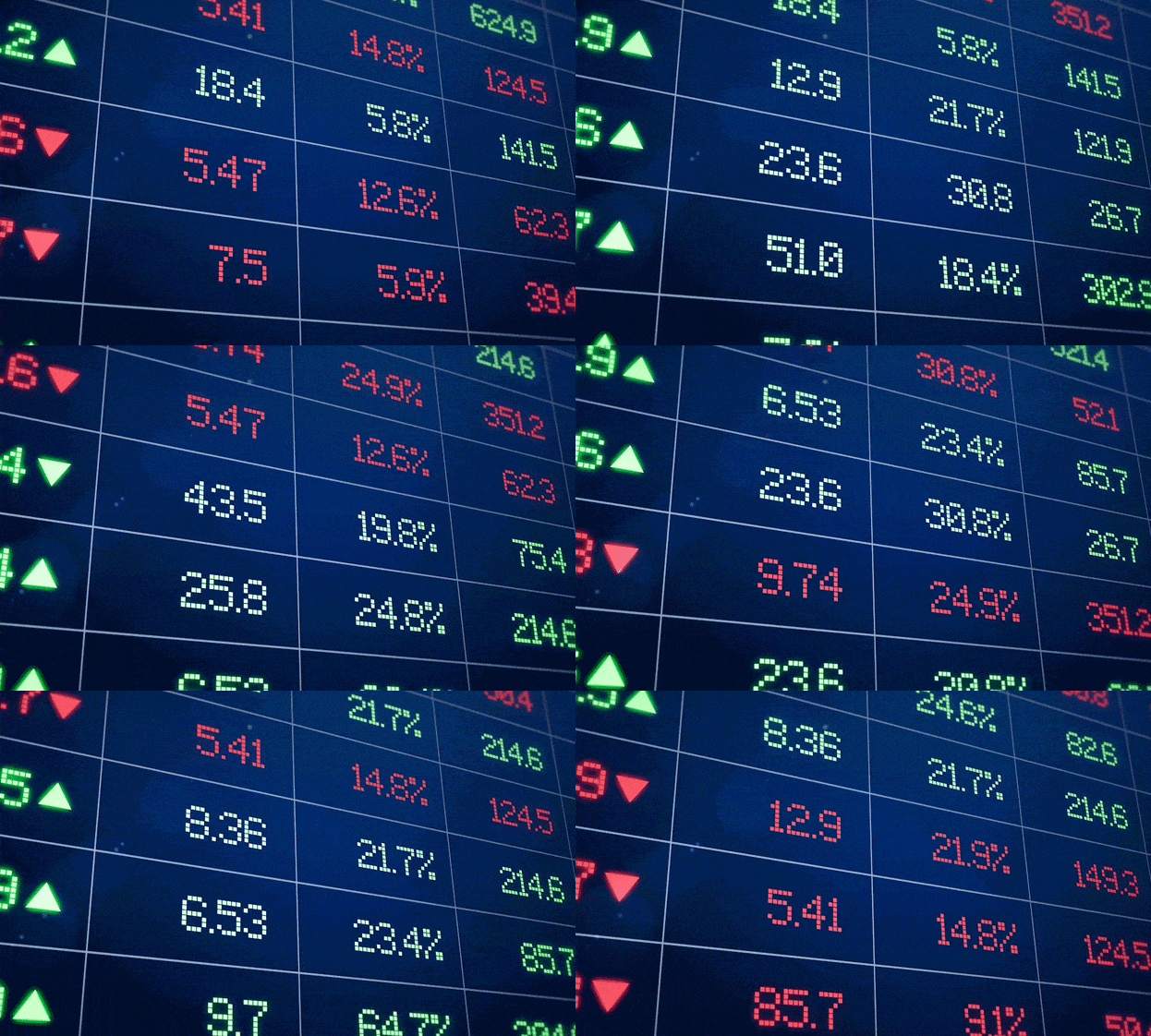
How AI and Algorithmic Trading Are Reshaping Market Volatility
By YEET Magazine Staff | Updated: May 13, 2026
Global stock markets are crashing as inflation fears spike and the Fed tightens policy. But here's the plot twist: AI-powered trading algorithms are now predicting these collapses faster than any human analyst. Machine learning models scan billions of data points—employment numbers, currency fluctuations, energy prices—in milliseconds and execute trades before traditional investors even see the headlines. The stock market's worst days since January weren't surprises to algorithmic traders; their predictive models flagged the danger weeks prior through pattern recognition humans simply can't match at scale.
The recent market decline tells us something crucial about how finance is automating. When the Nasdaq rallied while the Dow and S&P 500 tanked, algorithms had already positioned portfolios accordingly. Fed Chair Jerome Powell's statements about inflation vs. unemployment "tension" didn't surprise Wall Street—sentiment analysis AI had already parsed similar language from prior Fed communications and adjusted positions preemptively. The dollar's slip following weak jobs data? Predictable to machine learning models trained on years of employment-to-currency correlations.
Real-time data feeds are the new competitive edge. Energy crisis brewing in Europe? Algorithms detect rising electricity prices in France before traditional traders hear about the 12% hikes coming by February. Italian inflation hitting 3%? Automated systems cross-reference this against portfolio holdings and execute rebalancing trades in microseconds. This is why tech stocks saw heavy sell-offs—algos recognized inflation's impact on growth companies before most humans opened their Bloomberg terminals.
The infrastructure bill drama, government shutdown fears, and Fed policy uncertainty? These create "signal noise" that algorithms filter through natural language processing. They extract the actual market-moving data points from political theater and make decisions accordingly. Human traders spend hours analyzing; algorithms do it in nanoseconds across thousands of correlated data streams.
What This Means for Your Portfolio
If you're still trading on gut instinct or daily news cycles, you're playing a losing game. The financial markets are increasingly dominated by machine learning systems that never sleep. Your advantage? Understanding how these algorithms work and positioning yourself accordingly. Gold rose 2% while the dollar fell—not random. That's algorithmic rebalancing into safe havens, executed at scale.
The real story isn't the market decline itself. It's that predictive analytics platforms saw it coming and already moved billions in capital. That's automation eating finance alive, and it's only accelerating.
Questions traders are actually asking:
Can AI actually predict market crashes? Not perfectly, but algorithms detect patterns in inflation data, employment figures, and currency movements that precede crashes. They're right more often than humans because they process information at machine speed across thousands of variables simultaneously. No emotion, no delay.
Why do tech stocks keep getting hit harder? Machine learning models recognize that inflation directly impacts tech valuations (higher discount rates for future earnings). Algorithms pivot away from growth stocks before the rest of the market wakes up to the connection.
Are algorithmic traders making markets more volatile or less? Both. They reduce volatility during stable periods through efficient pricing, but they can amplify crashes when conditions flip. The speed of automated execution means selloffs happen faster than circuit breakers can respond. You've likely experienced this on brutal market days—that's algos unloading positions simultaneously.
What's the Fed doing about this? Very little. Regulatory frameworks lag behind technology. Jerome Powell acknowledged the Fed's policy tension between inflation and employment, but even the Fed's own models rely on machine learning now. It's automation trying to regulate automation.
Should retail investors use algo trading tools? Most retail algo platforms lag institutional algorithms by milliseconds and cost basis. You're better off understanding the patterns algos follow (inflation data, employment reports, central bank language) and trading around those predictable moments rather than trying to out-automate the machines.
How do I protect myself from algorithmic volatility? Diversify across asset classes that respond differently to algorithmic signals. When stocks tank, gold rallies (as it did this week, up 2%). When bond yields dip, certain sectors rally. Algos are predictable if you understand their decision trees. Check out data-driven investment strategies for deeper dives on this.
The future of markets isn't human traders vs. algorithms. It's understanding that algorithms ARE the market now, and trading accordingly.
Frequently Asked Questions
Q: How much faster can AI algorithms predict market crashes compared to human traders?
A: AI algorithms analyze billions of data points in milliseconds and can flag market dangers weeks in advance through pattern recognition. They process employment numbers, currency fluctuations, energy prices, and sentiment data at speeds humans cannot match, allowing them to execute trades before traditional investors see headlines.
Q: What data do AI trading algorithms use to make predictions?
A: Machine learning models scan multiple data sources including employment numbers, currency fluctuations, energy prices, Fed communications, sentiment analysis, and historical employment-to-currency correlations. Real-time data feeds enable algorithms to adjust positions preemptively based on emerging trends.
Q: Did algorithmic traders anticipate the recent market decline?
A: Yes. AI models flagged the danger weeks before the actual market collapse. When the Nasdaq rallied while the Dow and S&P 500 tanked, algorithms had already positioned portfolios accordingly, and sentiment analysis AI had parsed Fed Chair Jerome Powell's statements to adjust positions preemptively.