AI Is Automating the 'Clean Girl' Aesthetic: How Algorithms Are Making 'Effortless' Beauty Data-Driven
Artificial intelligence is reshaping beauty standards by automating the 'clean girl' aesthetic, transforming what once seemed effortless into a data-driven trend. Algorithms now analyze and predict beauty preferences, creating a feedback loop that standardizes minimalist aesthetics across social pla

By YEET Magazine Staff, YEET Magazine
Published November 23, 2025
Yes, the minimal makeup trend is absolutely the clean girl aesthetic — and it's getting a major AI upgrade. In 2025, AI-powered skin analysis apps, automated beauty routines, and algorithm-driven product recommendations are transforming how we achieve that "effortless" glow. The irony? Looking naturally flawless now requires machine learning to tell you exactly which serums to use, when to apply them, and how your skin compares to thousands of data points. The clean girl aesthetic started as understated elegance — glossy lips, dewy skin, brushed-up brows — but it's evolving into something smarter, more personalized, and weirdly more authentic. Welcome to the era of algorithmic beauty, where AI doesn't just suggest products; it predicts your skin's future.
What Is the Clean Girl Aesthetic, Anyway?
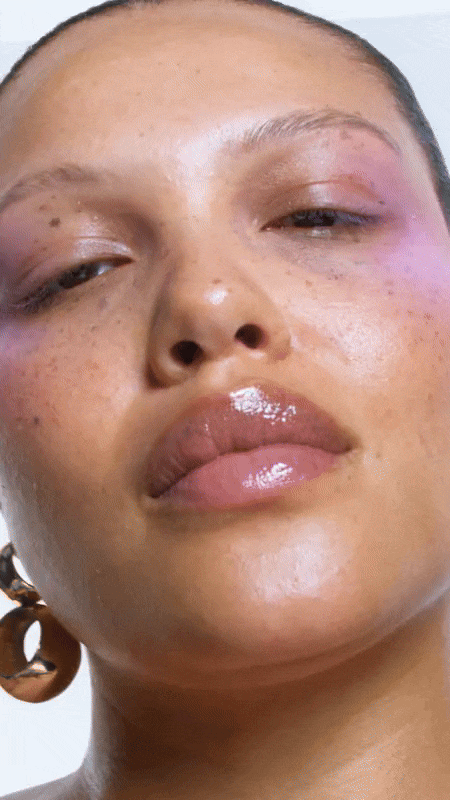
The clean girl look is all about understated elegance. No heavy contouring or bold lipsticks — just glossy lips, lightly brushed brows, and dewy, healthy-looking skin. It's the "I woke up like this" vibe, except you definitely didn't. The goal isn't zero makeup but enhancing what's already there. Less is more, but only if "less" is perfectly curated.
It's not just about beauty — it's a lifestyle. Well-kept routines, a wellness mindset, thoughtful wardrobe choices, and a minimalist, neutral palette. Think of it as Marie Kondo-ing your face. But here's what's changed: thanks to AI, achieving that "effortless" look is now backed by data science. Algorithms analyze your unique skin profile and generate personalized routines that actually work, eliminating the guesswork that plagued previous generations.
The clean girl aesthetic represents a shift away from heavy makeup trends and toward transparency — both in products and in how we approach beauty. It's authentic, sustainable, and increasingly, it's intelligent. AI is making this aesthetic more attainable than ever by removing the barrier between aspirational beauty and real results.
How AI Is Automating the "Effortless" Look
Here's where it gets interesting: achieving that natural glow is now a data science project. And honestly? It's working.
AI Skin Analysis Tools — Apps powered by computer vision scan your face and tell you exactly what's happening at the cellular level. Pores too big? Hydration at 67%? Melanin distribution uneven? The algorithm knows. Apps like Olay's Skin Advisor and Estée Lauder's virtual consultants use deep learning to map your face, identify problem areas in seconds, and generate customized treatment plans. These systems now process millions of facial scans, learning patterns invisible to the human eye. The technology uses neural networks trained on diverse skin types to ensure accuracy across all ethnicities and skin conditions.
Machine learning models can now detect the earliest signs of dehydration, inflammation, and oxidative stress before you even feel it. This predictive capability means your AI beauty assistant isn't just solving current problems — it's preventing future ones. Users report seeing measurable improvements within weeks because their routines are optimized at the molecular level.
Personalized Foundation Matching Through Computer Vision — Beauty brands are using machine learning to create custom foundation shades and tinted moisturizers tailored to your exact undertone, skin texture, and lighting preferences. Upload a selfie under different conditions, and AI algorithms analyze your complexion against a database of thousands of shade variations. Brands like Shade DNA and ModiFace's AI foundation matcher are replacing traditional foundation counters with virtual consultants that achieve 95%+ accuracy on first try.
These systems use spectral analysis to determine your true undertone, moving beyond the outdated warm/cool/neutral binary. The AI evaluates how light reflects off your skin, your natural melanin distribution, and even vascular patterns to recommend foundations that blend seamlessly. This technology has democratized access to professional color-matching that previously only existed in high-end beauty counters.
Automated Skincare Routines — Gone are the days of randomly applying products in random order. AI-driven skincare apps now create step-by-step protocols based on your skin's current state, the season, humidity levels, UV index, and even your stress levels. Some apps use IoT devices to track skin hydration and oil production in real-time, adjusting your routine daily. Smart mirrors analyze your face each morning and recommend which products you actually need that day, eliminating unnecessary steps.
The algorithms behind these systems learn from millions of user outcomes, identifying which ingredient combinations work best for specific skin types. They can predict when your skin barrier is weakening before visible damage occurs, suggesting preventative measures. This data-driven approach removes the trial-and-error that used to characterize skincare discovery.
Algorithm-Driven Product Recommendations — Rather than browsing beauty websites for hours, AI algorithms now curate product selections based on your unique biochemistry. These systems analyze ingredient efficacy studies, cross-reference them with your skin profile, and recommend products with the highest probability of success. Brands are implementing recommendation engines similar to Netflix's algorithm but for your face — collaborative filtering that learns from millions of user reviews and skin outcomes.
The beauty industry is moving toward a subscription model where your AI assistant continuously monitors your skin and ships you exactly what you need each month. No wasted products. No impulse purchases. Just perfectly calibrated skincare delivered to your door based on real-time analysis.
The Irony: "Effortless" Now Requires Data Science
The clean girl aesthetic was supposed to be about looking like you didn't try. The minimalist approach. The natural glow achieved through good genetics and a basic routine. But here's the plot twist: in 2025, that "effortless" look is now backed by machine learning algorithms processing terabytes of skin data.
This is deeply ironic. We've always wanted beauty to appear effortless while requiring tremendous effort behind the scenes. Now the effort is literally happening in data centers. Algorithms are optimizing your beauty regimen down to the molecular level, analyzing millions of data points to ensure you look "naturally" flawless.
The clean girl aesthetic has become a study in authentic automation. You're using cutting-edge technology to achieve a look that screams "I just woke up like this." The irony is intentional though — AI removes the guesswork, the expensive mistakes, and the hours wasted on ineffective routines. You get to look effortlessly beautiful because AI handled the complex optimization in the background.
What's fascinating is how this changes the psychology of beauty. Instead of feeling guilty about using products or techniques, users feel empowered by data. Your skin improvement isn't based on advertising claims — it's based on personalized algorithms trained on millions of real outcomes. The clean girl aesthetic shifts from "I'm naturally beautiful" to "I'm scientifically optimized," which is somehow both more honest and more satisfying.
Beauty Brands Are Building Their Own AI Infrastructure
Major cosmetics companies have quietly become artificial intelligence companies. Estée Lauder, L'Oréal, and Unilever are investing billions in AI research labs dedicated to understanding skin at unprecedented levels. These aren't side projects — they're core business strategy.
L'Oréal acquired ModiFace, a computer vision company, for a reported $200 million. They're building neural networks that can predict how makeup will look on any face, recommend personalized routines, and analyze skin conditions with dermatologist-level accuracy. The goal isn't just to sell more products — it's to make those products work better through personalized guidance.
Brands are creating proprietary databases of millions of facial scans, skin texture images, and skincare outcome data. These databases become competitive moats. A brand with 50 million facial scans in their system has trained their AI on vastly more examples than competitors, making their recommendations more accurate. This data advantage translates directly into customer loyalty and lifetime value.
The business model is shifting from selling products to selling personalized beauty optimization services. Subscription boxes guided by AI are already worth billions annually. The cosmetics industry is transitioning from transactional (you buy a product) to relational (AI continuously optimizes your routine for a monthly fee).
The Clean Girl Aesthetic Goes Global Through AI Translation
One advantage of AI automation is standardization at scale. The clean girl aesthetic is now being globalized through machine learning in ways that respect local beauty standards. AI doesn't impose Western beauty ideals — it learns what "clean girl" means in Seoul, Lagos, Mumbai, and São Paulo through local user data.
AI-powered beauty apps are training different models for different regions, recognizing that the clean girl aesthetic looks different depending on skin tone, climate, and cultural preferences. The algorithm that works for pale, oily skin in Minnesota shouldn't be identical to the algorithm optimizing for deep, dry skin in West Africa. Leading beauty tech companies are ensuring their AI systems train on diverse datasets so the clean girl aesthetic becomes globally accessible rather than culturally specific.
This represents a significant shift in how beauty trends spread. Rather than top-down dictates from fashion capitals, beauty aesthetics are now bottom-up, data-driven, and locally adaptive. The clean girl look you achieve in Tokyo will look different from the one in Toronto because the algorithm learned from millions of local faces with different characteristics.
Privacy Concerns in the Era of Facial Beauty AI
All this facial scanning raises legitimate questions. Every selfie uploaded to a beauty app is a data point being processed, stored, and potentially sold. Your face is being added to databases of millions of other faces. Your skin conditions, product preferences, and beauty insecurities are being analyzed by algorithms and corporate systems.
The regulatory landscape is catching up slowly. GDPR in Europe has started imposing restrictions on biometric data collection, including facial images. California's privacy laws are tightening around how companies can use facial recognition technology. But the beauty industry is still largely unregulated in this space, operating in a gray zone where your face is treated as valuable training data for AI systems.
Smart users should be asking: Where does my facial data go? Is it sold to third parties? Can I delete it? What algorithms are actually analyzing my face? The transparency that the clean girl aesthetic supposedly values needs to extend to the technology making it possible. Many users are unknowingly signing away rights to their facial biometrics in exchange for a free skin analysis app.
The Future: Predictive Beauty and Preventative Skincare
The next frontier is predictive skincare. AI systems will analyze your face today and tell you exactly what your skin will look like in five years if you follow specific routines — or if you don't. Insurance companies might eventually partner with beauty tech firms to provide AI-guided skincare as part of preventative health coverage, recognizing that healthy skin is preventative dermatology.
Imagine an AI system that can predict skin aging, acne breakouts, and barrier damage months in advance. You'd receive proactive recommendations before problems emerge. The clean girl aesthetic would become truly effortless because problems wouldn't develop in the first place — your personalized AI routine would prevent them.
Some researchers are exploring genetic integration, where AI analyzes your DNA and creates beauty protocols based on your genetic predispositions. If your genes make you prone to sensitivity, your AI assistant recommends barrier-supporting products before you even experience issues. This is where algorithmic beauty becomes deeply personalized and genuinely predictive.
Augmented reality and virtual try-on technology will eventually eliminate the need for actual makeup testing. Upload a selfie, and AI will show you exactly how any product will look on your face before you purchase it. You'll achieve the clean girl aesthetic through pure digital optimization, trying hundreds of combinations virtually before committing to purchases in the physical world.
What Does This Mean for DIY Beauty Culture?
The rise of algorithmic beauty recommendations is changing how people discover products independently. TikTok beauty creators and Instagram beauty influencers are being supplemented — sometimes replaced — by personalized AI recommendations. If the algorithm tells you exactly which product works for your skin type, why trust a random influencer's opinion?
This creates interesting market dynamics. Lesser-known brands with solid products can now reach their ideal customers through AI recommendation systems, bypassing the need for influencer partnerships or massive marketing budgets. A niche skincare brand that works exceptionally well for acne-prone skin will be recommended by AI to millions of acne-prone users without needing a single celebrity endorsement.
The DIY beauty community is becoming data-driven too. Beauty enthusiasts now track their skin improvements with before-and-after photos analyzed by AI, creating personal dashboards that show exactly which products work best. This removes emotion and brand loyalty from the equation — you're making decisions based on measurable outcomes rather than marketing narratives.
The Democratization of Professional Beauty Standards
Before AI, achieving professional-level skin quality required access to expensive dermatologists, estheticians, and high-end skincare lines. Now, AI-guided routines can produce results comparable to professional treatments for a fraction of the cost. The clean girl aesthetic that once required hundreds of dollars monthly can be achieved for $50 with an AI-optimized routine.
This democratization is genuinely powerful. Young people in developing countries can access personalized skincare guidance that was previously available only to wealthy individuals in major cities. A teenager in rural India with acne can get an AI skin analysis and personalized routine recommendations that rival what a dermatologist in New York would suggest.
The clean girl aesthetic becomes accessible to people who were previously excluded from participating in trendy beauty standards. AI removes gatekeeping. It makes professional-quality skincare guidance available to anyone with a smartphone. This is perhaps the most positive outcome of automating the aesthetic.
FAQ: Your Algorithmic Beauty Questions Answered
Q: Are AI skincare apps actually accurate?
A: Modern AI skin