How AI and Autonomous Systems Are Making Supercars Smarter Than Ever
The fastest cars in the world aren't just about raw horsepower anymore—they're powered by cutting-edge AI systems, predictive algorithms, and autonomous tech that optimize performance in real-time. Here's how artificial intelligence is reshaping what it means to drive.

By Deni Porter | YEET MAGAZINE
Modern supercars aren't just fast—they're smart. Today's hypercars use AI algorithms to optimize engine performance, autonomous braking systems that react faster than human reflexes, and real-time data analytics to predict mechanical failure before it happens. Machine learning models adjust fuel injection, tire pressure, and aerodynamic settings mid-drive based on road conditions and driver behavior. We're no longer in an era of pure speed; we're in the era of intelligent speed.
The world's fastest cars have evolved beyond mechanical marvels. Modern vehicles like the Bugatti Chiron and upcoming hypercars now feature neural networks that process sensor data from hundreds of points across the vehicle. These AI systems make thousands of micro-adjustments per second—something no human driver could possibly handle manually.
Think about it: autonomous stability control uses machine learning to predict tire slip before it happens. Adaptive cruise control uses computer vision and algorithms to maintain perfect distances. Even acceleration patterns are now optimized by AI that learns from telemetry data collected during previous runs. Every lap teaches the car something new.
The data behind the speed. Modern supercars generate terabytes of data during a single drive. Sensors track G-force, acceleration rates, brake temperature, engine combustion timing, and wheel grip. AI algorithms analyze this data to identify performance bottlenecks that engineers might miss. Predictive maintenance systems flag components that need replacement before they fail—keeping these million-dollar machines on the road.
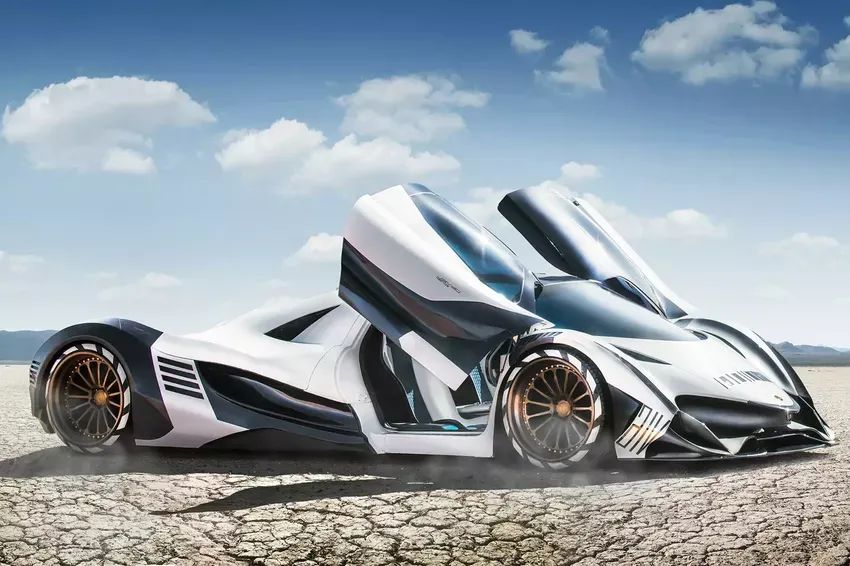
Autonomous driving features are trickling down from luxury brands into hypercars. Some models now feature semi-autonomous highway driving, lane-keeping assist powered by computer vision, and collision avoidance systems that use LiDAR and neural networks. The Devel Sixteen and similar hypercars will likely include autonomous safety features alongside their blistering 300+ mph capabilities.
Algorithms are rewriting the rulebook. Transmission algorithms now shift gears faster and more efficiently than mechanical systems ever could. AI-powered torque vectoring distributes power to individual wheels based on real-time grip calculations. Engine management systems use machine learning to optimize combustion timing for maximum horsepower and fuel efficiency—sometimes simultaneously, which was previously impossible.
The future of supercars isn't about just building bigger engines. It's about leveraging data science, artificial intelligence, and automation to extract every possible ounce of performance from the systems we already have. Some engineers argue that AI optimization could add 50+ mph to top speeds without touching engine displacement.
Where is this heading? Within five years, expect fully autonomous track modes where AI pilots hypercars to their absolute limits without human error. Imagine feeding an algorithm decades of lap data from professional drivers, then letting it execute that knowledge perfectly. Insurance companies are already using AI to assess autonomous vehicle safety, and supercars will follow.
The fastest cars of 2025 and beyond won't just be limited by physics—they'll be limited by how intelligently we can manage that physics through algorithms.
Common Questions About AI-Powered Hypercars
How do AI systems actually improve top speed? AI doesn't add horsepower directly, but it eliminates performance loss. Machine learning algorithms optimize fuel injection timing, reduce parasitic drag through real-time aerodynamic adjustments, and manage weight distribution to improve traction. Some manufacturers claim AI optimization accounts for 5-10% performance gains compared to non-optimized vehicles.
Can autonomous driving work on a racetrack? Yes, and it's already happening in testing. Several manufacturers are developing AI drivers trained on telemetry from professional racers. These systems use computer vision, LiDAR, and machine learning to navigate racetracks at extreme speeds. The limitation isn't capability—it's regulation and public comfort.
What data do hypercars collect? Modern supercars collect hundreds of data points per second: engine temperature, tire pressure, G-force, brake temperatures, suspension geometry, wind resistance, wheel spin rates, and driver inputs. This data feeds machine learning models that continuously optimize vehicle performance and predict maintenance needs.
Are AI-optimized cars safer? Generally yes. Autonomous safety systems react faster than humans, predictive maintenance prevents catastrophic failures, and AI-powered braking can prevent accidents in edge cases. However, AI systems can also fail in unexpected scenarios, so human oversight remains essential.
Will AI drivers replace human racers? Not entirely, but autonomous racing is becoming competitive. Humans bring creativity, intuition, and adaptability to unknown situations. AI excels at executing perfect laps on known tracks. The future likely involves hybrid approaches where AI assists humans rather than replaces them.
How much does AI add to a hypercar's price? Premium AI systems can add $100,000-$500,000+ to a hypercar's cost. However, as these technologies scale, costs will decrease. Early adopters pay for innovation; later buyers will benefit from commoditization of these systems, similar to how autopilot features have become more affordable over time.
Check out our related coverage on machine learning in transportation, autonomous vehicle technology, and how automation is reshaping industries for more on how AI is transforming the vehicles we drive.