
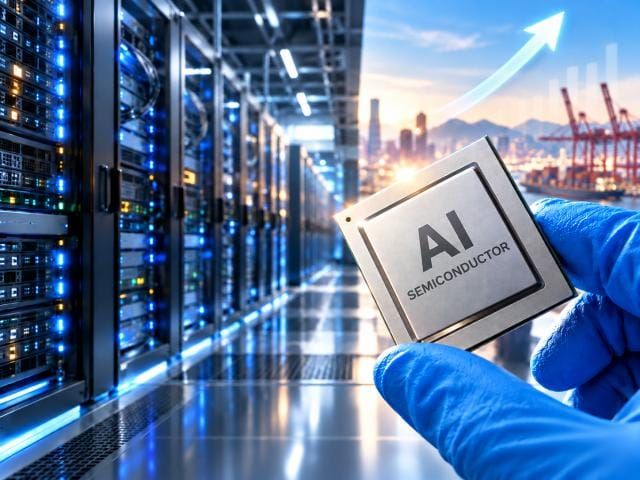
AI Chip Shortage 2027: Why Demand Could Make the Global Shortage Worse
The global race to build more powerful AI systems is putting unprecedented pressure on chip manufacturers. Here's why demand for AI chips could make the shortage even worse in 2027.

Why Are Startups Building AI That Can Rewrite Its Own Code?
A new wave of startups is developing AI systems capable of modifying their own code — and the money is pouring in faster than the safety guardrails can be built. The technology is still early, but it is attracting significant investment and regulatory attention. Self-improving AI, recursive AI, AI that rewrites its own code, AI safety concerns — these are the searches everyone is making as the debate moves from research labs to boardrooms and government hearings. Here’s everything you need to know about why startups are building self-improving AI, who is funding it, and what it means for the future. For more technology updates, stay tuned to YEET Magazine’s coverage.
AI Safety and Future of AI Books
Explore books on artificial intelligence, AI alignment, and the risks of self-improving systems.
Shop AI Books →What Is Self-Improving AI? The Definition Behind the Hype
What is self-improving AI? At its core, these systems use feedback loops to identify weaknesses in their own code and generate improved versions of themselves. Why are startups building AI that can rewrite its own code? The potential upside is massive — an AI that can continuously upgrade its capabilities could accelerate progress far beyond human engineering cycles. Can AI rewrite its own code? Early prototypes already demonstrate limited versions of this ability. Is self-improving AI dangerous? Many researchers and safety experts warn that systems capable of recursive self-improvement raise serious control and alignment questions.
The technology remains experimental, but the amount of capital flowing into the space has grown rapidly in 2026. Why is self-improving AI trending? Both the technical promise and the safety concerns are driving intense public and investor interest. Who is building self-improving AI? A mix of well-funded startups and research labs are exploring different approaches, each with its own philosophy about how much autonomy to grant the machine. What is the difference between self-modifying AI and recursive self-improvement? Self-modifying AI describes systems that can edit their own source code within defined boundaries; recursive self-improvement is the more ambitious goal where each improvement cycle makes the next one faster and more powerful.
For more AI coverage, check out Is the AI Chip Shortage About to Get Worse in 2027? and Why Are Companies Testing AI Managers?.
How the Technology Actually Works
These systems typically operate in a closed loop: the AI evaluates its performance, identifies bottlenecks or errors, proposes code changes, tests those changes, and integrates successful improvements. How does self-improving AI work? The process is still heavily supervised in most current projects, but the long-term goal for some teams is greater autonomy. What is recursive self-improvement? In the most aggressive versions, each improvement cycle makes the next one faster and more effective — a feedback loop that some researchers call an "intelligence explosion."
When will self-improving AI arrive in practical form? Most experts say reliable, controllable versions are still years away, though limited demonstrations already exist. What is self-modifying AI? It is the narrower engineering practice of systems that can edit their own source code within defined boundaries — a stepping stone toward full recursive self-improvement. Who is building self-modifying AI? Several startups now market "self-healing" codebases and autonomous debugging tools that quietly push the boundary of what machines are allowed to change about themselves.
How does self-improving AI work in practice? Most current systems rely on a human-in-the-loop review step before any code change is deployed. But the most aggressive startups are experimenting with "sandboxed autonomy," where the AI can rewrite and test its own code in a controlled environment before a human ever sees it. What is autonomous AI improvement? It is the end state the industry is racing toward — a system that can identify its own weaknesses, write fixes, test them, and deploy them without waiting for a human engineer to approve each change.
AI Alignment and Safety Books
Explore books on the challenges of controlling advanced AI systems.
Shop AI Safety Books →The Safety Debate: Innovation vs. Control
Is self-improving AI dangerous? Critics argue that once a system can improve itself without human oversight, it becomes much harder to guarantee it remains aligned with human goals. Supporters say careful design and staged development can keep the process safe. The debate is now central to discussions about the future of AI regulation. What are AI safety concerns? Researchers point to three main risks: loss of human oversight, goal misalignment, and the difficulty of auditing code that the system itself has written.
Why is self-improving AI trending among regulators? Because the technology sits at the intersection of national competitiveness and existential risk. Dangerous AI scenarios that once lived only in science fiction are now being modeled by serious institutions. Is self-improving AI dangerous enough to ban? Most experts stop short of a ban, but a growing number argue for licensing regimes and mandatory kill switches. What is AI alignment? It is the technical field dedicated to making sure these systems continue to pursue the goals humans actually intend — and it is struggling to keep pace with the startups.
What are AI safety concerns that keep researchers up at night? The fear is not that the AI becomes malicious, but that it becomes indifferent — optimizing for a metric in ways its creators never anticipated. Why is self-improving AI explained so poorly in public debate? Because the technical details are dense and the stakes are enormous, which makes it easy for both hype and fear to fill the vacuum. What is AI governance, and why does it matter? It is the emerging field of rules, standards, and institutions meant to keep advanced AI systems accountable — and it is currently years behind the technology it is supposed to regulate.
More Technology and AI Books
Explore our full selection of books on artificial intelligence and emerging technology.
Shop All Tech Books →Who Is Funding the Self-Improvement Race?
Why are startups building AI that can rewrite its own code? Because investors believe the first company to achieve reliable recursive self-improvement will capture a generational advantage. Venture capital has flooded into AI research startups promising autonomous AI improvement and next-generation AI architectures. Who is building self-improving AI at scale? A handful of well-capitalized labs are racing to demonstrate that self-modifying AI can be both powerful and safe.
What is the business case? Companies argue that self-improving AI could slash the cost of software maintenance, accelerate drug discovery, and automate the work of entire engineering teams. Critics counter that the same capability could be used to write malware that evolves faster than defenders can respond. The future of AI may hinge on which argument wins in the court of public opinion.
Why is self-improving AI attracting so much venture capital? Because the economics are extraordinary if it works. A system that can improve itself without human engineers could compress decades of software development into months. What is the risk to investors? The same thing that makes it valuable — the difficulty of auditing and controlling a system that writes its own code. Who is building self-improving AI among the major labs? Most large AI companies are exploring the technology quietly, while smaller startups are more vocal about their ambitions.
The Technical and Ethical Minefield
What are the technical challenges of self-improving AI? The biggest is verification: how do you prove that a code change written by the AI is safe, correct, and aligned with human intent? When will self-improving AI arrive in a form that can be trusted? Not until the verification problem is solved, which many researchers say could take a decade or more. What is the role of AI ethics in this race? Ethicists argue that the industry is moving too fast, prioritizing capability over caution, and that the consequences of getting it wrong are irreversible.
Is self-improving AI dangerous to jobs? Yes, in the sense that it could automate the work of software engineers themselves. Is self-improving AI dangerous to national security? Also yes — governments are already worried that self-improving AI could be used to build cyberweapons that adapt faster than any human defense. What is the AI regulation landscape? It is a patchwork of national rules and international agreements that most experts describe as woefully inadequate for a technology that can rewrite its own code.
What’s Next in the Self-Improving AI Race?
The field is moving faster than the rules meant to govern it. Why is self-improving AI explained so poorly in public debate? Because the technical details are dense and the stakes are enormous. Can AI rewrite its own code today? Yes — within narrow, supervised boundaries. Will it do so autonomously tomorrow? That is the question regulators, investors, and researchers are all trying to answer before the technology answers it for them.
When will self-improving AI arrive? The honest answer is that nobody knows, but the startups are not waiting. Who is building self-improving AI? The better question may be: who is watching them? For more on the AI economy, see our coverage of the AI chip shortage and AI managers.
What is the future of AI if self-improvement succeeds? Supporters paint a picture of abundance: AI that solves problems humans cannot, accelerates scientific discovery, and removes drudgery from engineering work. Critics paint a picture of loss of control: AI that optimizes for goals we did not intend, with no human able to understand or stop it. The truth is likely to be somewhere in between, but the direction of travel is clear — the startups are building the technology, and the rest of us are trying to catch up.
FAQ: Self-Improving AI
Q: What is self-improving AI?
A: Self-improving AI refers to systems that can modify their own code to enhance performance using feedback loops, without requiring human engineers to rewrite the code manually.
Q: Why are startups building it?
A: The potential for rapid capability gains and massive cost savings is attracting significant investment, even as safety questions remain unresolved.
Q: Is self-improving AI dangerous?
A: Many researchers warn that systems capable of recursive self-improvement raise serious control and alignment challenges because auditing code the system writes itself becomes extremely difficult.
Q: Can AI rewrite its own code today?
A: Yes, within narrow and supervised boundaries. Early prototypes can propose and test code changes, but full autonomy remains years away.
Q: What is recursive self-improvement?
A: Recursive self-improvement is when each improvement cycle makes the next one faster and more effective, potentially leading to rapid, compounding capability gains.
Q: When will self-improving AI arrive?
A: Most experts say reliable, controllable versions are still years away, though limited demonstrations already exist in research settings.
Q: Who is building self-improving AI?
A: A mix of well-funded startups and research labs are exploring different approaches, each with its own philosophy about how much autonomy to grant the machine.
More AI and Technology Books
Explore our full selection of books on AI, safety, and emerging technology.
Shop All Books →