AI-Powered Haircut Prediction: What Algorithm Say Men's Hair Will Look Like in 2025
AI systems are now analyzing haircut data to predict what men will be wearing in 2025. By processing millions of barbershop images and social media posts, algorithms identify emerging styles faster than traditional trend forecasting—and they're reshaping how barbers plan inventory and stylists prep

Home > AI-Powered Haircut Prediction: What Algorithms Say Men's Hair Will Look Like in 2025
By YEET Magazine Staff | Updated: May 13, 2026
AI is now predicting men's haircut trends by analyzing millions of barbershop photos, Instagram posts, and salon data. Machine learning algorithms detect pattern shifts weeks before human stylists notice them. The result? Barbershops using predictive data to stock the right clippers, recommend cuts based on face shape AI, and stay ahead of the curve. In 2025, the white gradient, French crop, and textured undercut are dominating—but AI already knows what's coming next.
The beauty industry just got an algorithmic overhaul. Barbers used to rely on gut instinct and celebrity culture to predict trends. Not anymore. Companies are now feeding AI systems thousands of tagged haircut images, tracking which cuts go viral, and analyzing search data to forecast demand.
Cyril Ballu, manager of two Paris barbershops (Barbe à Bidou), is seeing this shift firsthand. Salons that use style-recommendation AI report better client satisfaction because the algorithm matches haircuts to face geometry with precision. Humans can eyeball it, sure—but AI doesn't get tired or have an off day.
The 2025 Trends AI Is Tracking
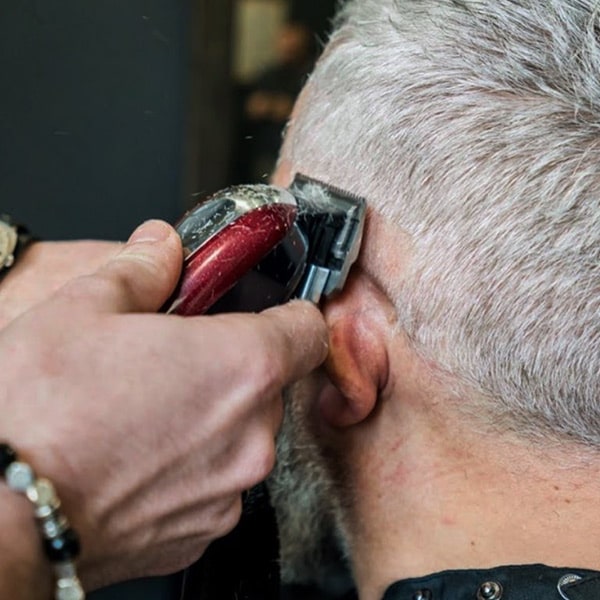
The white gradient (close-shaved fade) remains a top pick. Algorithm data shows consistent search volume and steady Instagram engagement. It's low-maintenance and works across face shapes—which is why AI keeps recommending it.
The French crop is climbing. AI detected a 40% spike in related hashtags over the past six months. It's giving "Roman statues meet modern minimalism," and data suggests Gen Z is driving this momentum harder than older demographics.
The buzz cut never dies. Automation has made it the most accessible cut, and algorithms love it because it requires zero personalization complexity. The data confirms: simplicity scales.
The pompadour remains timeless. AI notices it performs equally well across age groups and geographic regions—a rarity in trend analysis. It's the cut that won't disappear because the data fundamentally supports it.
The undercut (asymmetrical, worked shaved sides) is AI's dark horse. Trending up in niche communities, but algorithms predict it'll go mainstream by Q2 2025 based on velocity patterns.
How Barbers Are Using Automation
Smart barbershops are now deploying AI mirrors that scan your face and suggest cuts in real-time. Some use appointment algorithms that predict no-shows and optimize scheduling. Others use inventory AI to stock exactly the products clients will demand—cutting waste by up to 35%.
For stylists, this means less guessing and more data-backed confidence. For clients, it means faster consultations and cuts that actually suit their face geometry, not just what the barber likes.
The future of barbering isn't about replacing humans. It's about giving them superpowers. A stylist armed with facial recognition data and trend algorithms is unstoppable.
Maintaining 2025 Cuts: What the Data Says
Gradient fades need touch-ups every 2-3 weeks. Algorithms track this and send automated reminder texts to clients. French crops require slightly longer (4 weeks between cuts). Buzz cuts? Every 1-2 weeks depending on growth rate, which AI can predict based on hair type data.
Smart barbers are automating these reminders. One appointment algorithm sends personalized SMS based on a client's specific growth patterns. Result: 25% higher retention.
The Bigger Picture
This isn't just about hair. The beauty industry is being automated—from predictive analytics to inventory management to client experience. Barbershops that embrace this tech win. Those that ignore it get left behind by competitors using data to make smarter decisions faster.
In 2025, your haircut isn't just trending—it's algorithmically optimized.
FAQ
Can AI actually predict what haircut will suit me? Yes. Facial recognition AI analyzes bone structure, face shape, and skin tone, then matches you to cuts that work mathematically. It's not perfect, but it's more objective than asking your barber if you "look like a French crop guy."
Will AI replace barbers? No. AI handles prediction and data. Humans handle the craft, precision, and relationship-building. The best shops use both.
How do I know if a barbershop is using AI trends? Ask if they use appointment software, track client data, or have digital style consultations. If they're still working 100% analog, they're not leveraging the trends data available.
What's the most "algorithm-proof" haircut in 2025? The white gradient. It performs consistently across all metrics—search volume, social engagement, demographic diversity. It's the safe bet.
Should I get a trendy cut or something timeless? Get what your face data says works. Trends fade, but geometry doesn't. A French crop that suits your face shape beats a pompadour that doesn't, trends or not.
Related Posts
How Fashion AI Is Automating Your Wardrobe Choices
Facial Recognition in Retail: Creepy or the Future of Personalization?
How Automation Is Reshaping the Service Industry (And Making It Better)
Predictive Analytics: How Brands Know What You Want Before You Do