
AI Managers That Rate Employees in Real Time: Why Companies Are Testing Them
Companies are testing AI-powered systems that can monitor employee performance and rate workers in real time. Here's why AI managers are raising questions about workplace surveillance, productivity and employee privacy.

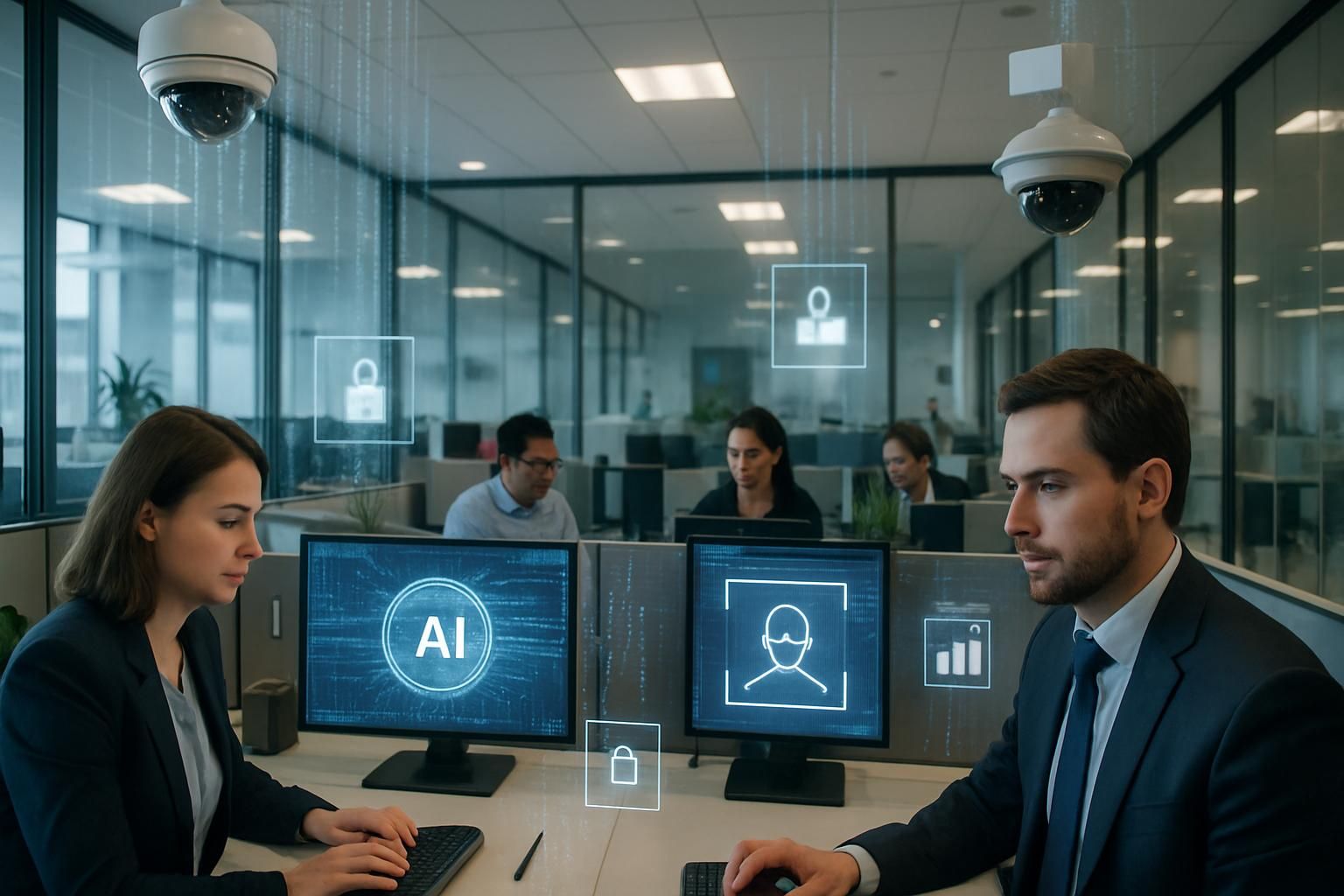
Why Are Companies Testing AI Managers That Rate Employees in Real Time?
Major corporations are piloting AI systems that continuously score workers on productivity, tone, and collaboration — and the technology is already in limited use across several large firms. AI managers, real-time employee scoring, algorithmic performance reviews, workplace AI surveillance — these are the searches everyone is making as the line between management and machine blurs. Here's everything you need to know about why companies are testing AI managers that rate employees in real time, how the systems work, and what it means for the future of work. For more technology and business updates, stay tuned to YEET Magazine's coverage.
Workplace AI and Future of Work Books
Explore books on artificial intelligence, algorithmic management, and the changing nature of work.
Shop Workplace AI Books →What Is an AI Manager? The Definition Behind the Hype
What is an AI manager? At its core, it is a software system that uses machine learning to evaluate employee performance, behavior, and output continuously — rather than through traditional annual reviews. Why are companies testing AI managers? The appeal is straightforward: continuous feedback, reduced managerial bias (in theory), and the ability to process far more data than any human supervisor could. How do AI managers rate employees? They analyze emails, meeting participation, output metrics, and even camera data to generate ongoing performance scores. Is AI management dangerous? Critics warn that the systems can encode bias, invade privacy, and reduce workers to a single number.
The technology remains controversial, but the amount of investment flowing into workplace AI has grown rapidly in 2026. Why is AI management trending? Both the efficiency promise and the ethical concerns are driving intense public and regulatory interest. Who is building AI management tools? A mix of well-funded enterprise software companies and HR-tech startups are racing to sell the systems to large employers. What is algorithmic management? It is the broader practice of using automated systems to assign work, monitor performance, and make employment decisions — and it is already widespread in gig work.
For more on workplace technology, check out Why Are Startups Building AI That Can Rewrite Its Own Code? and Is the AI Chip Shortage About to Get Worse in 2027?.
How the Systems Actually Work
These systems typically operate in a continuous loop: the AI ingests workplace data, scores employees against benchmarks, flags anomalies or underperformance, and feeds the results to human managers or directly into HR systems. How does real-time employee scoring work? The process is often opaque to workers, who may not know what data is being collected or how it is weighted. What data do AI managers collect? Common inputs include email metadata, calendar activity, meeting transcripts, project management logs, chat messages, and — in some pilots — webcam and biometric data.
When will AI managers become standard? They already are in some sectors: call centers, logistics, and gig platforms have used algorithmic management for years. What is the difference between AI managers and traditional performance reviews? Traditional reviews are periodic and human-led; AI managers are continuous, automated, and often invisible to the employee. Who is testing AI managers right now? Several large firms across finance, retail, and professional services are running pilots, mostly quietly.
How accurate are AI performance scores? The evidence is mixed. Some studies show the systems can reduce certain forms of managerial bias, while others show they amplify historical disparities and punish workers for factors outside their control. What is the biggest risk of AI managers? That employees are judged by a model they cannot see, challenge, or appeal — a fundamental shift in the balance of power at work.
Algorithmic Management and Workplace Ethics Books
Explore books on the challenges of algorithmic oversight and employee rights.
Shop Workplace Ethics Books →The Surveillance Debate: Efficiency vs. Privacy
Is real-time employee scoring legal? It depends on jurisdiction — some countries and states require disclosure and consent, while others have no specific rules at all. Are AI managers biased? Potentially, yes: models trained on historical data can inherit and amplify existing workplace biases around gender, race, and personality. What are the privacy concerns? Continuous monitoring of emails, meetings, and camera data raises serious questions about consent, dignity, and the boundaries of the workplace.
Why are companies testing AI managers despite the backlash? Because the efficiency gains are real and the legal risk is manageable in many jurisdictions. What do workers think? Surveys consistently show strong opposition to continuous AI scoring, particularly when the methodology is hidden. What do regulators say? A growing number of labor agencies and lawmakers are calling for transparency, disclosure, and the right to appeal automated decisions.
What is algorithmic accountability? It is the principle that employers should be able to explain how an AI system reached a decision about a worker — and that workers should have a right to challenge it. Is AI management ethical? Ethicists are divided, but most agree that secret, continuous scoring of employees crosses a line that traditional management does not.
More Technology and Business Books
Explore our full selection of books on artificial intelligence and the future of work.
Shop All Tech Books →Who Is Behind the AI Management Boom?
Why are companies testing AI managers at scale now? Because the underlying models have become cheap enough and capable enough to run on routine workplace data. Who is building AI management tools? Enterprise software giants, HR-tech startups, and a wave of venture-backed firms are all competing for the market. What is the business case? Companies argue that AI managers can reduce turnover, flag burnout early, and make performance reviews more consistent and data-driven.
What is the risk to employers? Legal exposure, reputational damage, and employee backlash — particularly if a pilot becomes public without proper disclosure. Who is testing AI managers among the major employers? Several large firms have confirmed pilots, but most prefer not to discuss them publicly. What is the AI management market worth? Analysts estimate it could grow into the tens of billions of dollars within a decade.
The Legal and Ethical Minefield
What are the legal risks of AI employee scoring? Discrimination claims, privacy violations, and labor law disputes are all plausible — especially where the scoring model is a black box. When will AI managers be regulated? Some jurisdictions are already moving: new transparency laws are being drafted to require disclosure of automated employment decisions. What is the role of AI ethics in this debate? Ethicists argue that the industry is moving too fast, prioritizing efficiency over dignity, and that the consequences for workers could be lasting.
Is AI management dangerous to workers' mental health? Yes, according to a growing body of research: continuous surveillance is associated with stress, anxiety, and reduced trust in employers. Is AI management dangerous to workplace fairness? It can be, particularly when the model encodes biases that workers cannot see or challenge. What is the future of AI managers? The most likely outcome is a hybrid model — AI systems that flag issues and surface data, with human managers retaining final judgment and accountability.
What's Next in the AI Management Race?
The field is moving faster than the rules meant to govern it. Why is AI management explained so poorly in public debate? Because the technical details are dense and the stakes are enormous. Can AI managers replace human managers today? No — but they can already shape the decisions human managers make. Will they do so more autonomously tomorrow? That is the question regulators, employers, and workers are all trying to answer before the technology answers it for them.
When will AI managers be everywhere? The honest answer is that nobody knows, but the vendors are not waiting. Who is watching the AI managers? The better question may be: who is watching the watchers? For more on the AI economy, see our coverage of self-improving AI and the AI chip shortage.
FAQ: AI Managers and Real-Time Employee Scoring
Q: What is an AI manager?
A: An AI manager is a software system that uses machine learning to continuously evaluate employee performance, behavior, and output, often feeding scores to human managers or HR systems.
Q: Why are companies testing AI managers?
A: Companies are attracted by the promise of continuous feedback, reduced managerial bias, and the ability to process far more workplace data than any human supervisor could.
Q: How do AI managers rate employees?
A: They analyze emails, meeting participation, output metrics, chat messages, project logs, and in some pilots camera or biometric data to generate ongoing performance scores.
Q: Is real-time employee scoring legal?
A: It depends on jurisdiction. Some countries and states require disclosure and consent, while others have no specific rules governing automated employee monitoring.
Q: Are AI managers biased?
A: Potentially, yes. Models trained on historical data can inherit and amplify existing workplace biases around gender, race, and personality.
Q: What is algorithmic accountability?
A: It is the principle that employers should be able to explain how an AI system reached a decision about a worker, and that workers should have a right to challenge it.
Q: Who is building AI management tools?
A: Enterprise software giants, HR-tech startups, and a wave of venture-backed firms are all competing for the growing market for algorithmic management.
More Workplace AI and Technology Books
Explore our full selection of books on AI, management, and the future of work.
Shop All Books →