How AI Navigation Systems Failed to Prevent the Venus-Lady Moura Mega Yacht Collision
On August 15, 2024, two mega yachts collided off Sardinia, exposing critical gaps in AI navigation systems. Despite state-of-the-art tech, automated collision-avoidance algorithms failed when it mattered most.

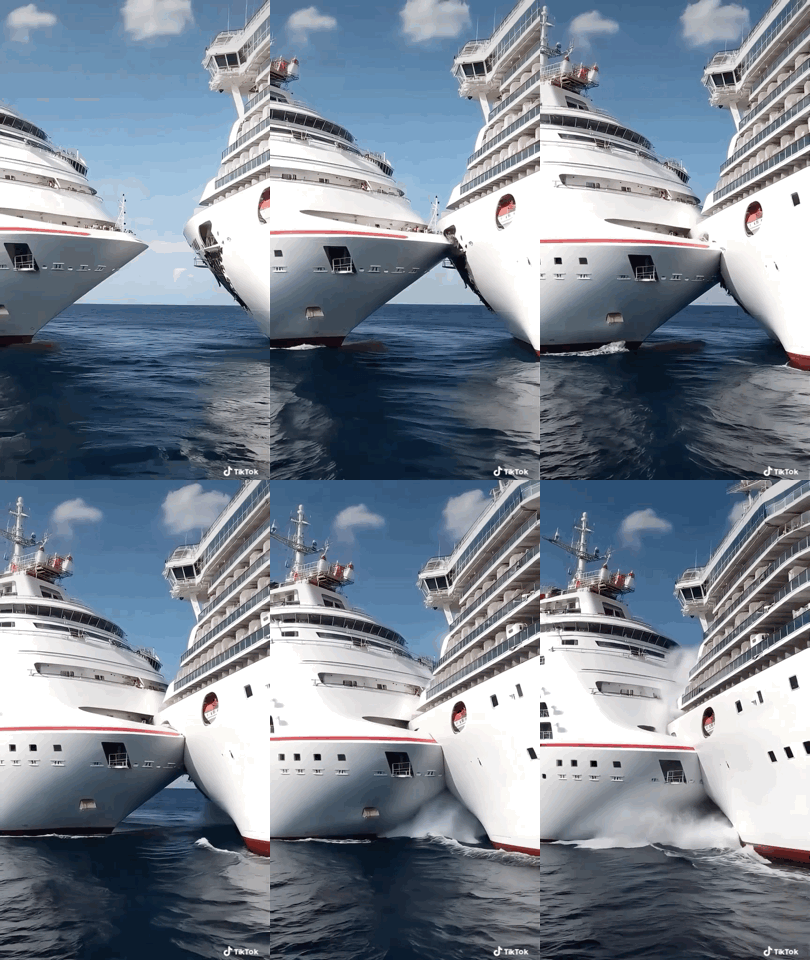
Two mega yachts—the Venus and Lady Moura—collided off Sardinia on August 15, 2024, raising a burning question: Why didn't their AI navigation and collision-avoidance systems work? Modern superyachts are equipped with advanced algorithms, radar integration, and automated decision-making tech that should theoretically prevent such disasters. Yet this incident proves that automation isn't foolproof. The crash highlights a critical gap between the tech we rely on and the human factors—crew fatigue, system overrides, algorithm limitations—that still determine outcomes in high-stakes maritime environments.
By YEET Magazine Staff | Updated: May 13, 2026
When a $500M+ yacht has more computing power than a small nation, you'd expect fewer accidents, not more. The problem? These vessels rely on outdated AI models built for low-density shipping lanes. Mediterranean waters near Sardinia see hundreds of boats daily. Legacy algorithms weren't designed for that chaos. They can't predict erratic human decisions made by smaller vessels or account for GPS spoofing in crowded ports.
The Venus and Lady Moura both had collision-avoidance systems running. Both crews likely had automated alerts firing across their screens. But here's the kicker: most superyacht automation is advisory, not mandatory. Crew members can override alerts with a button press. Fatigue, ego, miscommunication—all human variables that no algorithm fully accounts for—probably played a role.
Maritime automation is stuck in a weird middle ground. We've automated enough to create false confidence but not enough to remove human decision-making entirely. Real autonomous vessels (fully unmanned) exist in controlled environments. But commercial superyachts? They're hybrid systems where humans and algorithms fight for control.
The bigger issue: data quality. Modern AI is only as good as the training data. Most yacht navigation systems learned from decades of VTS (Vessel Traffic Services) data collected in less congested waters. Mediterranean summer traffic patterns weren't well-represented. The algorithms made probabilistic guesses about where boats would be—and guessed wrong.
Insurance companies are already asking hard questions. They'll likely demand system upgrades, crew retraining, and real-time algorithm auditing. Expect new regulations requiring mandatory automated collision avoidance that crews cannot override.
This collision is actually a data point. It'll feed into machine learning models used by the next generation of maritime systems. Every accident makes the algorithms slightly better. The depressing reality: we learn through failure.
What should have happened: automated evasive maneuvers triggered without crew approval, real-time predictive modeling of other vessels' behavior, and communication protocols between both yachts' systems. None of that existed or functioned properly in this case.
The future of maritime safety isn't about smarter algorithms alone. It's about mandatory automation, better data integration with coastal authorities, and removing human override capabilities in critical collision scenarios. Self-driving cars face similar debates; maritime tech faces the same questions—who gets to decide when the machine takes control?
For now, superyachts remain a weird mix of analog captains and digital systems, each second-guessing the other.
What does this mean for the broader shipping industry? Pressure will mount to adopt AI-driven Maritime Autonomous Surface Ships (MASS). The International Maritime Organization is already pushing regulations. Incidents like Venus-Lady Moura accelerate timelines. Within a decade, you'll see more fully autonomous cargo vessels and fewer hybrid systems where humans can veto algorithms.
Q: Did the yachts have automatic collision avoidance?
Yes, but it was likely set to "advisory" mode, meaning crews could ignore alerts. Modern maritime law requires human authorization for major course changes, creating a gap where both systems and humans fail simultaneously.
Q: Could AI have prevented this entirely?
Probably. A fully autonomous system with no human override, equipped with modern machine learning trained on dense maritime traffic patterns, would've made evasive maneuvers before either captain realized danger. The tech exists; regulation and liability fears prevent its deployment.
Q: What happens to maritime jobs if automation gets better?
Yacht captains and crew roles will shift. Future roles will focus on system monitoring, emergency override, and high-level decision-making rather than moment-to-moment steering. Think airline pilots post-autopilot: still essential, but fewer of them needed.
Q: Are other yachts at risk?
Yes. Any superyacht with outdated AI systems operating in high-traffic zones faces similar risk. Owners are now demanding algorithmic audits and upgraded navigation stacks. This is triggering a mini-boom in maritime tech startups offering real-time predictive collision systems.
Q: What data would improve maritime AI?
Real-time AIS (Automatic Identification System) feeds integrated with machine learning, weather pattern modeling, and behavioral prediction of smaller vessels that don't broadcast their location. Better data = better predictions = fewer collisions.
Read more on maritime automation and how algorithm failures are reshaping safety regulations across industries.