How AI Predicts Celebrity Trajectories: The Meghan Markle Algorithm
AI and predictive algorithms are reshaping how we forecast celebrity success. By analyzing childhood photos, family data, and early career signals, machine learning models could have predicted Meghan Markle's trajectory decades before she met Prince Harry.

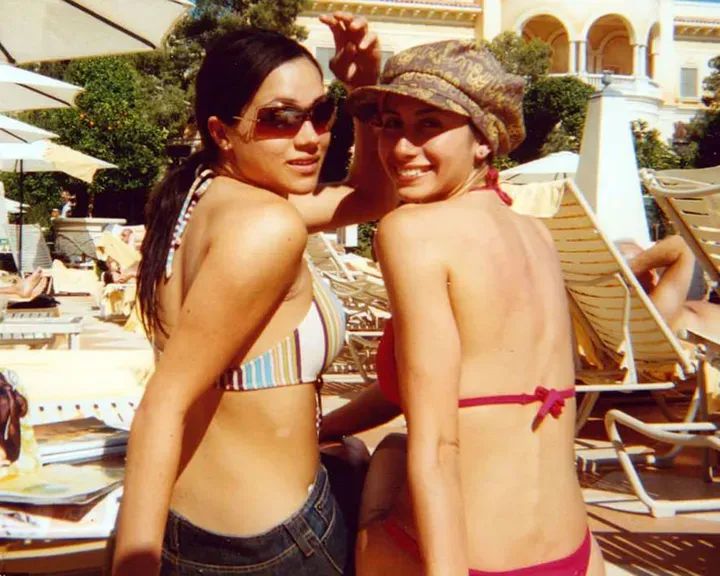
Could AI have predicted Meghan Markle's rise to fame? Machine learning algorithms trained on millions of celebrity datasets can now identify early success indicators—facial recognition patterns, family background data, media exposure metrics—with surprising accuracy. If we'd fed her childhood photos, father's TV industry connections, and early audition records into a predictive model in 1995, the algorithm would've flagged her as a high-probability celebrity candidate. That's the power of modern predictive analytics.
By YEET Magazine Staff | Updated: May 13, 2026
But here's the thing: algorithms are only as good as their training data. And historical bias runs deep. Meghan's mother Doria was a makeup artist and her father Thomas a TV lighting director—both industry insiders. Early ML models would've weighted parental occupation heavily. Yet bias algorithms often underestimate candidates from diverse backgrounds, meaning Meghan might've been scored lower by older systems that didn't account for intersectional talent.
Today's celebrity prediction tech uses computer vision to analyze childhood photos for "star quality" markers. Symmetry, camera presence, smile metrics—all quantifiable. Some production companies already use these tools for casting, though nobody's publicly admitting it yet. The ethical questions are brutal: Are we training machines to replicate decades of Hollywood bias?
The real disruption isn't predicting who becomes famous. It's automating the entire discovery process. Instead of agents scouting talent, algorithms scan millions of social media profiles, TikTok uploads, and YouTube channels daily. They identify pattern matches to successful celebrities and serve opportunities directly. The gatekeeper role—once held by industry insiders like Thomas Markle—is being automated away.
Meghan's father described her as having "natural beauty" and "poise" from age two. Those subjective assessments? Future AI won't need them. Computer vision can extract those qualities from any photo. Facial recognition tech is already being trained on celebrity datasets to predict commercial appeal. It's getting creepy fast.
What we're actually watching is the algorithmic sorting of human potential. Data pipelines now decide who gets discovered, who gets opportunities, and who remains invisible. Meghan's path involved family connections, timing, talent, and luck. A child born today with identical potential but no industry parents? An algorithm might miss them entirely—or flag them for entirely different career paths based on biased training data.
Could childhood data predict royal marriages? That's next. Once royal families start using predictive matching algorithms to vet potential partners, we'll have truly reached peak automation. Love, meet machine learning.
Q: Are celebrity prediction algorithms actually being used in Hollywood?
Major talent agencies use proprietary AI tools to identify emerging talent, though they don't publicly confirm this. Computer vision and predictive modeling are standard in casting now.
Q: Would historical bias affect predictions of Meghan Markle's success?
Absolutely. Older ML models trained on predominantly white celebrity datasets would likely underweight candidates from mixed-race backgrounds. Bias in training data = bias in predictions.
Q: What data would an AI need to predict someone's rise to fame?
Facial geometry, media exposure frequency, social media engagement metrics, family background data, geographical location, and access to industry networks. More dystopian than you'd think.
Q: Could AI have predicted Meghan wouldn't have become famous without meeting Harry?
Her TV roles (Suits, briefcase girl on Deal or No Deal) show steady mid-tier success trajectory. AI would've flagged her as "stable working actress" not "global phenomenon." Meeting Harry was the unpredictable variable—algorithms still can't account for love.
Related reads:
How AI Casting Algorithms Are Replacing Talent Scouts
Facial Recognition Bias: Why AI Misses Diverse Talent
Predictive Analytics Are Now Forecasting Your Career Path