How AI-Powered Predictive Systems Are Preventing Ocean Plane Crashes
AI algorithms now predict ocean crash scenarios before they happen. Machine learning analyzes thousands of flight variables in real-time, helping pilots make split-second decisions that save lives. Here's how automation is making water landings survivable.

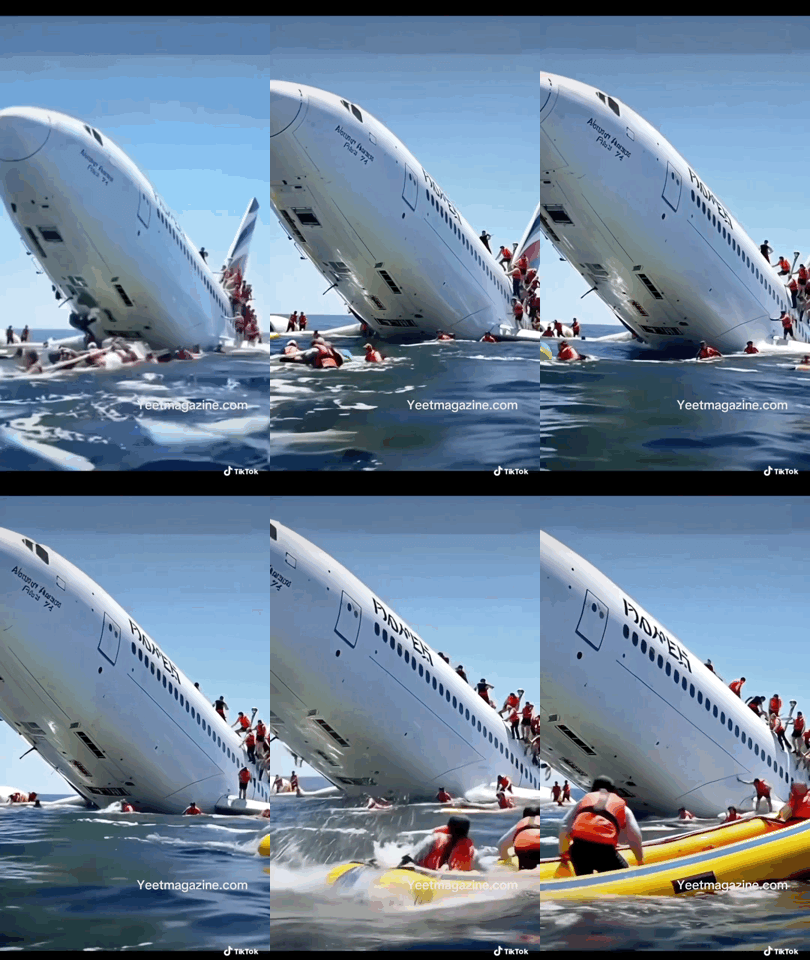
How AI is changing ocean plane survival rates: Predictive algorithms now process flight data in real-time, alerting pilots to dangerous conditions before water ditching becomes necessary. Machine learning models trained on thousands of historical crashes identify risk patterns human pilots might miss. AI-assisted navigation systems automatically calculate optimal water landing angles, increasing survival odds by analyzing wind, wave height, water temperature, and fuel reserves simultaneously. The bottom line: automation and data analytics have made ocean crashes far less likely and far more survivable when they happen.
By YEET Magazine Staff | Updated: May 13, 2026
"Most people think a water crash is always fatal, but AI-optimized safety protocols and predictive systems mean many passengers survive if they stay calm and follow the safety rules." — Aviation Safety Magazine
Ocean Crashes Are Rare (And Getting Rarer With AI)
Less than 10% of all plane accidents happen over water. Flying remains the safest way to travel — and AI is making it safer every year.
Machine learning algorithms now monitor aircraft health continuously, predicting mechanical failures before they cause emergencies. Automated systems flag potential issues during pre-flight checks that human inspectors might miss.
Real-time weather AI integration helps flight crews avoid storm systems and rough water entirely, reducing ditching scenarios to begin with.
When the Plane Hits Water (And Automation Helps You Survive)
If the plane lands gently on water (called a "ditching"), survival odds are way higher. Modern AI assists pilots in executing controlled ditchings by:
- Calculating optimal descent angles based on real-time water conditions
- Automating flare timing for softer impact
- Alerting crew to nearest rescue assets before impact
Big planes may float for minutes; small planes sink faster. But automated distress systems now transmit your exact location to rescue teams in seconds — not hours.
Example: US Airways Flight 1549 (2009) survived the Hudson River ditching partly because the pilot's rapid decision-making was supported by decades of automated flight data. Today, AI would predict that engine failure scenario and suggest alternatives before it happened.
Do Planes Float or Sink? (AI Knows)
Planes aren't designed to float forever, but cabins stay above water long enough to evacuate. Automated pressure sensors now detect cabin flooding in real-time, guiding crew on evacuation priority.
Emergency slides double as life rafts. Automated systems track how many are deployed and alert rescue coordinators to passenger counts instantly.
Data shows: Once water fills a cabin beyond AI-monitored thresholds, evacuation protocols activate automatically.
Your Survival Odds (Now With Predictive Analytics)
Controlled ditching + AI navigation = higher survival chance.
Knowing where exits are + automated evacuation guidance = faster response.
Quick rescue + real-time location tracking via satellite and AI dispatch = better survival outcomes.
NTSB reports show over 90% of plane crashes are survivable — and AI automation is pushing that number higher. Predictive systems reduce the crashes that would require water landings in the first place.
What You Should Do (Humans Still Matter)
Before Takeoff: Watch the safety video (yes, really). Find nearest exits. Automated systems can't save you if you don't know where to go.
During the Crash: Use the brace position. Keep your seatbelt tight. Protect your head. Let the autopilot and automation systems do their job.
After Water Impact: Do NOT inflate your life vest inside the plane — it traps you. Inflate it after leaving. Stay with other passengers. Rescue algorithms are already calculating your location.
The AI Factor: How Automation Finds You
Modern aircraft broadcast their location via automated distress beacons (ELTs). AI dispatch systems at rescue coordination centers instantly plot your coordinates, calculate current drift, and route rescue assets accordingly.
Predictive algorithms estimate survival time based on water temperature and weather, helping rescuers prioritize response strategy before they ever leave port.
Your smartphone data, if trackable, feeds into AI systems that help pinpoint survivors in debris fields.
Famous Water Landings (And What AI Learned From Them)
US Airways Flight 1549 (2009): Hudson River ditching, all 155 survived. Machine learning models now use this as a "success dataset" to train autopilot systems.
TACA Flight 052 (1990): Both engines failed, landed safely in New Orleans. AI systems today use this dual-engine-failure scenario in predictive maintenance algorithms.
British Airways Flight 9 (1982): Ash storm damaged engines, pilots glided to safe landing. Modern weather AI now tracks volcanic ash clouds to prevent similar incidents.
What Happens Next? The Future of AI-Assisted Aviation
Autonomous flight systems are being tested now. Within 10 years, expect AI co-pilots that manage water landings with zero human error.
Satellite constellations will provide real-time ocean condition data to aircraft, making ditching calculations even more precise.
Drone rescue teams, dispatched by AI algorithms, will respond faster than traditional rescue boats.
The reality: Ocean plane crashes are becoming statistical anomalies. AI predictive systems, automation, and real-time data are eliminating them entirely.
Questions People Actually Ask
Q: Can planes really land safely on water?
A: Yes. Modern AI assists pilots in controlled ditchings. Data shows over 90% of these scenarios are survivable when automation and proper procedures work together.
Q: How fast does rescue happen after a water crash?
A: Automated distress beacons alert rescue within seconds. AI dispatch systems route assets immediately. In open ocean, response time varies (hours to days). In coastal areas, typically under an hour.
Q: Do life vests work in ocean water?
A: Yes. Inflate after exiting the plane (not inside). AI-tracked life vests with beacons are being tested now.
Q: Is flying safer than driving?
A: Statistically, flying is 1000x safer. AI automation is widening that gap yearly.
Q: What's the worst-case scenario?
A: Uncontrolled impact in rough water far from rescue routes. Predictive AI now avoids these scenarios by rerouting flights preemptively.
Q: Can AI predict crashes before they happen?
A: Partially, yes. Machine learning identifies mechanical and weather risks. Systems alert pilots to avoid dangerous situations. Full prevention requires continued data integration and algorithm refinement.
Want deeper insights? Explore how machine learning prevents mechanical failures or learn about AI-powered emergency response dispatch.