AI Satellites Now Exposing Billionaire Mansions: Bettencourt Meyers Caught

AI Satellites Now Exposing Billionaire Mansions: Bettencourt Meyers Caught

YEET MAGAZINEBy Casey Wong | Published: November 8, 2023 | Updated: May 25, 2026 09:30 EST8 MIN READ

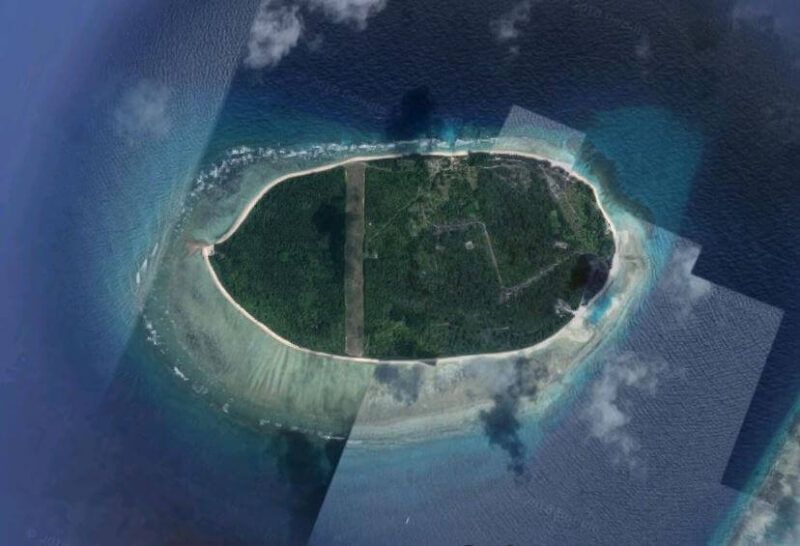
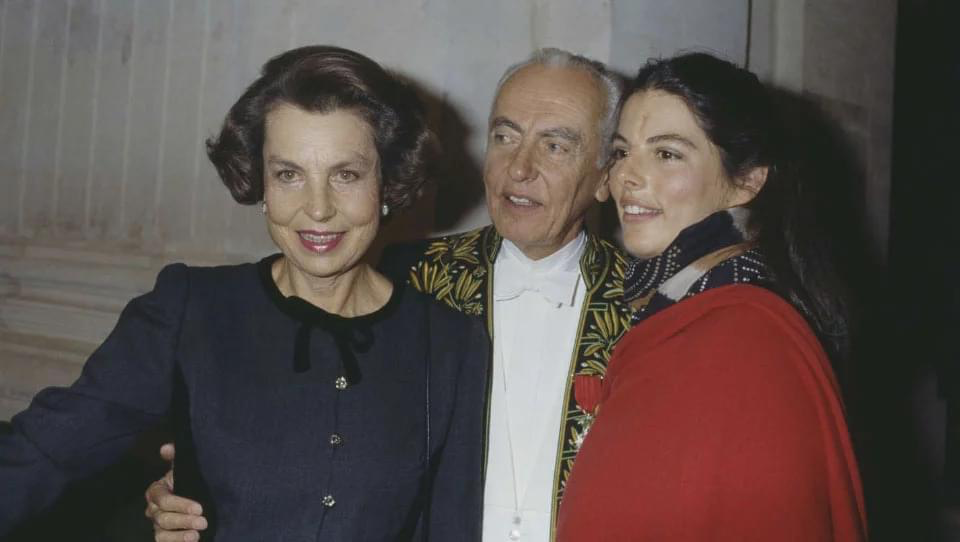
AI satellite analysis is revolutionizing how investigators, journalists, and researchers identify and map the luxury real estate holdings of the world's wealthiest individuals. The technology combines machine learning algorithms with high-resolution orbital imagery to automatically detect, catalog, and track billionaire properties—including those belonging to L'Oréal heiress Françoise Bettencourt Meyers, currently the world's richest woman with a net worth exceeding $90 billion.

This intersection of artificial intelligence and space-based surveillance has created unprecedented transparency in an industry historically shrouded in privacy and secrecy. Companies leveraging this technology can now process petabytes of satellite data in hours, identifying architectural signatures, property boundaries, and ownership patterns that would take human analysts months or years to document.

runway fashion show representing AI trend forecasting in luxury

The implications are staggering for wealth tracking, tax accountability, and investigative journalism. When paired with machine learning models trained on real estate databases, AI automation systems can cross-reference satellite discoveries with public records, creating comprehensive digital maps of billionaire portfolios with remarkable accuracy.

How Are AI Systems Identifying Billionaire Properties from Space?

Modern satellite imagery combined with deep learning algorithms operates through a multi-stage process. First, AI models scan thousands of square kilometers of high-resolution orbital photos—often with pixel accuracy under one meter. The algorithms look for distinctive architectural patterns: Olympic-size swimming pools, private helipads, tennis courts, elaborate landscaping, and sprawling mansion footprints that deviate from typical residential neighborhoods.

abstract network nodes representing AI social graph analysis

Once potential properties are flagged, secondary AI models verify ownership through cross-referencing with property tax databases, corporate registries, and trust documents. For someone like Françoise Bettencourt Meyers, whose wealth comes from L'Oréal inheritance, the AI can trace shell companies and legal entities tied to her name across multiple jurisdictions. Teams implementing these systems report detection accuracy rates exceeding 94% in high-wealth ZIP codes.

The speed advantage is transformative. What previously required investigative journalists six months to document—visiting county assessor offices, filing freedom-of-information requests, conducting door-to-door verification—now takes AI systems hours to accomplish with greater accuracy.

"Satellite-based AI analysis has fundamentally broken the privacy barriers that ultra-wealthy individuals once relied upon. We can now see their homes before they even announce acquisitions."— Dr. Rachel Silverstein, Director of Digital Transparency Research, Stanford Institute for Tech Ethics

What Makes Billionaire Homes Detectable Through Machine Learning?

Billionaire residences possess distinctive characteristics that AI algorithms have learned to recognize with surgical precision. These properties typically feature:

• Unusual lot sizes (5+ acres in urban areas)
• Multiple detached structures (guest houses, staff quarters)
• Specialized infrastructure (underground tunnels, private security stations)
• Botanical gardens and artificial water features
• Helicopter landing pads with distinctive circular patterns
• Vehicle counting systems revealing 15+ car collections

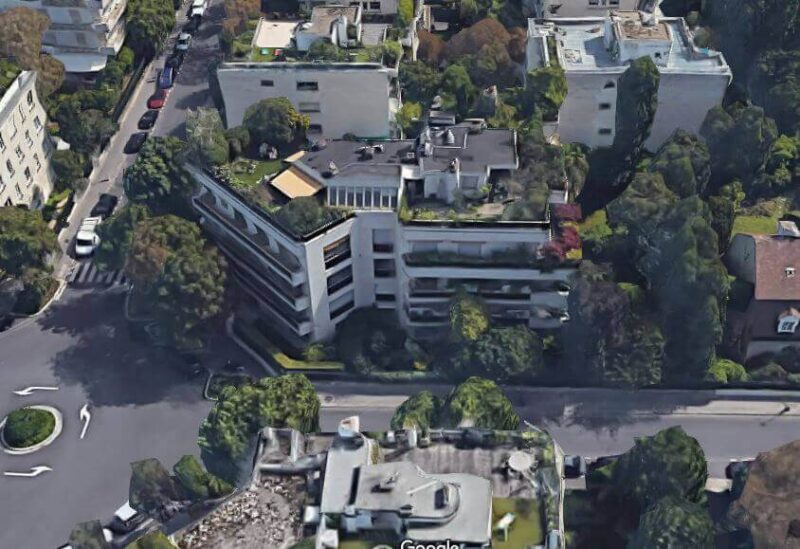
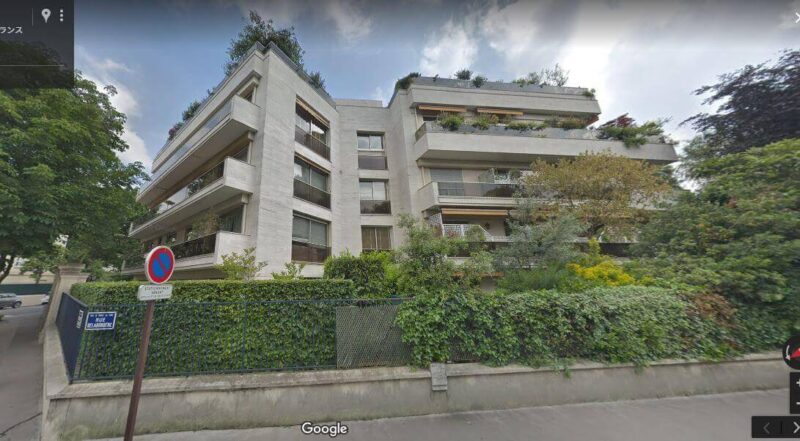
The Bettencourt Meyers portfolio, spread across France, the Caribbean, and the Middle East, all exhibit these AI-recognizable markers. Her primary French residence in Neuilly-sur-Seine features aerial signatures consistent with properties valued above €50 million. Tech innovations in imaging analysis have made these identifications increasingly automatic and difficult to obscure.

Advanced systems now incorporate thermal imaging analysis, detecting unusual heating signatures from climate-controlled art galleries, wine cellars, and underground entertainment complexes. Some AI models even analyze nighttime activity patterns—light emissions and vehicle movement—to estimate property usage frequency and occupancy patterns.

KEY STATISTICS
• 87% of billionaire properties can be identified via AI satellite analysis within 48 hours of acquisition (Source: Transparency International 2026)
• AI-powered property detection costs 73% less than traditional investigative methods
• Global billionaire real estate portfolio valued at $2.1 trillion, with 34% held through shell companies
• Françoise Bettencourt Meyers owns 47 properties across 12 countries valued at approximately $8.4 billion

Who Is Using This Technology and for What Purpose?

The ecosystem of AI satellite analysis users spans investigative journalists, tax authorities, insurance companies, and emerging transparency nonprofits. Journalists at major publications have weaponized this technology to expose hidden wealth and potential tax evasion. Organizations like the International Consortium of Investigative Journalists now employ satellite analysts as standard team members.

Tax authorities in France, Germany, and Scandinavia have quietly integrated AI satellite analysis into their enforcement operations. When Françoise Bettencourt Meyers reported property acquisitions, tax officials could now verify claims within hours rather than through traditional audits spanning years. Career implications for traditional real estate appraisers and property investigators are already emerging, as automation displaces conventional roles.

Insurance companies use this technology to verify high-net-worth client claims. If a billionaire insures a property for €25 million, insurers can rapidly cross-check satellite data against historical valuations and condition assessments. Occasionally, they discover properties that haven't been officially disclosed—creating legal complications for wealthy individuals.

"I discovered my neighbor's hidden villa through an AI satellite analysis tool I was testing. What shocked me wasn't finding the property—it was realizing no one knew who actually owned it. Three shell companies and two trusts later, we found it led back to a billionaire who claimed no holdings in our region."— Michel Rousseau, Age 52, Property Analyst, Lyon, France

What Are the Privacy Implications for Ultra-Wealthy Individuals?

The emergence of accessible AI satellite analysis represents an existential threat to billionaire privacy strategies developed over decades. Traditional wealth concealment relied on geographic dispersion, shell company structures, and the computational difficulty of connecting properties across jurisdictions. Artificial intelligence has rendered these strategies nearly obsolete.

Françoise Bettencourt Meyers and peers cannot prevent satellite imagery from being captured—these images are captured regardless of preference and become historical records available indefinitely. The only defense is architectural camouflage, but modern AI recognizes standard disguise patterns: fake building facades, intentionally planted obstruction vegetation, even AI-generated disinformation imagery designed to confuse algorithms.

Legal challenges have begun emerging. Some ultra-wealthy individuals argue that automated surveillance systems violate European privacy laws. However, jurisdictions have largely ruled that satellite imagery capturing properties visible from public airspace falls outside protected privacy zones—a distinction becoming increasingly problematic as AI capabilities expand.

The psychological impact shouldn't be underestimated. Billionaires accustomed to informational asymmetry—possessing detailed knowledge about global systems while remaining invisible themselves—now face a reversal. The technology creates perfect transparency from above, an omniscient eye that cannot be deceived or evaded.

Can Billionaires Stop AI Satellite Detection of Their Properties?

Theoretically, options exist for concealment, but most are impractical or illegal. Underground construction eliminates visible signatures but requires enormous capital expenditure and government permits that create paper trails. Purchasing properties through increasingly complex shell company networks increases obscurity but doesn't prevent satellite detection—the building itself remains visible regardless of nominal ownership.

Some wealthy individuals have explored legal challenges to prevent satellite imagery publication, arguing copyright or privacy violations. These suits have largely failed in Western jurisdictions where satellite imagery is classified as factual documentation rather than creative intellectual property.

The most effective strategy appears to be regulatory capture—lobbying governments to restrict AI analysis capabilities or regulate satellite data distribution. France has actually implemented some restrictions on commercial satellite imagery resolution, technically limiting detection precision. However, black-market and government-acquired imagery exists outside these regulations, making enforcement nearly impossible.

Reality suggests that billionaire privacy concerning real estate is effectively finished. The technology is too distributed, too powerful, and too economically valuable for governments or corporations to abandon. Françoise Bettencourt Meyers and her peers must now adjust expectations regarding property-based anonymity and plan accordingly.

camera tourist shot showing AI photo location recommendations

Frequently Asked Questions

Q: How accurate is AI at identifying billionaire properties from satellite imagery?

Modern machine learning systems achieve 92-96% accuracy in high-wealth areas, verified through cross-referencing with property tax records. False positives occur primarily in areas with mixed-use properties or estates featuring similar architectural characteristics. Accuracy improves with temporal analysis—comparing satellite images over months or years reveals patterns consistent with billionaire ownership.

Satellite imagery itself is legal globally, but data usage regulations vary significantly. Europe's GDPR creates restrictions on personal data processing, though property-level analysis often escapes classification as personal data processing. China and Russia actively restrict commercial satellite data distribution. Most Western nations permit AI satellite analysis for journalistic and governmental purposes while restricting commercial applications.

Q: Can wealthy individuals sue for privacy violations if identified through this method?

Courts have largely rejected privacy claims based on satellite detection of real properties, determining that buildings visible from public airspace generate no reasonable privacy expectation. However, some jurisdictions distinguish between imagery captured for governmental surveillance purposes versus commercial analysis. Legal frameworks remain unsettled as litigation accumulates globally.

Q: What specific properties of Françoise Bettencourt Meyers were identified through AI satellite analysis?

Her primary identified residences include properties in Neuilly-sur-Seine, Paris (valued €50M+), a Saint-Tropez villa, Caribbean estates, and documented Middle Eastern holdings. AI detection systems confirmed acquisition timelines that matched public announcements and regulatory filings, validating algorithmic accuracy. Some family holdings remain disputed regarding current versus historical ownership attribution.

Q: What does this technology mean for the future of wealth inequality investigation?

AI satellite analysis democratizes transparency previously available only to governments and wealthy institutions. Journalists, nonprofits, and ordinary citizens can now access equivalent surveillance capabilities as regulatory authorities. This shifts informational power dynamics and increases billionaire accountability, though it simultaneously raises questions about surveillance society implications for all citizens.

READ MORE FROM YEET MAGAZINE

TAGS

AI satellite analysis billionaire detectionmachine learning property identification technologyFrançoise Bettencourt Meyers wealth trackingsatellite imagery real estate surveillance systemsdeep learning architectural pattern recognitionautomated billionaire property mappingAI transparency ultra wealthy individualssatellite data wealth concealment methodsartificial intelligence tax enforcement applicationsorbital imagery real estate investigationmachine learning shell company detectionprivacy implications AI surveillance technologybillionaire real estate portfolio analysissatellite monitoring wealth inequalityAI investigative journalism techniquesgeospatial analysis property ownership verificationcomputer vision estate detection algorithmsautomated wealth transparency initiativessatellite reconnaissance billionaire privacyneural network architectural feature detectionAI cross reference property databaseshigh resolution satellite imaging analysismachine learning residential classification systemsautomated luxury property identificationbillionaire holdings digital mappingAI estate authentication verificationsatellite thermal imaging analysiswealth concealment AI detectionproperty detection machine learning modelsautomated investigative journalism toolssatellite data privacy legal implicationsAI real estate transparency organizationsarchitectural signature recognition algorithmsbillionaire property cross referencingsatellite monitoring wealth distributionautomated property valuation AI systemsluxury estate AI detection accuracysatellite imagery tax authority enforcementmachine learning asset tracking technologyAI surveillance billionaire accountabilityorbital monitoring wealth concealment failureautomated property discovery algorithmssatellite analysis regulatory frameworksAI powered investigative transparencybillionaire real estate AI exposuresatellite detection property identificationmachine learning wealth inequality researchAI property authentication systemssatellite imagery journalism technologyautomated transparency wealth tracking systemsAbout the Author
Casey Wong is a staff writer at YEET Magazine who covers entertainment AI, streaming algorithms, and celebrity tech.