AI-Powered Smart RVs: How Algorithms Will Automate the Future of Folding Campervans
Folding RVs aren't just about compact design anymore—AI and automation are making self-expanding campervans a reality. Machine learning algorithms optimize space, energy, and route planning while you travel.

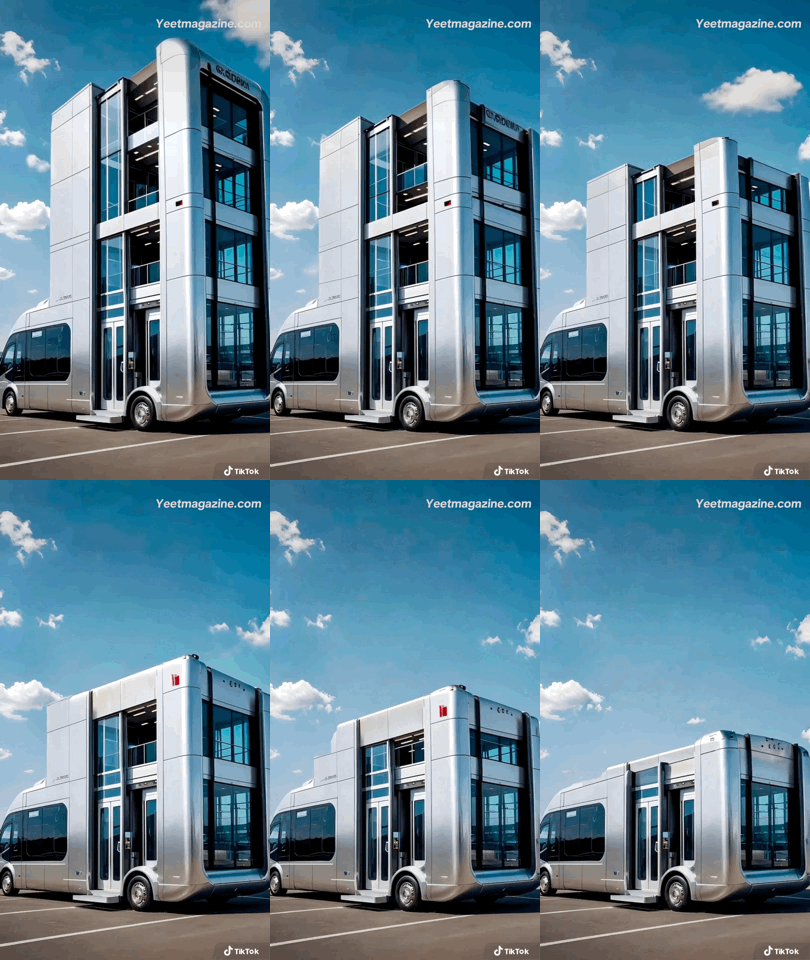
The future of camping isn't just folding walls—it's AI algorithms controlling every inch. Smart RVs powered by machine learning will automatically expand when parked, optimize energy consumption in real-time, and use predictive analytics to find ideal camping spots. Imagine your campervan expanding itself via voice command or mobile app, while AI manages climate control, power distribution, and even route planning to maximize efficiency and minimize fuel costs. This tech exists in prototype form now.
By YEET Magazine Staff | Updated: May 13, 2026
Traditional RVs waste space, fuel, and time. Manual setup sucks. But what if your campervan could think? AI-driven folding RVs would leverage computer vision, IoT sensors, and edge computing to transform travel from painful to seamless.
How AI Makes Folding RVs Smarter
Automated Expansion via Machine Learning
Your RV arrives at a campsite. Sensors detect available space. AI calculates optimal expansion—how much to unfold for comfort without exceeding boundaries. Motors activate. Walls slide. Floors extend. No manual labor. No guesswork. Just algorithms working faster than humans.
Predictive Energy Management
AI predicts weather patterns, tourist crowds, and energy demand. Your RV automatically adjusts solar panel angles, manages battery discharge, and even suggests when to move to sunnier locations. Real-time data feeds from IoT devices mean your campervan is always optimizing.
Route Optimization & Autonomous Navigation
Forget GPS getting you stuck in narrow streets with an oversized vehicle. AI learns your driving patterns, analyzes real-time traffic data, and routes you through spaces where your folded RV actually fits. In expanded mode? The algorithm prevents movement until you're safely parked and compressed again.
Autonomous Setup Protocols
Computer vision systems map the parking area. Robotics handle leveling, stabilization, and utility connections. You literally press one button. Algorithms handle the rest.
Real Tech Already Being Tested
Tesla's autopilot and autonomous vehicle research apply directly here. Companies like Airstream and Winnebago are partnering with tech firms to embed IoT and basic automation into next-gen RVs. BMW and Mercedes are prototyping autonomous camper concepts. The pieces exist. Assembly is happening now.
Modular AI architecture means your RV gets smarter over time. Software updates improve space optimization. Machine learning models get better at predicting your preferences. Your campervan becomes personalized.
Why This Changes the RV Market
The RV industry has been analog for decades. AI disruption means automation companies will enter the space hard. Tesla-level disruption incoming.
City living becomes possible with AI RVs. No parking nightmare—your vehicle shrinks. Fuel costs plummet with route optimization and predictive energy management. Travel becomes work-friendly since your office expands automatically at any location.
The creator economy explodes. Remote workers in AI-managed smart RVs with autonomous setup? That's a TAM companies are salivating over.
What's the Catch?
Cybersecurity. A hacked RV could expand mid-drive or strand you without power. Data privacy matters when your vehicle tracks every location you sleep. Regulatory frameworks don't exist yet. Insurance companies don't know how to price AI-driven vehicles.
Cost will be brutal at launch. We're talking $200K+ for bleeding-edge smart RV tech. That's premium territory.
Maintenance gets complex. More software = more failure points. Your campervan's AI might need updates like your phone.
FAQ
Can AI RVs work offline? Yes. Edge AI means core functions (expansion, climate control, basic navigation) work locally. Cloud connectivity enhances features like predictive analytics and route optimization.
How long does AI-powered setup actually take? Seconds to minutes depending on complexity. Fully autonomous expansion with utility connections? Maybe 3-5 minutes. Way faster than manual.
Will my data be tracked? Almost certainly. Location, energy usage, travel patterns get collected. Privacy-conscious users will need encrypted, locally-stored alternatives.
When can I actually buy one? Limited beta availability 2025-2026. Mass market? 2027-2028. Affordable models might wait until 2030+.
Do I need internet for an AI RV to work? Not for basic functions, but connectivity massively improves performance. Cellular coverage varies in remote areas.
Related Articles
Check out our breakdown of how autonomous vehicles are reshaping transportation, explore IoT tech transforming smart homes, and dig into machine learning optimization algorithms for more on automation's future.
The folding RV revolution isn't coming from RV companies. It's coming from AI labs, robotics firms, and tech giants entering the space. The travel industry is about to get disrupted hard.
HTML_CONTENT