Amazon's AI System Fired Workers for Bathroom Breaks: Inside the Automated Termination Problem
Amazon's artificial intelligence system automatically fired warehouse workers for taking bathroom breaks, raising serious questions about AI in the workplace. The incident highlights how automated performance monitoring can lead to unjust terminations without human oversight.

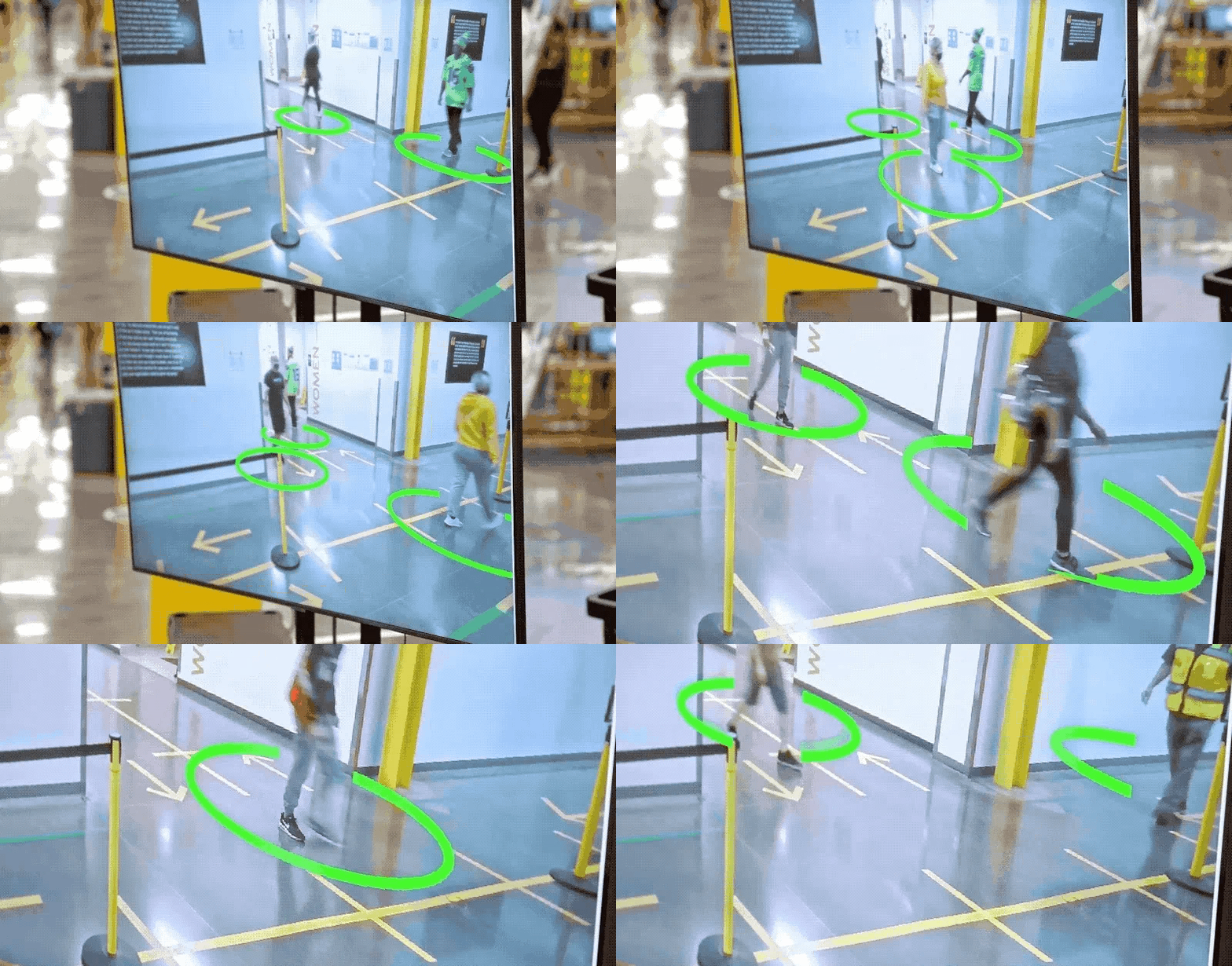
Amazon's AI Fired People for Taking Bathroom Breaks
The Core Issue (First 100 Words): Yes, you read that right. Amazon's automated tracking system reportedly flagged and fired warehouse workers for taking bathroom breaks that were too long or too frequent. The AI didn't care if they had a medical condition. It didn't care if they were dehydrated or pregnant. It just saw "time off task" and auto-terminated them. This actually happened. In 2021, a class-action lawsuit revealed that Amazon's AI-powered productivity system fired over 300 workers at a single warehouse for failing to meet speed quotas — including bathroom breaks counted against them. One worker testified she stopped drinking water at work so she wouldn't have to pee. Another lost her baby after being denied bathroom breaks. The machine didn't hate them. It just didn't know they were human.
How an Algorithm Decided Urination Was Unproductive
Amazon's system works like this: every employee's every move is tracked. Scan a package. Walk to a shelf. Pick an item. Put it in a tote. The AI calculates exactly how many seconds each task should take. If you fall behind — even to use the bathroom — the system logs "Time Off Task."
Get flagged too many times? The AI automatically starts the termination process. No manager review. No conversation. Just a robot firing you because you had diarrhea.
One former employee told reporters she ran 15 minutes late from her break because she was vomiting. The AI flagged her. She was fired three days later. Another worker said managers admitted the system was unfair but claimed their hands were tied. The algorithm made the call.
The AI/Automation Angle
Amazon's surveillance system uses computer vision, machine learning, and IoT sensors to create what tech experts call "algorithmic management." The system doesn't employ human judgment — it operates on hard metrics. Productivity quotas become mathematical algorithms. Workers become data points. The AI doesn't make exceptions because it has no concept of exceptions. It sees patterns and enforces them with mechanical precision. This is the dark side of automation: removing human discretion in favor of absolute compliance.
Why Amazon Defended the Robot Boss
Amazon argued the AI was protecting productivity. Faster workers mean faster shipping. Faster shipping means more money. From a pure numbers standpoint, the system worked — delivery times dropped, costs fell, and shareholders cheered.
But here's the part Amazon didn't advertise: the same AI caused permanent injuries, mental breakdowns, and workers pissing in bottles rather than walking to a bathroom. Investigative reporters found ambulances called to warehouses for dehydration and heat stroke. Workers wore diapers. Not because they wanted to. Because the algorithm punished bathroom breaks like theft.
Amazon eventually settled a lawsuit with the US government for $1.2 million over safety violations tied to the system. But the AI didn't change. It's still tracking. It's still firing. It just got better at hiding it.
The company's official stance was defensive. Amazon claimed the system was "one tool among many" and that managers had final say on terminations. This is technically true — but it's also misleading. When the algorithm recommends termination with a 95% accuracy rate based on mathematical models, how many managers actually override it? Studies show they rarely do. The AI becomes the de facto decision-maker, with human managers serving as rubber stamps.
What This Means for Your Job Right Now
If Amazon's AI can fire someone for peeing, your boss's AI can fire you for anything. The same tech is already inside warehouses, call centers, delivery companies, and even remote work trackers. Apps monitor your keyboard strokes, your mouse movement, your "active minutes." Some systems take random screenshots. Others flag you if you look away from the screen too long.
You think your manager watches you? No. The algorithm does. And it never blinks.
The scary part? Most workers don't even know they're being judged by AI until they get the termination email. No warning. No "hey, your bathroom breaks are high." Just a robot deciding you're replaceable.
The Bigger Picture: Automation Without Accountability
This isn't just about Amazon. It's about how AI systems are being deployed across industries with virtually no oversight. The problem compounds when you consider that:
1. AI Systems Have Bias Built In: If the training data reflects historical discrimination, the AI will too. Amazon's system was trained on "efficient" workers — which skewed toward younger, healthier employees without chronic illnesses or disabilities.
2. Algorithms Don't Appeal Decisions: You can't argue with math, right? Wrong. But that's what companies claim. The AI said you were inefficient, and that's final. There's no court of appeal for algorithmic termination.
3. Transparency is Zero: Amazon never told workers the exact metrics being used to judge them. The system was a black box. Workers didn't know why they were flagged until it was too late.
4. Speed Becomes Religion: When an AI is optimized only for speed, everything else becomes irrelevant. Worker safety? Irrelevant. Worker dignity? Irrelevant. Worker health? Irrelevant. The algorithm achieved peak efficiency by removing the human variable entirely.
This is the dangerous intersection of automation and capitalism. Technology that could liberate workers instead becomes a tool to squeeze more productivity out of them without consequences.
What Companies Won't Tell You About AI Monitoring
Most employers deploying AI monitoring systems won't openly admit what they're actually doing. They call it "productivity optimization" or "performance management." What they mean is surveillance capitalism applied to labor.
Companies like Amazon, Walmart, and UPS use algorithms to set quotas that are mathematically impossible for human beings to meet. Then they use the same AI to punish those who can't meet them. It's a closed loop designed to extract maximum value while minimizing liability.
The tech is becoming more sophisticated. New systems use predictive analytics to identify which employees are "at risk" of being inefficient. Some use sentiment analysis on employee emails and messages to flag "problematic" attitudes. Others use gait recognition to track how workers move through warehouses.
This isn't science fiction. This is happening now, in warehouses and call centers across America.
The Legal Aftermath and Why It Didn't Fix Anything
After the 2021 lawsuit, Amazon made some cosmetic changes. They added an appeals process. They hired more human managers to review terminations. But the underlying system didn't change. The AI still tracks. The AI still flags. The AI still recommends termination with the same algorithmic ruthlessness.
Why? Because the system is too profitable to abandon. Amazon saves millions annually through algorithmic management. The $1.2 million settlement is a rounding error in their budget. For the company, it was cheaper to pay the fine than to redesign the system.
This is the real problem with AI accountability. Companies can absorb settlements. They can afford lawsuits. What they can't afford is losing the competitive advantage that automation provides. So they pay fines, make token improvements, and keep pushing.
Workers Are Fighting Back (Slowly)
Unionization efforts at Amazon warehouses have gained momentum partly because of issues like the bathroom break AI system. Workers want transparency. They want human decision-making. They want the right to pee without getting fired.
Some states have begun passing legislation requiring companies to disclose algorithmic management systems to employees. California's AB-5 and similar laws attempt to provide protections, but they're often written too narrowly to catch the latest tech tricks.
The fight is David versus Goliath. Workers have bathroom breaks as their weapon. Amazon has billions in AI research funding.
What the Future Looks Like If Nothing Changes
If companies like Amazon face no meaningful consequences for algorithmic terminations, the technology will only get worse. Imagine:
- AI systems that monitor your home office and track when you're not looking at your screen
- Algorithms that predict you'll quit and fire you first
- Systems that dock your pay in real-time based on minute-by-minute productivity scores
- AI that analyzes your facial expressions to determine if you're "engaged enough"
These aren't hypothetical. Companies are already testing them.
The bathroom break story is just the beginning. It's the canary in the coal mine for workplace automation. If we allow AI to make employment decisions without human oversight, we're building a future where workers have fewer rights, less dignity, and less control over their own bodies.
Frequently Asked Questions
Did Amazon really fire people for bathroom breaks?
Yes. A 2021 lawsuit and multiple investigations confirmed Amazon's AI system terminated workers for "Time Off Task," including bathroom and medical breaks. The lawsuit revealed that over 300 workers at a single warehouse were fired, with some losing jobs within days of being flagged by the system. Workers testified that they altered their health behaviors to avoid triggering the algorithm, with some stopping drinking water to reduce bathroom needs and others wearing diapers to work.
Is Amazon still using AI to monitor workers?
Yes. The system is still active in most Amazon warehouses, though the company has made minor adjustments following legal pressure. The core technology remains unchanged — AI tracking every movement and flagging workers who fall behind quotas. Amazon argues the system has "oversight," but the reality is that algorithmic recommendations carry overwhelming weight in termination decisions.
What is "Time Off Task" in Amazon's system?
"Time Off Task" is the Amazon system's term for any moment a worker isn't actively scanning, picking, packing, or stowing items. This includes bathroom breaks, water breaks, stretching, checking messages from managers, and even brief moments of fatigue. The system calculates a percentage of "Time Off Task" and flags employees who exceed certain thresholds. There is no built-in allowance for human bodily functions.
How much did Amazon settle for in the lawsuit?
Amazon settled with the U.S. government for $1.2 million specifically related to safety violations tied to the AI monitoring system. However, this pales in comparison to the company's annual profits (over $100 billion). The settlement is largely considered insufficient by worker advocates, as it doesn't fundamentally change how the system operates. Additional class-action lawsuits from affected workers are ongoing in various states.
What other companies use similar AI monitoring systems?
Many major corporations use comparable systems: Walmart uses AI to track employee productivity, UPS monitors driver behavior with algorithms, DoorDash tracks gig workers in real-time, and countless remote work companies use monitoring software that tracks keystrokes and screenshots. The technology is industry-standard, with companies like Verifone, Kronos, and Workforce.com selling these systems to employers across retail, logistics, and call centers.
Can employees opt out of AI monitoring?
In most cases, no. AI monitoring is typically a condition of employment. If you want the job, you accept the monitoring. Some states are moving toward transparency requirements, which mandate that employers disclose monitoring practices, but that's different from opting out. Employees who refuse monitoring typically have their employment terminated.