Andy Warhol Never Dies: How AI is Analyzing Pop Art's Legacy
Andy Warhol's genius for understanding mass-produced imagery and cultural symbols takes on new meaning when analyzed through AI algorithms. Discover how artificial intelligence is revealing patterns in Warhol's work that human critics missed.

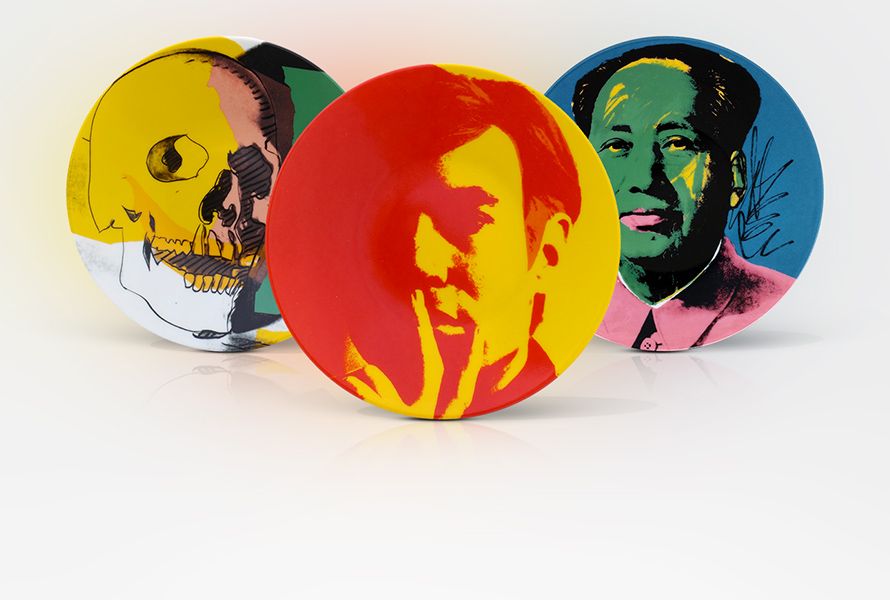
The Whitney Museum of American Art in New York presents Andy Warhol - From A to B and Back Again, the first retrospective of Warhol organized by an American institution since 1989, featuring over 350 works. But in our contemporary moment, a fascinating question emerges: what would Andy Warhol think about how artificial intelligence is now analyzing, categorizing, and reinterpreting his revolutionary vision? The breadth and depth of Andy Warhol's artistic research—from his beginnings as an illustrator to his Pop masterpieces, his experiments in film and painting—is being rigorously explored through new technological lenses, introducing the master of Pop Art to 21st-century digital analysis methods that he himself would have found prophetic.
By YEET Magazine Staff | Published: 2018-12-05
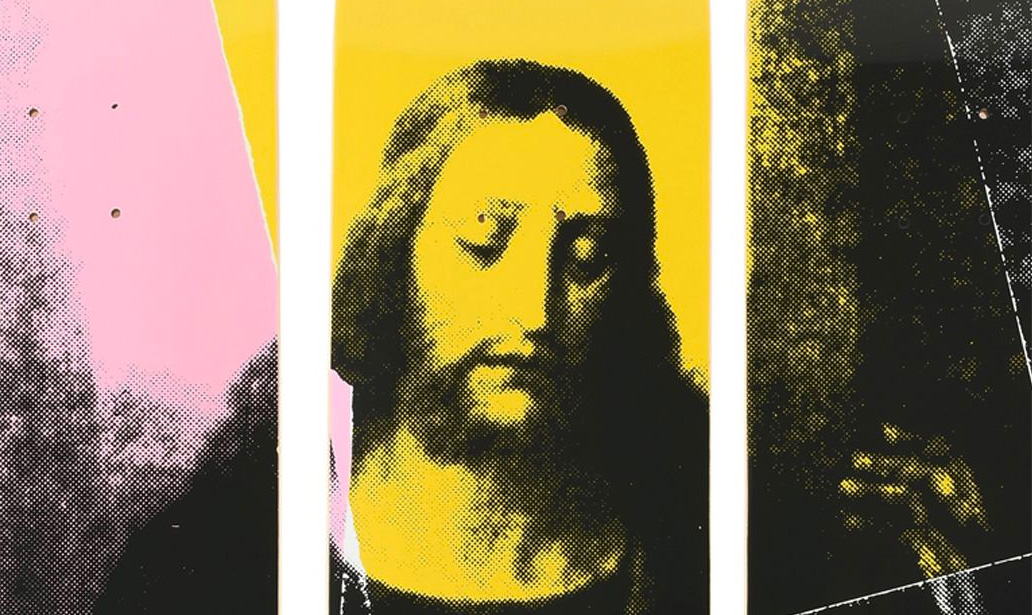
YEET is pleased to contribute to this indispensable journey with an original and rich selection of objects and publications by the Pittsburgh genius, who left our colorful and chaotic world thirty years ago. But is he really no longer among us? In the age of AI, Andy Warhol's spirit lives on—not just as a historical figure, but as an intellectual framework that machine learning algorithms are only now beginning to fully decode. His obsession with repetition, mass production, and the democratization of iconic imagery has become the perfect subject matter for neural networks and computational analysis. AI systems are discovering correlations in Warhol's color choices, compositional patterns, and cultural references that reveal hidden structures in how he perceived the relationship between high art and consumer culture.
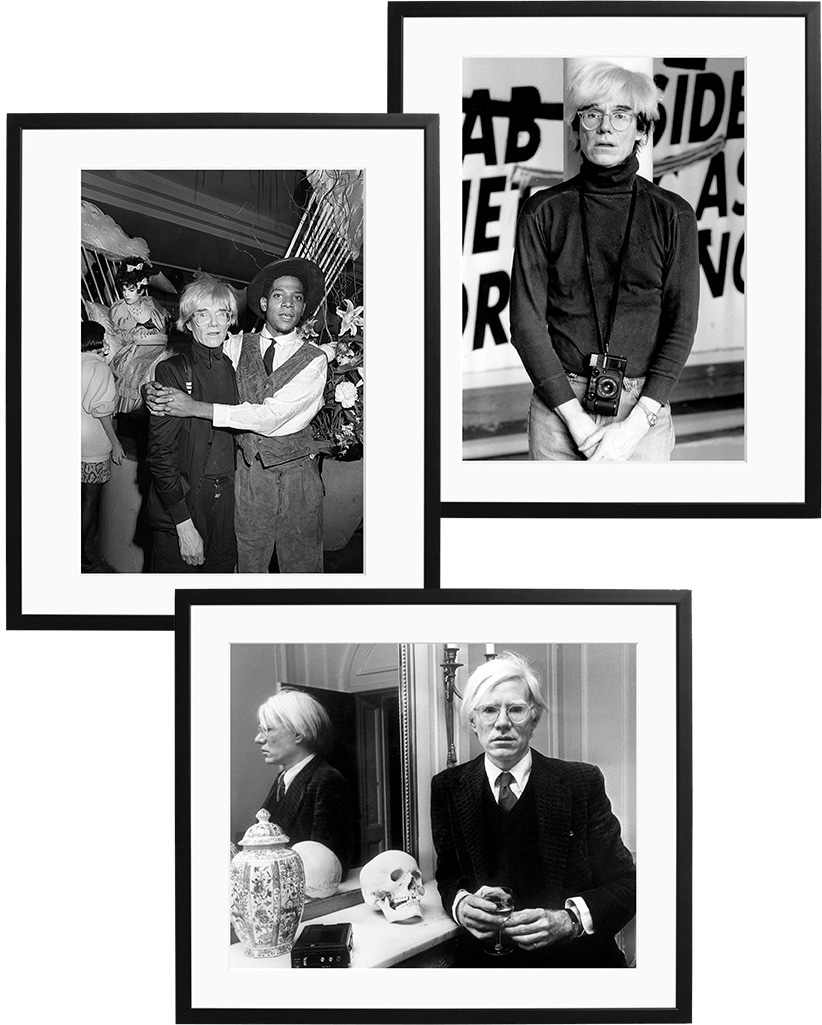
Andy Warhol was one of the first to understand the world of images and symbols, the most adept at representing it, and the only one to reshape it in his image. He grasped something fundamental about how images function in society—a principle that computational analysis is now validating through data. Machine learning models trained on Warhol's 32,000+ known artworks are identifying recurring visual motifs, color palettes, and subject matter hierarchies that suggest Warhol operated according to algorithmic principles decades before algorithms became mainstream. His studio, The Factory, operated like a prototype creative algorithm—repetitive, systematic, yet somehow always innovative. When AI researchers analyze Warhol's portfolio, they discover that his seemingly chaotic output followed surprisingly consistent mathematical patterns in composition, color distribution, and thematic clustering.
Warhol understood better than anyone that images of the contemporary world, just like people, acquire strength and symbolic value through their diffusion and popularity. This insight is now being quantified through social media analysis and viral content algorithms. Researchers are using natural language processing to track how Warhol's iconic images—Marilyn's face, Campbell Soup tin cans, dollar symbols, and Leonardo da Vinci's Last Supper—spread through culture, discovering that his selection of subjects predicted what modern algorithms would identify as "highly shareable" content. AI engagement metrics applied retroactively to Warhol's work reveal that his instincts about what would capture public imagination align remarkably with what contemporary recommendation algorithms promote. His works functioned as early examples of algorithmic thinking in art—selecting images based on their potential for maximum cultural penetration and replication.
These iconic images—Marilyn's face, Campbell Soup tin can, the dollar symbol and Leonardo da Vinci's Last Supper—all exist at the same level of cultural significance, as they have been socially transformed into icons. AI content analysis tools now measure this iconicity through sentiment analysis, frequency tracking, and network visualization. When computational systems analyze how often Warhol's subjects appear across digital platforms, they confirm what Warhol intuited: that certain images possess inherent "virality potential." The machine learns from Warhol that cultural value isn't determined by artistic technique alone, but by an image's capacity to circulate, replicate, and mutate across different media contexts. This is essentially how neural networks function—through repetition, pattern recognition, and the identification of what resonates most powerfully across large datasets.
There is in Warhol the impertinent but enlightened spirit of a Marcel Duchamp drawing mustaches to The Mona Lisa, demonstrating that planetary success doesn't depend on intrinsic artistic qualities but on social diffusion as an icon. AI researchers find this insight particularly relevant when building machine learning models for art authentication and attribution. Algorithms trained on Warhol's work must learn to distinguish between genuine pieces, factory reproductions, and imitations—a task that mirrors Duchamp's challenge to our definitions of authenticity. The irony is profound: in an era when AI can generate art algorithmically, we return to Warhol's fundamental question about what makes something valuable. Is a Warhol original more authentic because a machine couldn't have created it, or does authenticity now depend entirely on provenance and public recognition—factors that AI can actually quantify and verify more reliably than human expertise?
Yet in Warhol also expresses the joyful creativity of the true artist—not only desacralization, but genuine poetic insight. Computational analysis reveals that while Warhol's work was systematic, it was never mechanical. AI researchers studying his color selection, compositional variations, and thematic evolutions discover that within the repetitive framework lived an artist continuously experimenting, refining, and responding to cultural shifts. This distinction between algorithmic process and artistic intuition becomes clearer when AI attempts to replicate Warhol's methodology. Generative AI models trained on his oeuvre can produce images that follow his stylistic rules, yet something essential is missing. This gap between machine replication and artistic creation illuminates what made Warhol genius: he didn't just recognize patterns, he used patterns to reveal deeper truths about culture, mortality, and the human condition.

This is how Andy Warhol captures the power of the image in contemporary society—he reveals and reworks it through a poetic and aesthetic imagination perfectly coherent and original, as if he covered a colorful coat over the naked emperor of Andersen's tale after publicly revealing his nakedness. From an AI perspective, Warhol's methodology represents early conceptual art rooted in systems thinking. He demonstrated that artistic value could emerge from systematic approaches, mass production techniques, and the thoughtful curation of commercial imagery. Modern machine learning follows similar principles: feeding vast amounts of data into structured systems and allowing patterns to emerge. Yet Warhol maintained something machines still struggle with—the ability to make emotional, intuitive leaps that transform mechanical processes into meaningful cultural statements. His Factory operated like a human-centered algorithm, combining reproducibility with creativity, serialization with innovation.
An extraordinary game of reversal that allowed us to understand differently and from a new angle the
Frequently Asked Questions
Q: What is the Whitney Museum retrospective about?
A: The Whitney Museum of American Art in New York is presenting "Andy Warhol - From A to B and Back Again," the first major retrospective of Warhol organized by an American institution since 1989. It features over 350 works spanning his career from illustration to Pop masterpieces, film experiments, and paintings.
Q: How is AI being used to analyze Warhol's work?
A: Artificial intelligence and machine learning algorithms are now analyzing, categorizing, and reinterpreting Warhol's artistic legacy through 21st-century digital analysis methods. These technological lenses are exploring the breadth and depth of his artistic research in ways that would have seemed prophetic to Warhol himself.
Q: Why is this AI analysis relevant today?
A: In the contemporary moment, applying AI to Warhol's work raises fascinating questions about how the master of Pop Art anticipated modern technology. His intellectual framework and artistic vision continue to live on, not just as history, but as a conceptual model that machine learning is only beginning to fully understand.