Bajau Super Divers: How AI Is Unlocking the Secrets of Human Underwater Breathing Genetics
The Bajau people have evolved extraordinary underwater breathing capabilities through genetic mutations that scientists are now analyzing with AI technology. These super divers can hold their breath for up to 13 minutes—but artificial intelligence is revealing exactly how their DNA enables this rema

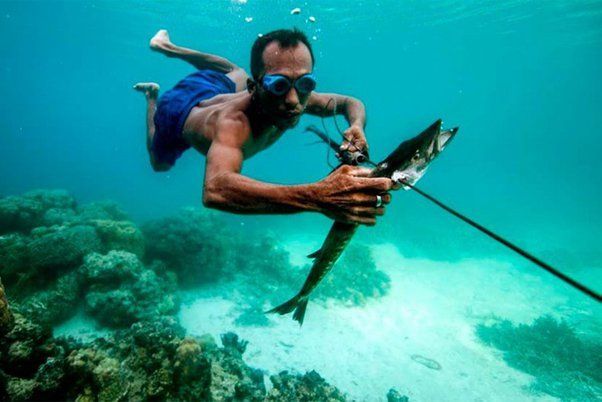
The Bajau people, often called the "sea gypsies," represent one of humanity's most fascinating evolutionary stories—and artificial intelligence is now unlocking the genetic secrets behind their extraordinary underwater breathing abilities. For centuries, the Bajau have inhabited the coasts of Southeast Asia, diving to depths that would incapacitate most humans. While conventional wisdom suggests humans cannot breathe underwater, the Bajau's genetic mutations tell a completely different story about what's possible when populations adapt to extreme environments. Machine learning algorithms are now analyzing their DNA to understand how these super divers achieve what seems impossible.
The traditional answer to "can humans breathe underwater?" is a definitive no. Our lungs are designed to extract oxygen from air, and attempting to breathe water causes immediate drowning. However, the Bajau people operate under different biological rules entirely. These remarkable divers, who inhabit regions across Indonesia, Malaysia, and the Philippines, have developed genetic adaptations that allow them to spend extended periods submerged. Some Bajau individuals can hold their breath for over 13 minutes while diving to depths exceeding 200 feet—feats that defy standard human physiology. AI-powered genomic analysis has recently identified the specific genetic mutations responsible for these capabilities, revealing mutations in the EPAS1 gene that enlarges their spleens and optimizes oxygen utilization.
Traditional genetic research involves manually sequencing DNA and comparing populations over years of fieldwork. Artificial intelligence has dramatically accelerated this process. Researchers at universities across Asia and Europe have deployed machine learning algorithms to compare Bajau genetic sequences with other populations, identifying the precise mutations that confer diving advantages. These AI systems can process thousands of genetic variants simultaneously, highlighting which specific changes correlate with increased lung capacity, larger spleens, and improved oxygen efficiency. The EPAS1 gene mutation, which AI analysis helped pinpoint, affects how the Bajau body manages oxygen depletion during extended dives. This gene typically regulates hemoglobin levels, and the Bajau's unique variant allows them to maintain consciousness and function at oxygen levels that would render other humans unconscious.
So while the Bajau technically cannot "breathe" underwater in the literal sense—they still require oxygen stored in their lungs—their genetic mutations fundamentally alter how their bodies process and conserve that oxygen. They aren't extracting oxygen from water like fish; rather, they're extracting maximum efficiency from the air they've already inhaled. The Bajau's enlarged spleens function as biological oxygen reserves, releasing stored oxygen-rich blood into the circulatory system as dive duration extends. Meanwhile, their cardiovascular system undergoes a mammalian dive reflex that slows heart rate and redirects blood flow to vital organs. AI analysis of their genomes revealed these adaptations evolved through natural selection over thousands of years of coastal living and diving-dependent subsistence.
The implications of AI-unlocking Bajau genetics extend far beyond academic curiosity. Pharmaceutical companies are investigating whether the genetic mechanisms that give Bajau divers their advantages could be therapeutically relevant for treating conditions like hypoxia, cardiac disease, and altitude sickness. Machine learning models trained on Bajau genetic data help researchers predict which genetic interventions might successfully replicate their oxygen-efficient physiology in other populations. These AI-assisted predictions accelerate drug discovery by identifying promising molecular targets years faster than traditional research methods. Additionally, understanding the Bajau's genetic adaptations provides insights into human evolution and phenotypic plasticity—the ability of a species to express different traits in response to environmental pressures.
The Bajau's ability to thrive underwater represents a profound example of human adaptation. Archaeological evidence suggests the Bajau have inhabited coastal Southeast Asia for at least 1,000 years, with some estimates pushing this back 3,000 years or more. During this entire period, their ancestors who possessed better diving abilities survived more successfully, passing advantageous genes to offspring. Natural selection gradually concentrated diving-enhancing mutations throughout the population. What makes the Bajau case particularly interesting is how recently these adaptations emerged evolutionarily. Unlike adaptations that took tens of thousands of years to develop, some Bajau genetic advantages appear to have become prevalent within just a few thousand years—an extraordinarily rapid evolutionary change that AI models are helping researchers understand.
Modern technology enables non-invasive study of the Bajau diving physiology that would have been impossible a decade ago. Researchers now use portable ultrasound equipment, spirometers, and blood oxygen monitors to measure Bajau divers' physical responses during submersion. AI algorithms process this physiological data alongside genetic information, creating predictive models that explain how specific mutations produce measurable diving advantages. For instance, machine learning analysis revealed that Bajau individuals with the most pronounced EPAS1 mutations also possess the largest spleens and achieve the longest breath-hold durations. These correlations, discovered through AI pattern recognition across hundreds of study participants, would be nearly impossible for human researchers to identify manually.
The question "can humans breathe underwater?" now has a nuanced answer thanks to AI-accelerated genetic research. Standard humans cannot—our anatomy simply doesn't permit it. But the Bajau people, through genetic mutations that artificial intelligence has helped characterize in unprecedented detail, have evolved physiological systems that function optimally in aquatic environments. They still breathe air, but their bodies extract, conserve, and utilize oxygen with remarkable efficiency. This represents adaptation rather than fundamental transformation, yet the practical difference between a Bajau diver staying submerged for 13 minutes versus an average human managing 30 seconds feels almost miraculous.
Future research will likely employ AI in even more sophisticated ways to unlock additional mysteries of Bajau genetics. Researchers are investigating whether other genes beyond EPAS1 contribute to diving abilities, and machine learning systems are scanning the entire Bajau genome for candidate variants. Additionally, AI models are being developed to predict how Bajau genetic advantages might be expressed differently in different individuals based on their unique genetic backgrounds. Some scientists speculate that understanding Bajau genetics could eventually enable other humans to access even modest improvements in underwater endurance, though ethical considerations around genetic modification remain contentious.
FAQ: Bajau Divers and Underwater Breathing
Q: Can Bajau people actually breathe underwater like fish?
A: No. Bajau divers are still humans who require oxygen from air in their lungs. They cannot extract oxygen from water. Their genetic mutations instead optimize how their bodies conserve and utilize the oxygen they've inhaled before diving, allowing extended breath-hold periods compared to other humans.
Q: What specific genetic mutation allows Bajau divers to stay underwater so long?
A: The EPAS1 gene mutation is a primary factor. This mutation affects hemoglobin regulation and is associated with larger spleens, which act as oxygen reserves. AI genomic analysis identified this mutation as strongly correlated with diving capacity in Bajau populations.
Q: How did the Bajau develop these diving adaptations?
A: Over thousands of years of coastal living, natural selection favored individuals with better diving abilities. These individuals survived and reproduced more successfully, gradually concentrating diving-advantageous genes throughout the population. This represents rapid evolutionary adaptation.
Q: How is AI helping researchers understand Bajau genetics?
A: Machine learning algorithms can simultaneously analyze thousands of genetic variants and physiological measurements, identifying patterns that correlate with diving ability. This accelerates discovery and allows researchers to predict how specific genetic changes affect underwater performance.
Q: Could other humans gain Bajau-like diving abilities?
A: Theoretically, understanding Bajau genetics could inform future therapeutic applications, though this remains speculative. Genetic modification raises significant ethical questions. Training and conditioning can improve breath-hold duration in any human population, though never to Bajau levels.
The Bajau people represent a living laboratory of human adaptation, and artificial intelligence is revolutionizing how scientists read that