
Can You Lose Immigration Benefits for Falsely Claiming to Be a US Citizen?
A false claim to US citizenship can have severe immigration consequences. The rules depend on the date, purpose and circumstances of the claim.

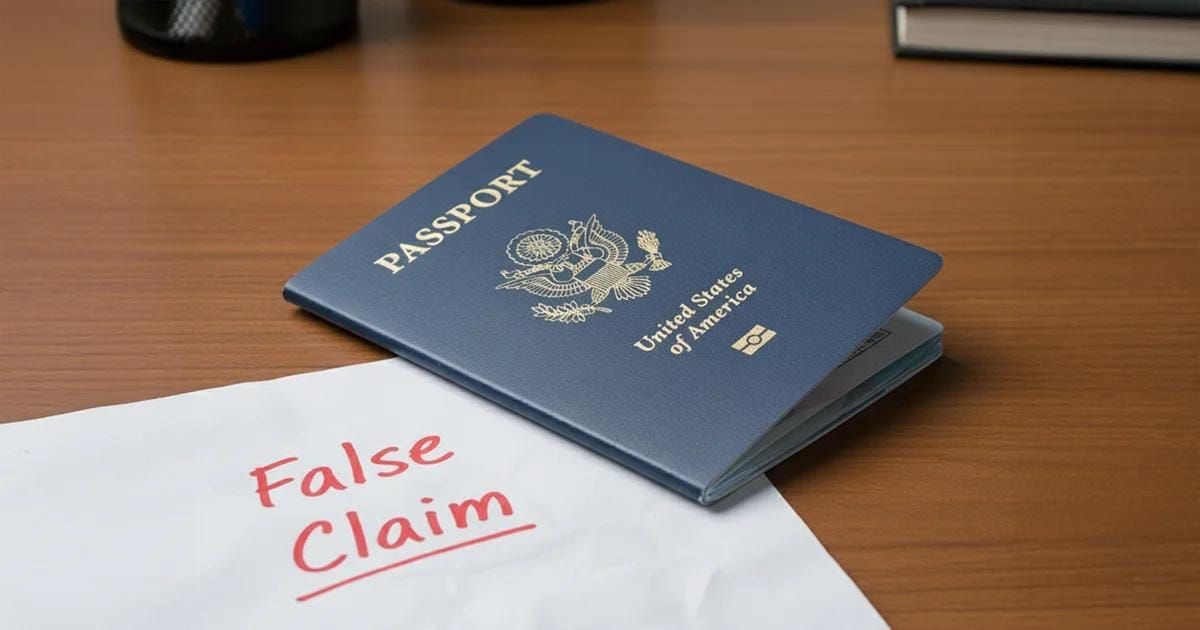
YEET Magazine — us citizenship fraud
Could One False Claim of U.S. Citizenship Block Someone From Getting a Green Card? The Immigration Rule Explained
Claiming to be a U.S. citizen when you are not can have consequences that follow a person through future immigration applications. Under federal immigration law, certain false claims can make a noncitizen permanently inadmissible, potentially blocking a green card or other immigration benefits. The rule is especially serious because a person does not necessarily have to know that the citizenship claim was false. But the law also contains specific requirements, limited exceptions and narrow waiver provisions that can make the outcome depend heavily on the circumstances.
This is part of YEET Magazine's continuing coverage of U.S. citizenship fraud, false claims and immigration identity misuse. For readers concerned about suspected fraud involving another person's documents or identity, see our related guide: How to Report Suspected U.S. Citizenship Fraud or Identity Misuse.

What happens when someone falsely claims to be a U.S. citizen?
The Immigration and Nationality Act contains a specific provision addressing false claims to U.S. citizenship. Under INA Section 212(a)(6)(C)(ii), a noncitizen who falsely represents themselves as a U.S. citizen for a purpose or benefit under the Immigration and Nationality Act or another federal or state law is inadmissible.
Inadmissibility means a person may be legally ineligible for admission to the United States or for an immigration benefit that requires admissibility, including adjustment of status to lawful permanent residence.
This is not simply another allegation of immigration paperwork fraud. Congress created a separate legal ground specifically for false claims to U.S. citizenship. It can apply even when the claim was made outside an immigration application.
For example, USCIS guidance explains that a false claim may arise in an employment context, when someone claims citizenship to avoid employment authorization requirements. Other examples can involve seeking a U.S. passport, attempting to enter the country or making a citizenship claim to avoid immigration enforcement.
The distinction between a false citizenship claim and other forms of immigration misrepresentation is important. Our broader explainer, What Counts as U.S. Citizenship Fraud?, covers the different legal categories, including false statements and fraudulent citizenship documents.
Why September 30, 1996 matters
The effective date is a critical part of this legal rule. The false-claim ground of inadmissibility applies to representations made on or after September 30, 1996, the date associated with the relevant provisions of the Illegal Immigration Reform and Immigrant Responsibility Act.
A claim made before that date cannot trigger this particular false-claim ground of inadmissibility. However, that does not mean every older false statement is legally harmless. Depending on the facts, an earlier statement may still raise questions under other provisions, including the separate rules concerning fraud and willful misrepresentation.
For this reason, the exact date of the representation matters. Investigators and immigration officers may need to establish when the statement was made, where it occurred and what the person was trying to accomplish.
Does the person have to know the citizenship claim was false?
This is one of the most important and frequently misunderstood parts of the law.
In Matter of Zhang, a 2019 precedential decision, the Board of Immigration Appeals explained that the false-claim provision does not require the government to establish that the person knowingly or intentionally made a false citizenship representation.
USCIS incorporated that interpretation into its policy guidance in 2020. Its August 20, 2025 policy alert reaffirmed the approach and clarified how officers should examine the purpose or benefit associated with the representation.
There is an important distinction here. The person does not necessarily have to intend to make a false statement. But USCIS guidance still directs officers to examine whether the person made the representation with the subjective intent to obtain a benefit or achieve a purpose under federal or state law.
In other words, the legal analysis is not simply whether someone knowingly lied. The purpose of the claim and the circumstances surrounding it also matter.
What types of false citizenship claims can trigger immigration consequences?
The law is broader than a false answer on a naturalization application. A claim can be made orally, in writing or through the submission of documents. USCIS guidance also explains that the representation does not have to be made directly to a federal immigration officer.
Examples that may attract scrutiny include:
- Employment verification: Claiming U.S. citizenship on Form I-9 to avoid presenting employment authorization documents.
- Passport applications: Claiming citizenship when applying for a U.S. passport without being legally entitled to one.
- Government benefits: Making a false citizenship representation to obtain a benefit for which citizenship is a legal requirement.
- Voting: Falsely claiming citizenship in connection with voting or voter registration where citizenship is required.
- Immigration inspections: Claiming citizenship to avoid inspection, immigration questioning or removal proceedings.
- State or local processes: Making a citizenship claim to obtain a benefit or avoid a legal requirement under applicable state or federal law.
The details matter. A statement that someone is a U.S. national is not necessarily the same as a claim to be a U.S. citizen. USCIS recognizes that U.S. nationals and U.S. citizens are not identical legal categories.
Can a false citizenship claim made to an employer count?
Yes. This is one of the most consequential aspects of the provision.
A person does not necessarily have to submit a false citizenship statement to USCIS or another immigration agency. A false representation to a private employer may be relevant if it was made to obtain employment or avoid an employment eligibility requirement under federal law.
For example, USCIS guidance discusses a person who marks the U.S. citizen box on Form I-9 to avoid providing evidence of employment authorization. That representation may trigger the false-claim ground even though the employer is not an immigration agency.
The rule can therefore affect people who assumed that a statement made during an ordinary hiring process would have no immigration consequences. This is different from an ordinary paperwork error: the legal analysis must consider the actual representation and the purpose for which it was made.

Is there an exception for someone who reasonably believed they were American?
There is a narrow statutory exception, but it requires several conditions to be satisfied together.
Under INA Section 212(a)(6)(C)(ii)(II), a person may avoid inadmissibility under this provision if:
- Both parents were U.S. citizens: Each natural parent, or each adoptive parent in the case of an adopted person, must be or have been a U.S. citizen.
- Permanent residence before age 16: The person must have permanently resided in the United States before reaching 16 years of age.
- Reasonable belief of citizenship: The person must have reasonably believed at the time of the representation that they were a U.S. citizen.
These requirements are cumulative. Having one U.S. citizen parent, having lived in the United States as a child or simply believing that citizenship was possible does not automatically satisfy the exception.
USCIS guidance also clarifies that both parents must have been U.S. citizens at the time of the false representation for the exception to apply.
Are there any other exemptions or waivers?
The statutory exception is not the only part of the law that matters. USCIS identifies specific immigrant categories that are exempt from the false-claim ground of inadmissibility.
These include:
- Special Immigrant Juveniles: Certain applicants seeking adjustment of status under the applicable special immigrant juvenile provisions.
- Registry applicants: Certain people seeking permanent residence under the registry provisions of immigration law.
USCIS also explains that there is no general waiver of this inadmissibility ground under INA Section 212. However, Congress has authorized specific waivers for certain categories, including refugees, asylees, certain trafficking victims and people seeking legalization under applicable provisions. Nonimmigrants may also be able to seek a separate nonimmigrant waiver in qualifying circumstances.
These provisions are limited. They should not be interpreted as a general opportunity for anyone facing a false citizenship allegation to obtain forgiveness through an ordinary waiver application.
Can someone correct a false citizenship claim before it affects an immigration application?
USCIS policy recognizes a legal concept known as timely retraction. In certain circumstances, a person who corrects a false representation voluntarily and before being challenged may be able to avoid inadmissibility on that basis.
However, the timing and circumstances are crucial. The correction generally must be made in the same proceeding in which the false statement was made, before an official challenges the person's truthfulness and before that proceeding concludes.
Simply admitting a past false claim years later during a different immigration application is not necessarily a timely retraction.
For example, USCIS guidance explains that disclosing a previous false citizenship claim on a later adjustment-of-status application does not automatically qualify as a timely retraction of an earlier statement made on Form I-9.
Anyone who believes they may have made an inaccurate citizenship representation should obtain individual legal advice before attempting to correct or explain the record. A poorly timed or incomplete explanation can create additional problems.
Can a false citizenship claim permanently block someone from getting a green card?
Potentially, yes. USCIS's August 20, 2025 policy alert states that a person found inadmissible under the false-claim provision is permanently barred from adjustment of status and that, in most cases, no immigrant waiver is available.
That is why this provision can be particularly serious for someone who later marries a U.S. citizen, becomes eligible for another immigration category or attempts to apply for permanent residence through a family or employment route.
However, the outcome is not automatic simply because someone has been accused of making a false claim. The applicable legal elements, date, purpose, evidence, statutory exceptions and any available waiver must be assessed.
Inadmissibility also needs to be distinguished from deportability. The Immigration and Nationality Act contains a separate provision, INA Section 237(a)(3)(D), addressing certain false claims made by noncitizens who have already been admitted to the United States and may be removable.
What should someone do after being questioned about a false citizenship claim?
A person facing questions about a previous citizenship representation should treat the issue seriously. The first step is to establish exactly what was said, when it was said and in what context.
- Obtain the original record: Secure copies of the relevant Form I-9, application, registration, statement or document.
- Establish the date: Determine whether the statement was made before or after September 30, 1996.
- Identify the purpose: Understand what benefit or legal purpose the representation was intended to achieve.
- Preserve supporting evidence: Keep relevant correspondence, employment records, applications and other documents.
- Check possible exceptions: Review whether the statutory exception or a specific exemption or waiver category could apply.
- Consult an experienced immigration attorney: Obtain advice before submitting explanations, signing new statements or making further representations to authorities.
If the issue involves suspected fraudulent documents or another person's alleged false citizenship claim, the reporting process is different from defending against an immigration allegation. Our related guide explains how to report suspected U.S. citizenship fraud, what evidence may matter and which official agencies handle different complaints.
Official legal guidance: False claims to U.S. citizenship
USCIS's Policy Manual explains how officers assess false citizenship representations, the purpose or benefit requirement, timely retraction and the statutory exceptions.
Read USCIS Policy Manual — Determining False Claims to U.S. Citizenship →
Why the August 2025 USCIS policy update matters
On August 20, 2025, USCIS issued Policy Alert PA-2025-17, revising its guidance on the false-claim ground of inadmissibility.
The update revised the Policy Manual's guidance on how officers determine whether a false claim occurred and how they assess statutory exceptions and waivers. It also clarified the role of the person's subjective intent to obtain a benefit or achieve a purpose under federal or state law.
The policy alert specifically states that the 2019 Board of Immigration Appeals decision in Matter of Zhang supersedes earlier DHS guidance that required proof that the person knowingly made the false citizenship claim.
This distinction is important for applicants reviewing old employment records, previous immigration forms or statements made many years earlier. The law cannot be reduced to the simple question of whether someone intended to lie.
The relevant analysis involves the representation itself, the date, the purpose or benefit, the surrounding evidence and whether an exception or waiver is available.
Check the statutory exception and waiver rules
USCIS explains which applicants may be exempt, which narrow statutory exception may apply and which categories can seek specific waivers.
Read USCIS Policy Manual — Exemptions, Exceptions and Waivers →
Frequently Asked Questions
Can a false claim to U.S. citizenship make someone inadmissible?
Yes. Under INA Section 212(a)(6)(C)(ii), certain false claims made for a purpose or benefit under federal or state law can make a noncitizen inadmissible to the United States.
Can a false citizenship claim prevent someone from getting a green card?
Yes. A person found inadmissible under this provision may be permanently barred from adjustment of status, subject to applicable statutory exceptions and specific waiver provisions.
Do false claims to U.S. citizenship made before 1996 follow the same rule?
No. The false-claim ground applies to representations made on or after September 30, 1996. Earlier statements may still raise separate questions under other immigration laws.
Does someone have to know they are not a U.S. citizen for the rule to apply?
Not necessarily. Under Matter of Zhang and USCIS guidance, the person does not need to intend to make a false citizenship claim. However, USCIS examines whether the representation was made with the subjective intent to obtain a benefit or achieve a purpose under federal or state law.
Can claiming U.S. citizenship to get a job affect immigration status?
Yes. Claiming citizenship on Form I-9 to avoid employment authorization requirements can trigger the false-claim ground of inadmissibility.
Is there an exception for someone whose parents are U.S. citizens?
A narrow exception may apply if each natural or adoptive parent was a U.S. citizen at the time of the representation, the person permanently resided in the United States before age 16 and reasonably believed they were a U.S. citizen when making the claim.
Can someone withdraw or correct a false citizenship claim?
A timely and voluntary retraction in the same proceeding may prevent inadmissibility in certain circumstances. A later disclosure in a separate immigration application does not automatically qualify.
Is there a waiver for a false claim to U.S. citizenship?
There is no general waiver under INA Section 212 for this ground. Specific waiver provisions exist for certain categories, including refugees, asylees, qualifying trafficking victims and legalization applicants. Nonimmigrants may have a separate waiver option in qualifying cases.
Related Coverage
This article is part of YEET Magazine's U.S. citizenship fraud coverage. For practical guidance on suspected false claims, identity misuse and reporting procedures, read:
- Could Someone Be Falsely Claiming U.S. Citizenship? How to Report Suspected Fraud or Identity Misuse — how to document concerns and identify the appropriate official reporting channel.
For additional legal context, consult the official USCIS policy guidance and statutory sources below.
Sources:
8 U.S.C. § 1182 — Inadmissible Aliens;
USCIS Policy Alert PA-2025-17 — False Claim to U.S. Citizenship;
USCIS Policy Manual — Determining False Claim to U.S. Citizenship;
USCIS Policy Manual — Exemptions, Exceptions and Waivers;
Matter of Zhang, 27 I&N Dec. 569 (BIA 2019).