China's Hypersonic Aircraft and AI Flight Optimization: Beijing to New York in 2 Hours
China's hypersonic aircraft program has achieved Mach 7 speeds in wind tunnel tests, with researchers now using AI-driven aerodynamic optimization to enhance performance. The I Plane could theoretically fly from Beijing to New York in just two hours—but artificial intelligence is critical to solving

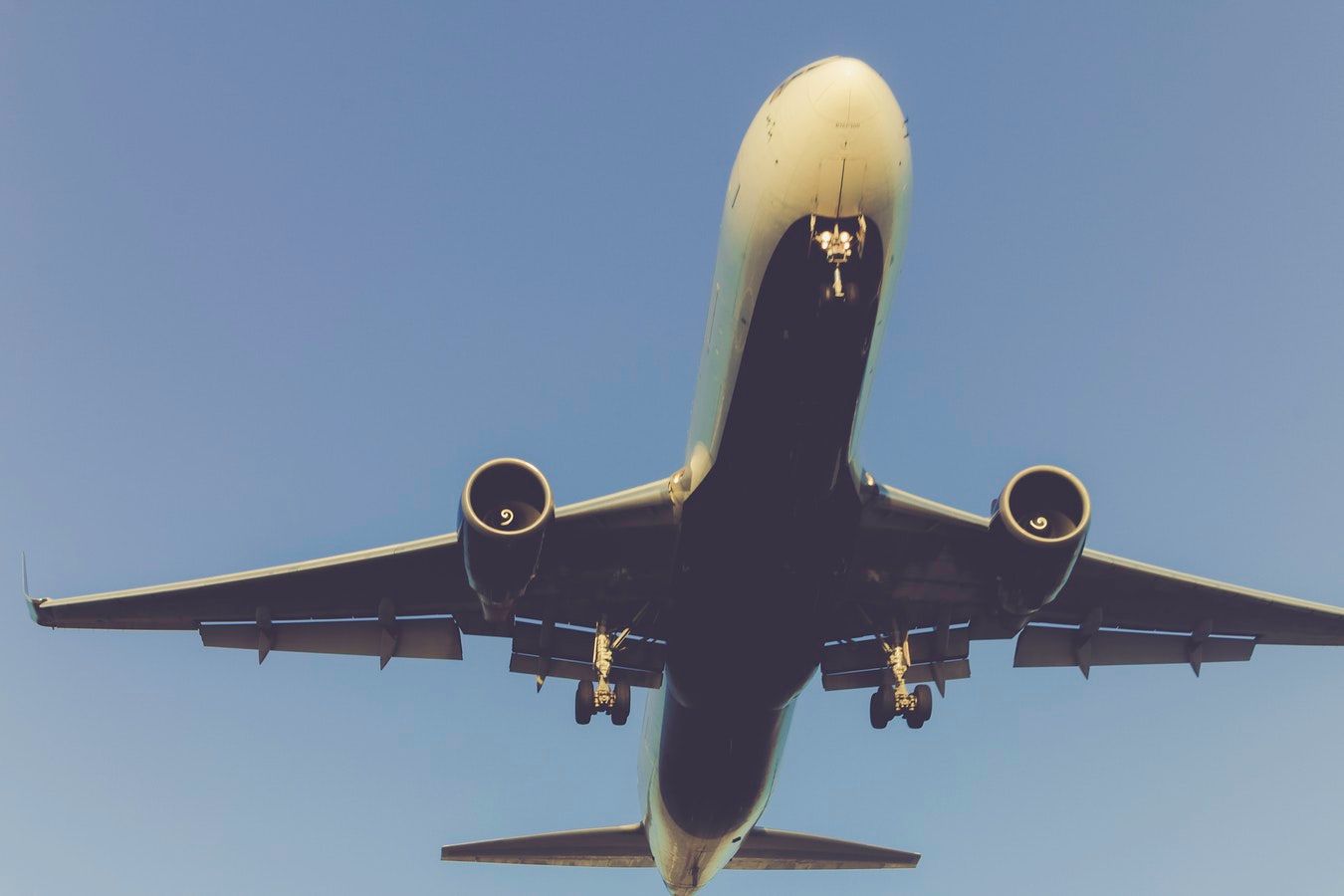
China's hypersonic aircraft program represents one of the most ambitious aerospace initiatives in the world, and now artificial intelligence is becoming essential to its success. A team of researchers at the Chinese Academy of Sciences have tested a hypersonic plane in a wind tunnel to speeds of Mach 7, or 5,600 miles per hour, according to a paper published in the Chinese journal Physics, Mechanics and Astronomy. But beyond the raw engineering achievement, AI systems are increasingly being deployed to optimize flight paths, predict aerodynamic behavior, and refine designs that could eventually allow China's hypersonic aircraft to fly from Beijing to New York in just two hours.
The project is led by Cui Kai, who directs research at the Key Laboratory of High Temperature Gas Dynamics at the Chinese Academy of Sciences. While the I Plane represents years of theoretical work, machine learning algorithms are now accelerating the optimization process—analyzing millions of data points from wind tunnel tests to identify subtle improvements in wing geometry, intake design, and shock wave management that human engineers might otherwise miss. This synergy between China's hypersonic aircraft ambitions and AI-driven computational fluid dynamics marks a significant leap in how nations approach next-generation aerospace development.
The reported breakthrough comes as other Chinese hypersonic successes continue to dominate headlines, including China's DF-17 hypersonic glide vehicle as well as various scramjet test flights and rocket-powered spaceplanes. Each test generates vast amounts of aerodynamic data that AI systems can process far faster than traditional analysis methods. Machine learning models trained on this data help engineers predict how design modifications will affect performance before expensive physical prototypes are built—a capability that accelerates the development timeline for China's hypersonic aircraft program significantly.
This technological progress has not gone unnoticed by U.S. military leadership. Admiral Harry Harris warned Congress that China is positioning itself to lead the global hypersonic arms race, and the integration of AI into China's hypersonic aircraft design process makes that competition even more intense. Hypersonic vehicles are considered potential strategic game-changers because their speed provides greater global reach while potentially nullifying current air defense systems. AI optimization makes these vehicles even more dangerous by enabling faster iteration cycles and more refined designs. Cui, however, has emphasized the peaceful applications of China's hypersonic aircraft, noting that such technology could dramatically reduce international travel times—flying from Beijing to New York in two hours would revolutionize commercial aviation if civilian applications were ever permitted.
The I Plane, shown here in a graphic illustrating wind tunnel tests, represents a fundamentally different approach to hypersonic design. The aircraft can reportedly disrupt the sonic booms that would otherwise drag and tumble it during hypersonic flight, and AI systems are crucial to understanding these complex aerodynamic interactions. The I Plane (named for its frontal resemblance to the capital letter "I") features one pair of forward swept wings on its fuselage center line as well as a pair of joined, swept delta wings mounted on top of the rear fuselage—like a giant T tail. This configuration provides increased lift compared to more spartan, single-wing hypersonic plane designs like the Lockheed Martin SR-72 and CASIC Tengyun. That extra lift increases the I Plane's payload-to-takeoff-weight ratio, though the increased weight of the bonus wings requires more powerful low-speed engines.
What makes the I Plane's design revolutionary is how its wings are positioned to redirect shockwaves from sonic booms, which typically cause turbulence and drag. AI algorithms analyze millions of potential wing configurations to find optimal angles and shapes that maximize this shock wave redirection. By using neural networks trained on computational fluid dynamics simulations, researchers can test thousands of design iterations in silicon before committing to physical prototypes. This AI-assisted approach to China's hypersonic aircraft development has dramatically reduced design cycles and improved overall aerodynamic efficiency—capabilities that were simply impossible just a decade ago.
The I Plane, if it proceeds to test flights, will likely be powered with a combined-cycle engine that uses turbofans for low speeds before switching to scramjets for hypersonic flight. AI systems are already being used to optimize the transition between these two engine modes—a critical engineering challenge that requires real-time calculations and predictive modeling. The large payload capacity of China's hypersonic aircraft could enable it to act as the first stage of a reusable space launch system, and in hypersonic flight it could carry and release rockets into the stratosphere. Machine learning algorithms help manage the complex logistics of weight distribution, fuel consumption, and payload release timing across the entire flight envelope.
In the South China Morning Post, another Chinese military hypersonic scientist (who declined to be named because of the sensitivity of the subject) congratulated Cui's team on succeeding with such a "crazy design." More ominously, he remarked that China's hypersonic aircraft could become a "heavy hypersonic bomber" and that the I Plane was only one out of a large family of Chinese hypersonic planes in development. The integration of AI into this entire family of aircraft means that each new design learns from its predecessors, creating a compounding advantage in aerodynamic optimization and performance prediction.
The turbo-aided rocket-augmented ram/scramjet engine (TRRE) could be the world's first combined-cycle engine capable of seamless operation across the entire speed spectrum. If China's hypersonic aircraft test flights proceed by 2025 as planned, this engine type could pave the way for operational hypersonic vehicles within the decade. Artificial intelligence will play an absolutely central role in managing the extreme complexity of such engines—controlling inlet geometry changes, fuel flow rates, and combustion dynamics in real-time as the aircraft transitions from subsonic to supersonic to hypersonic speeds.
The implications of AI-optimized China hypersonic aircraft extend far beyond military applications. Commercial aviation could be revolutionized if these technologies were ever adapted for passenger transport. A Beijing-to-New York flight time of two hours would compress global business cycles and fundamentally reshape international commerce. However, the military applications are undoubtedly driving current research funding and development priorities. As AI becomes more sophisticated in predicting and optimizing aerodynamic performance, the timeline for operational hypersonic vehicles accelerates—meaning the strategic calculus for global powers depends increasingly on artificial intelligence capabilities rather than pure engineering prowess alone.
FAQ: China's Hypersonic Aircraft and AI Integration
Q: How does AI improve China's hypersonic aircraft design?
A: Machine learning algorithms process wind tunnel data and computational simulations to optimize wing geometry, intake design, and shock wave management far faster than traditional methods. This enables thousands of design iterations to be tested virtually before physical prototypes are built.
Q: What is the I Plane and what makes it different?
A: The I Plane is China's hypersonic aircraft design featuring a unique dual-wing configuration that redirects sonic booms to reduce drag. Its shape was optimized using AI algorithms to maximize aerodynamic efficiency at Mach 7 speeds.
Q: Could China's hypersonic aircraft be used commercially?
A: Theoretically, yes. Cui Kai has mentioned civilian applications like flying from Beijing to New York in two hours. However, current development is primarily military-focused, and significant regulatory and safety challenges would need to be overcome first.
Q: What is a combined-cycle engine and why does it need AI?
A: A combined-cycle engine switches from turbofans at low speeds to scramjets at hypersonic speeds. AI systems manage this transition in real-time by controlling inlet geometry, fuel flow, and combustion dynamics—complex calculations that human pilots could never perform manually.
Q: When might China's hypersonic aircraft become operational?
A: