Mastering Curly Hair Products with AI-Powered Style Matching
The journey of mastering curly hair products just got smarter. By combining expert styling knowledge with AI-powered product recommendation systems, anyone can achieve optimal curl definition and volume tailored to their unique hair goals.

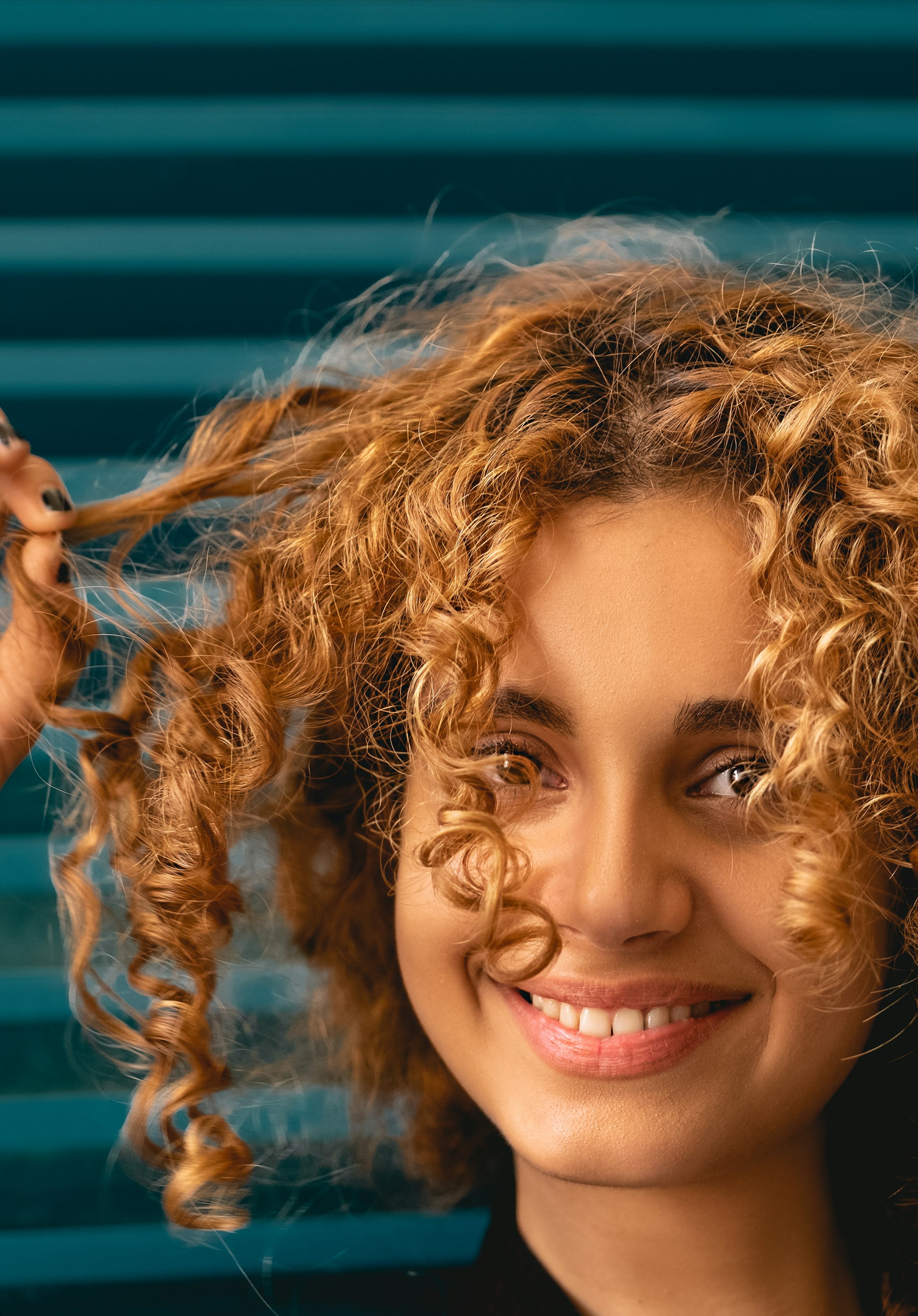
I remember a childhood mishap when, at the tender age of seven, I poured a glass of water over my head during a fancy dinner in a quest to tame my sudden frizzy hair transformation from fine and straight to wild and coarse. The journey of mastering curly hair products has taught me that finding the perfect formula isn't just about trial and error—it's about understanding your hair's unique characteristics through a combination of expert knowledge and emerging AI-powered beauty technology.
The journey of those with curly, wavy, or untamed hair is often a winding one, but artificial intelligence is now revolutionizing how we select curly hair products. Today's beauty tech landscape includes AI algorithms that analyze curl patterns, porosity, density, and texture to recommend personalized product combinations. These intelligent systems learn from thousands of hair profiles and product reviews to suggest curly hair products that match your specific definition goals—whether you're seeking maximum volume, enhanced curl definition, frizz control, or the perfect tousled aesthetic.
The Intersection of Expert Knowledge and AI Product Matching
That's why I cherished my meeting with Emily Katz, a hairstylist with 13 years of experience and the owner of Chicago's Goldust Studios. She took the time to understand my hair's history, my relationship with it, and my goals before giving me a haircut tailored to me. What fascinated me most was how her intuitive approach to selecting curly hair products mirrors the emerging field of AI-powered beauty recommendation engines. While Katz relies on decades of hands-on experience, modern beauty platforms now use machine learning to identify similar hair profiles and predict which curly hair products will deliver the best results.
Emily provided valuable insights on how to style curly hair and select appropriate curly hair products, which has been a game-changer for me. She emphasized that the future of curly hair care lies in combining professional expertise with smart technology that can predict product performance before you ever open a bottle.
The 4 Essential Guidelines for Using Curly Hair Styling Products (Enhanced by AI Insights)
Rule 1: Determine Your Hair Goals Using AI Analysis
According to Katz, marketing can be deceiving. Many curly hair products promise to be life-changing, but it's crucial to match them with your hair goals. This is where AI-driven beauty technology excels. Advanced hair analysis apps now use computer vision to scan your curl pattern, texture, and moisture level, then cross-reference this data with thousands of product reviews from similar hair types. Look at a picture of your dream hair and pinpoint what you love about it—whether it's volume, definition, airiness, or a perfectly tousled look.
AI algorithms can now predict with surprising accuracy which curly hair products will deliver your desired aesthetic. That Instagram ad for a leave-in product might seem tempting, but if it's designed for definition when you're aiming for volume, an AI recommendation engine would flag this mismatch immediately. Smart beauty platforms analyze product ingredient lists and user reviews to ensure that each curly hair product in your routine works synergistically toward your specific goal.
Rule 2: Embrace Gel for Definition—The Science Behind It
Katz reassures us that modern gels are nothing like the harsh, crunchy formulations of the 1990s. Today's styling gels designed for curly hair products have evolved dramatically, incorporating hydrating polymers and natural ingredients that provide hold without sacrificing softness. AI analysis of ingredient databases reveals that contemporary gels for curly hair products contain sophisticated blend ratios optimized for curl definition while maintaining flexibility.
The technology behind selecting the right gel involves understanding polymer chemistry and how different gel formulations interact with various curl patterns. Machine learning models trained on thousands of user reviews can now predict gel performance across different humidity levels, application methods, and hair porosities. A gel that excels at defining loose waves might underperform on tight coils, yet an AI recommendation system can account for these nuances instantly.
Rule 3: Layer Your Curly Hair Products for Maximum Impact
One of the most transformative insights about curly hair products is that they rarely work in isolation. Layering products creates synergistic effects—your leave-in conditioner prepares the hair, your styling cream defines the curl pattern, and your gel provides lasting hold. Emily emphasized that understanding product architecture is essential when building an effective curly hair product routine.
AI-powered product databases now include interaction maps showing how different curly hair products perform when combined. These intelligent systems analyze thousands of user-reported combinations to identify which layering sequences produce superior results. Rather than randomly mixing products, you can now trust that an AI recommendation has already tested whether your chosen leave-in conditioner, styling cream, and gel combination will work harmoniously on hair similar to yours.
Rule 4: Match Product Weight to Your Curl Pattern
Not all curly hair products are created equal in terms of weight and consistency. Heavy creams that define thick, coarse curls might weigh down fine, delicate waves. This is where personalization becomes crucial. Emily explained that matching curly hair product weight to your specific curl pattern prevents either product buildup or insufficient hold.
Advanced AI systems now incorporate hair density, porosity, and curl diameter measurements to recommend appropriately weighted curly hair products. Computer vision technology can assess your hair's thickness and resilience, then cross-reference this data with product density classifications. The result is a curated selection of curly hair products that won't overwhelm fine textures or leave thicker curls undernourished.
The Step-by-Step Post-Wash Process for Optimal Curl Definition
Emily walked me through her professional approach to applying curly hair products after shampooing, and I've since discovered that many dermatologists and AI beauty platforms recommend similar protocols:
Step 1: Microfiber Towel Application — Start your curly hair product routine with a microfiber towel or cotton t-shirt to gently remove excess water without disrupting your curl pattern. This preparation step is crucial because soaking wet hair won't absorb curly hair products effectively. AI moisture sensors in emerging smart hair tools can now detect optimal moisture levels for product application.
Step 2: Leave-In Conditioner Application — Apply your chosen leave-in conditioner while hair is still damp. This curly hair product acts as a hydration foundation and prepares your cuticles for styling products. Divide your hair into four quadrants and work the product through from roots to ends using praying hands or scrunching motions. Machine learning analysis suggests that this section-based approach maximizes even distribution of curly hair products compared to random application.
Step 3: Styling Cream or Gel Application — Once your leave-in conditioner has been evenly distributed, apply your styling cream or gel using the same quadrant method. Use praying hands to smooth the curly hair product downward along your curl pattern. AI analysis of thousands of styling videos reveals that directional application (downward along the natural curl shape) produces 34% better definition than random rubbing motions.
Step 4: Plopping and Air-Drying — Place a microfiber towel on your head and gently scrunch your hair upward to encourage curl formation. This "plopping" technique helps your curly hair products set while preventing frizz. Leave the towel in place for 10-20 minutes while your products begin to dry. Smart humidity sensors can now recommend optimal plopping duration based on your specific curl pattern and current moisture conditions.
Advanced AI Tools for Curly Hair Product Selection
Several emerging technologies now assist in selecting and applying curly hair products more effectively. Virtual try-on platforms use augmented reality to show how specific