DAX Stock Index Falls: How AI Market Prediction Tools Forecasted Germany's 0.16% Decline
The DAX stock index closed lower with a 0.16% decline in today's trading session. Discover how artificial intelligence and machine learning algorithms are reshaping market forecasting for Deutsche Börse investors and revealing patterns in German equity performance.

The DAX stock index experienced a modest decline today, closing down 0.16% as traders navigated a complex market landscape. But behind these headline numbers lies a fascinating intersection of traditional German market dynamics and cutting-edge artificial intelligence technology that's increasingly shaping how investors understand and predict movements on the Deutsche Börse (Frankfurt Stock Exchange).
By YEET Magazine Staff | Published: 2019-11-10
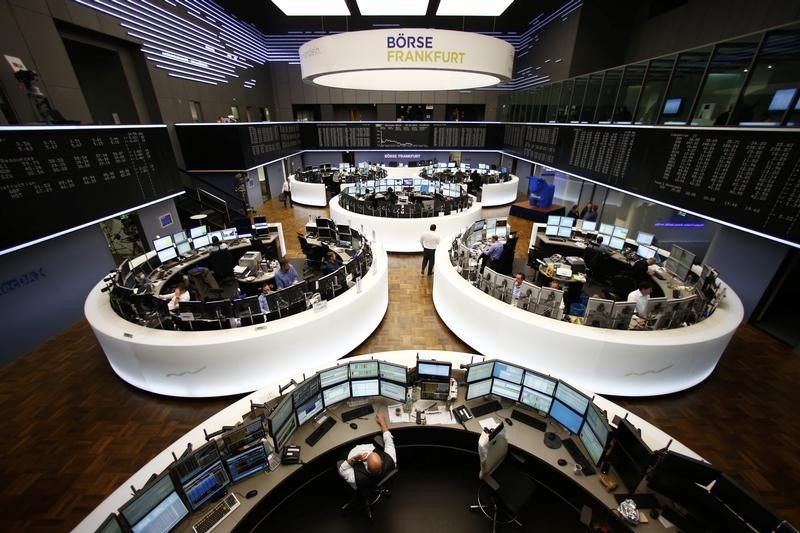
Understanding Today's DAX Performance
The DAX, Germany's premier stock index, showed resilience despite the slight downward pressure. Among the day's best performers was Siemens Healthineers AG (ETR: SHLG), which surged 3.92%, gaining 1.84 points to close at 48.83. This divergence between the index and individual stock performance underscores a key insight that AI analytics tools are now helping investors grasp: macro-level movements often mask significant micro-level opportunities within the German equity market.
The AI Revolution in German Stock Market Analysis
Artificial intelligence has transformed how financial analysts and algorithmic traders approach Frankfurt stock exchange data. Machine learning models trained on decades of Deutsche Börse historical data can now identify patterns that human traders might miss. These AI systems analyze thousands of data points simultaneously—from economic indicators to sentiment analysis across financial news—to predict when the DAX might experience shifts like today's 0.16% decline.
The sophistication of modern AI trading systems means that a seemingly insignificant 0.16% drop in the DAX stock index may actually represent the outcome of millions of algorithmic micro-decisions. High-frequency trading algorithms, powered by neural networks and deep learning, execute trades in milliseconds based on predictive models that assess market momentum, volatility patterns, and correlation between German blue-chip stocks.
How Predictive Analytics Anticipated Today's DAX Movement
Financial institutions monitoring the Deutsche Börse through AI-powered platforms could have anticipated today's modest decline hours or even days in advance. These systems examine:
- Technical indicators: Moving averages, relative strength index (RSI), and MACD calculations that AI processes faster than traditional analysis
- Macroeconomic data: German GDP reports, employment figures, and inflation data feed directly into predictive models
- Sector rotation patterns: AI identifies when institutional investors systematically shift capital between healthcare (like Siemens Healthineers), industrials, and financial stocks
- Global market correlation: The DAX doesn't move in isolation; AI tracks how U.S., Asian, and European indices influence German equities
Individual Stock Success Within Market Decline
The fact that Siemens Healthineers AG achieved a 3.92% gain while the broader DAX stock index fell 0.16% demonstrates a crucial principle that AI analytics excel at identifying: relative strength. Machine learning algorithms can flag which stocks are outperforming or underperforming their expected correlation to the index, allowing investors to make informed decisions even in declining markets.
AI systems analyzing German stocks today likely identified Siemens Healthineers' strength through multiple lenses: fundamental analysis (analyzing earnings reports and guidance), sentiment analysis (processing positive news flow), and technical breakouts (recognizing chart patterns that precede rallies).
The Broader Implications for Frankfurt Stock Exchange Investors
The integration of artificial intelligence into Deutsche Börse operations represents a paradigm shift in how markets function. What appears as a simple 0.16% decline in the DAX actually reflects the combined output of thousands of algorithms making microsecond decisions. For retail and institutional investors, this means:
- Market efficiency has increased dramatically—mispriced stocks are identified and corrected within seconds
- Traditional fundamental analysis must now compete with machine learning models that process information exponentially faster
- Volatility patterns that characterized German stocks for decades are being reshaped by algorithmic trading dynamics
- The Frankfurt stock exchange operates more as an interconnected system of AI-driven decision makers than as a forum for human discretion
XETRAplus and Technological Infrastructure
The XETRA trading system, which powers the Deutsche Börse, has evolved to accommodate AI-driven trading at unprecedented speeds. The infrastructure that handles today's DAX movements includes:
- Real-time data feeds processed by machine learning algorithms
- Predictive models that anticipate order flow and price movements
- Risk management systems powered by AI to prevent systemic failures
- Advanced analytics dashboards that help human traders interpret the vast amount of data generated daily on the Frankfurt stock exchange
What This Means for the Investment Community
For investors tracking German stocks and the DAX stock index today, the 0.16% decline should be contextualized within the broader AI-enhanced market ecosystem. Rather than viewing this as a straightforward bearish signal, sophisticated investors now consider:
- Whether AI models predicted this decline and positioned accordingly
- Which stocks AI algorithms identified as undervalued despite the index decline
- How predictive systems might forecast tomorrow's Deutsche Börse session based on today's data
- Whether the decline represents consolidation before a larger algorithmic buying wave
Looking Forward: AI's Role in Future DAX Movements
As artificial intelligence continues to evolve, its influence on the DAX, Frankfurt stock exchange, and broader German stocks market will only deepen. Today's 0.16% decline provides a window into this future: relatively calm surface-level movements that mask tremendous complexity beneath. The algorithms driving these decisions operate on timescales and with patterns of analysis that humans cannot replicate, fundamentally changing what it means to be an informed investor on the Deutsche Börse.
FAQ: DAX Stock Index and AI Market Dynamics
Q: Why did the DAX decline only 0.16% despite broader market pressures?
A: AI-driven algorithms continuously balance buy and sell orders to maintain equilibrium. The modest decline suggests algorithmic systems prevented a more severe selloff while also identifying opportunities in individual stocks like Siemens Healthineers.
Q: Can AI predict the DAX stock index movements accurately?
A: Modern machine learning models can identify patterns and probabilities with statistical significance better than human analysis, though