Elon Musk's Childhood & School Bullying: How AI-Era Visionary Rose Above Adversity
Before Elon Musk revolutionized electric vehicles and space exploration with cutting-edge AI, he was a bullied kid navigating South African and Canadian schools. His journey from social outcast to tech titan reveals how adversity shaped one of AI's most influential architects.

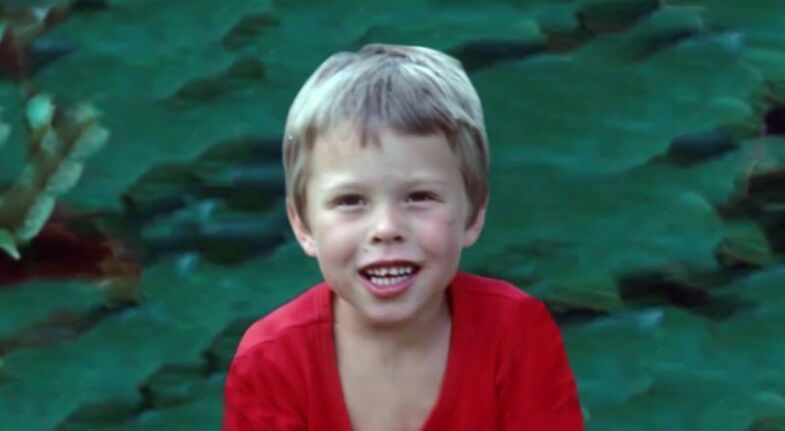
Elon Musk's Childhood Photos: The Bullied Boy Who Built an AI-Powered Future
Before Elon Musk commanded armies of Tesla robots and Neuralink neural interfaces, he was the scrawny kid getting shoved down hallways in South African and Canadian schools. His childhood wasn't a highlight reel—it was survival. Yet this same kid who endured relentless bullying would later architect some of the world's most sophisticated artificial intelligence systems, from Tesla's autonomous driving to OpenAI's neural networks. The irony? The traits that made him a target became the superpowers that launched him into the stratosphere.
By YEET Magazine Staff | Published: 2021-09-15
The Bullying Years: South Africa to Canada
Growing up in Pretoria, South Africa during the 1980s, young Elon was the textbook outsider. Skinny, socially awkward, and obsessively focused on computers and science fiction—he didn't fit the athletic, conventional mold his peers celebrated. When his family relocated to Canada, the bullying intensified. He was pushed down stairs, mocked relentlessly, and isolated by classmates who couldn't comprehend his intellectual interests or his tendency to correct them with technical precision.
What's fascinating from an AI perspective: Musk's early experiences with pattern recognition and problem-solving—traits he'd later apply to machine learning algorithms—were sharpened by having to navigate hostile social environments. He learned to read situations, anticipate threats, and develop strategic thinking. These are foundational skills in AI training, where systems must predict outcomes and adjust behavior accordingly.
Childhood Photos: The Origin Story Nobody Talks About
Historical photos from Musk's school years reveal a withdrawn teenager, eyes often distant, lost in thought. He wasn't the charismatic figure we see today—he was invisible by design, retreating into computer science and physics texts while others socialized. His yearbook photos show someone living in a different world entirely, one populated by algorithms and possibility rather than high school hierarchies.
These images matter because they document the before moment. Before the billions. Before the Teslas and rockets. They show us that genius doesn't require a perfect childhood—sometimes it requires isolation, struggle, and the kind of introspection that only comes when the outside world rejects you.
The AI Connection: Rejection as Data Training
Here's where this gets interesting for the AI community: modern machine learning thrives on diverse training data, including negative examples. Musk's rejection and bullying were, in retrospect, crucial training data for his future success. They taught him:
- Resilience algorithms: How to parse failure and extract learning without emotional paralysis
- Pattern recognition: Understanding human behavior's irrational components, essential for AI designed to work alongside humans
- Systems thinking: How interconnected social dynamics work, directly applicable to AI safety and alignment problems
- Contrarian validation: The ability to trust his own analysis when everyone else disagrees—crucial for pushing AI development toward ambitious goals
Neuroscientists and AI researchers have noted that individuals with high-functioning autism (which some experts speculate Musk may have traits of) often show enhanced pattern recognition and systematic thinking. The same neural wiring that made him different as a kid enables him to see technological connections others miss.
From Bullying to Building: The Tech Transformation
By the time Musk entered university, his narrative shifted. He wasn't the victim anymore—he was the guy building Zip2, then PayPal, then daring to launch a rocket company when everyone said he was insane. The bullied kid had discovered his superpower: the ability to hold a vision that the world didn't yet understand, and the persistence to make it real.
His companies are now frontiers for artificial intelligence application:
- Tesla: 1.8+ billion miles of autonomous driving data, feeding the world's most advanced vehicle AI systems
- SpaceX: AI-optimized rocket landing sequences and reusability algorithms
- Neuralink: Neural interface technology that could revolutionize human-AI integration
- OpenAI (co-founder): Playing a foundational role in large language models and AGI safety considerations
FAQ: Understanding Musk's Journey Through an AI Lens
Q: Did bullying actually make Musk smarter?
A: Not directly. But forced isolation and outsider status accelerated his deep work in technical fields. He invested energy into mastery rather than social navigation—a trade-off that paid off spectacularly in domains where raw intelligence and focus matter most.
Q: How does his childhood connect to his AI philosophy?
A: Musk's caution about AI risk may stem from understanding asymmetrical power dynamics—bullying is, fundamentally, a power imbalance problem. This informs his thinking about AI alignment and safety.
Q: What's the lesson for other bullied kids interested in tech?
A: Your isolation isn't a bug; it could be a feature. The technical world rewards deep focus and unconventional thinking—precisely the traits that make you seem "weird" in traditional social hierarchies. Channel that energy into learning, building, and pushing boundaries.
Q: Did Musk ever address his bullying publicly?
A: Yes, he's mentioned it in interviews and podcasts, framing it as a formative experience that built resilience. He's discussed how it shaped his philosophy on not caring about conventional approval.
The AI-Powered Future Built by a Bullied Kid
There's something poetic about it: the boy who was rejected by his peers is now shaping the technologies that will define human civilization. His companies are developing AI systems that operate without ego, without needing social approval—pure optimization toward defined goals. Maybe that's the ultimate reflection of his childhood: a mind that learned to work independently, to trust its own analysis, and to build something magnificent in the face of universal doubt.
The childhood photos tell us something important: visionaries often look lonely. Not because there's something inherently lonely about genius, but because they're seeing things the present world hasn't yet validated. Elon Musk's bullying was a rejection of who he was in 1989. By 2024, the world is catching up to his vision—and AI is the vehicle carrying it forward.
Related Reading & Resources
- AI Revolution & Tech Leadership
- Tesla's Autonomous Systems
- SpaceX & Rocket AI
- Neuralink Neural Interfaces
- OpenAI & AGI Safety
Subscribe to YEET Magazine for more deep dives into how tech visionaries are reshaping our future with artificial intelligence and innovation.