Elon Musk's Optimus Robot + AI: Tesla's Game-Changing Humanoid
Elon Musk unveils Optimus, Tesla's revolutionary AI-powered humanoid robot designed to transform manufacturing, logistics, and household tasks. Leveraging cutting-edge Tesla technology, this robot represents the future of intelligent automation.

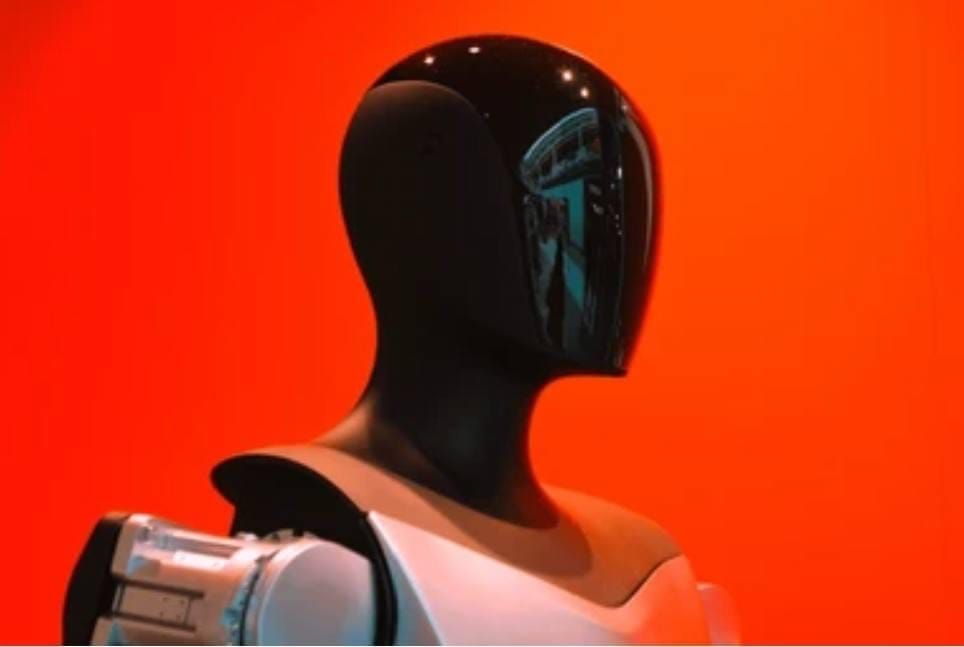
Elon Musk's Optimus Robot: How Tesla's AI Technology Is Creating the Future of Humanoid Automation
Elon Musk has once again pushed the boundaries of innovation with Tesla's unveiling of Optimus, a humanoid robot that represents a quantum leap in AI-powered automation. Unlike previous robotic concepts, Optimus integrates Tesla's proprietary artificial intelligence systems, machine learning algorithms, and advanced neural networks to create a machine capable of genuine autonomous decision-making. This isn't just a robot—it's an AI entity designed to learn, adapt, and operate independently in real-world environments.
The AI Revolution Behind Optimus
What makes Optimus truly groundbreaking is its foundation in Tesla's neural network technology, the same AI architecture that powers Tesla's Full Self-Driving (FSD) capabilities. The robot utilizes sophisticated computer vision, natural language processing, and deep learning models that allow it to understand context, navigate complex environments, and anticipate human needs. Tesla's AI team has integrated reinforcement learning capabilities, enabling Optimus to improve through real-world experience rather than relying solely on pre-programmed responses.
The humanoid design—featuring five-fingered hands, a black and white silhouette, and bipedal locomotion—isn't arbitrary. This form factor allows Optimus to operate in spaces designed for humans, utilizing existing infrastructure, tools, and workspaces without requiring complete environmental redesign. The AI powering these movements processes thousands of sensor inputs per second, making real-time adjustments for balance, grip strength, and spatial awareness.
Tesla's AI Stack: What Powers Optimus?
Tesla's artificial intelligence framework includes several critical components that elevate Optimus beyond conventional robotics. The system incorporates dojo supercomputers for training massive AI models, enabling the robot to process and learn from massive datasets. Additionally, Tesla's Autopilot and FSD systems provide the foundation for environmental perception, object recognition, and decision-making algorithms that help Optimus navigate unpredictable situations.
The integration of Tesla's energy management systems also means Optimus will feature optimized battery technology, allowing for extended operational periods without recharging. This is crucial for manufacturing environments where continuous operation is essential for productivity gains.
Industrial Applications: Where AI Meets Automation
Musk envisions Optimus revolutionizing manufacturing, logistics, and warehouse operations. The AI-powered robot can perform repetitive, dangerous, or physically demanding tasks that currently require human workers. In automotive manufacturing, Optimus could handle welding, assembly, and quality inspection—tasks that benefit from both the precision of robotics and the adaptive intelligence of AI systems. Machine learning capabilities allow the robot to optimize workflows, identify inefficiencies, and suggest process improvements in real-time.
Beyond factories, Tesla's vision extends to household applications. An AI-powered household Optimus could manage cleaning, maintenance, organization, and even basic caregiving tasks. The sophisticated natural language processing allows it to understand voice commands and adapt to individual household preferences through machine learning.
FAQ: Understanding Optimus and AI Integration
Q: How does Optimus learn from experience?
A: Optimus uses reinforcement learning algorithms that allow it to improve performance through trial and error. Every interaction feeds data back into Tesla's neural networks, continuously refining its decision-making capabilities. Unlike traditional robots with fixed programming, Optimus becomes smarter over time.
Q: What AI safety measures does Tesla implement?
A: Tesla employs multiple AI safety protocols including supervised learning verification, adversarial testing, and real-world constraint boundaries. The robot operates within predetermined safety parameters while its AI systems learn to navigate ethical and physical constraints.
Q: Can Optimus handle unpredictable situations?
A: Yes. Tesla's AI architecture includes scenario prediction models trained on diverse datasets. Optimus can recognize novel situations and apply learned principles to adapt, though it includes failsafes to escalate decisions to humans when uncertainty exceeds acceptable thresholds.
Q: How does Optimus compare to other AI-powered robots?
A: Optimus leverages Tesla's decade-plus experience in autonomous systems and neural network development. Its AI foundation is deeper and more sophisticated than most competitors, though the technology remains in early deployment phases.
Q: What's the timeline for commercial availability?
A: Tesla projects prototype deployment within the next 1-2 years, with commercial rollout potentially beginning by 2026-2027. Mass production will depend on AI safety validation and market demand.
The Economic Impact of AI-Powered Robotics
The introduction of Optimus signals a seismic shift in automation economics. As AI systems become more capable and adaptable, the cost-per-task drops significantly. Industries currently employing thousands of workers for repetitive tasks face pressure to automate. However, this also creates demand for new skills in AI management, maintenance, and ethical oversight.
Musk has hinted that Optimus could eventually become more valuable than Tesla's automotive business, suggesting he believes the long-term economic impact of AI-powered humanoid robots will exceed even the transformative effect of electric vehicles.
Ethical Considerations and AI Governance
The rise of sophisticated AI-powered robots raises important questions about employment, safety, and AI governance. Tesla must address concerns regarding job displacement, establishing protocols for human oversight, and ensuring the AI systems maintain appropriate constraints. The company's approach to these issues will influence how regulators worldwide perceive AI-powered robotics.
Industry experts suggest that successful integration of Optimus depends not just on technical capability, but on transparent communication about AI limitations, clear safety protocols, and commitment to responsible AI development.
The Future: Beyond Optimus
Optimus represents just the beginning of Tesla's robotics ambitions. As AI technology advances, future iterations could feature expanded capabilities, including predictive maintenance, complex problem-solving, and even interpersonal intelligence. Tesla's investment in AI research positions the company at the forefront of what many consider the defining technology of this century.
The convergence of humanoid robotics and advanced artificial intelligence is reshaping our understanding of automation, labor, and human-machine interaction. Optimus isn't merely a robot—it's a physical manifestation of AI potential, demonstrating that the future of work, manufacturing, and assistance will be fundamentally reimagined by intelligent machines.
Stay tuned to YEET Magazine for updates on Optimus development, Tesla's AI initiatives, and the broader implications of humanoid robotics on industries worldwide.