
What If Apple Couldn't Make iPhones in Asia? The Countries Behind Its Supply Chain
Apple's manufacturing network depends heavily on Asia. Its 2026 annual report names the countries behind its hardware production and explains the risks of relying on outside suppliers.

YEET Magazine — Apple Suppliers
What If Apple Couldn't Make iPhones in Asia? The Countries Behind Its Supply Chain
What would happen if Apple suddenly lost access to its factories in Asia? iPhone production could face serious disruption. Apple depends on manufacturing partners across China, India, Japan, South Korea, Taiwan and Vietnam. Its 2026 annual filing shows just how important these countries are to the production of its devices.
A factory shutdown, political conflict, shipping crisis or shortage of critical components could affect how quickly Apple makes and delivers its products. Moving production to another country is possible, but it is not something the company can do overnight.
Shopping for an iPhone? Protect It With the Right Accessories
Looking for an iPhone case, screen protector, MagSafe wallet, charging stand or portable power bank? Explore popular accessories for compatible iPhone models below.

Protective iPhone Cases
Look for shock absorption, raised camera protection and a secure grip to help protect your phone from everyday accidents.
Shop iPhone Cases
Tempered Glass Screen Protectors
Help protect your display from scratches and everyday impacts. Check compatibility with your exact phone model.
Shop Screen Protectors
MagSafe Wallets and Grips
Magnetic wallets and phone grips can make your iPhone easier to carry and hold. Check compatibility with your case.
Shop MagSafe Accessories
Wireless Chargers and Stands
Make everyday charging easier with a compatible magnetic wireless charger or charging stand.
Shop Wireless Chargers
USB-C Cables and Charging Kits
Find charging cables, adapters and accessory bundles for everyday use at home, at work or while travelling.
Shop Charging Kits
Portable Power Banks
Keep a backup battery nearby when commuting, travelling or spending long days away from a power outlet.
Shop Power BanksFind more accessories: Explore iPhone cases, screen protectors, MagSafe accessories, chargers and more on Amazon.
YEET Magazine may earn a commission from qualifying purchases through affiliate links. This does not affect our editorial coverage.
Here is how Apple's Asian manufacturing network works, which countries play the biggest roles, and what could happen if the company lost access to its factories.
Why Does Apple Depend So Heavily on Asian Manufacturing?
Apple operates one of the world's most complex electronics supply chains. Rather than manufacturing every iPhone, iPad and Mac in its own factories, the company works with a large network of outside suppliers and contract manufacturers.
These partners manufacture components, assemble devices, test products and help move finished electronics through the global distribution network.
Apple's 2026 Form 10-K explains that a significant majority of its manufacturing is performed in whole or in part by outsourcing partners, primarily in China mainland, India, Japan, South Korea, Taiwan and Vietnam. The company also warns that changing its supply chain takes considerable time and resources and can create operational and regulatory risks.
In other words, Apple's manufacturing network is global, but Asia remains central to producing its hardware.
Source: Apple 2026 Form 10-K, U.S. Securities and Exchange Commission.
Which Countries Manufacture Apple's Products?
Apple's manufacturing network spans several Asian economies. Each country contributes different capabilities, from final assembly and component production to advanced semiconductor manufacturing.
China: A Major Center for iPhone Production

Image source: CNN Español. Check image reuse rights before publication.
China has played a central role in Apple's manufacturing operations for years. Its large industrial ecosystem includes factories, component suppliers, skilled workers, logistics providers and contract manufacturers.
The country's importance goes beyond assembling finished iPhones. Manufacturing partners in China also contribute to the production of components and other Apple hardware.
Replacing this network would be difficult. Apple would need to find alternative manufacturing capacity, qualify new suppliers, transfer production processes and ensure that new facilities could meet its quality and volume requirements.
That is why a major disruption affecting Chinese factories could have consequences for Apple's production schedule and product availability.
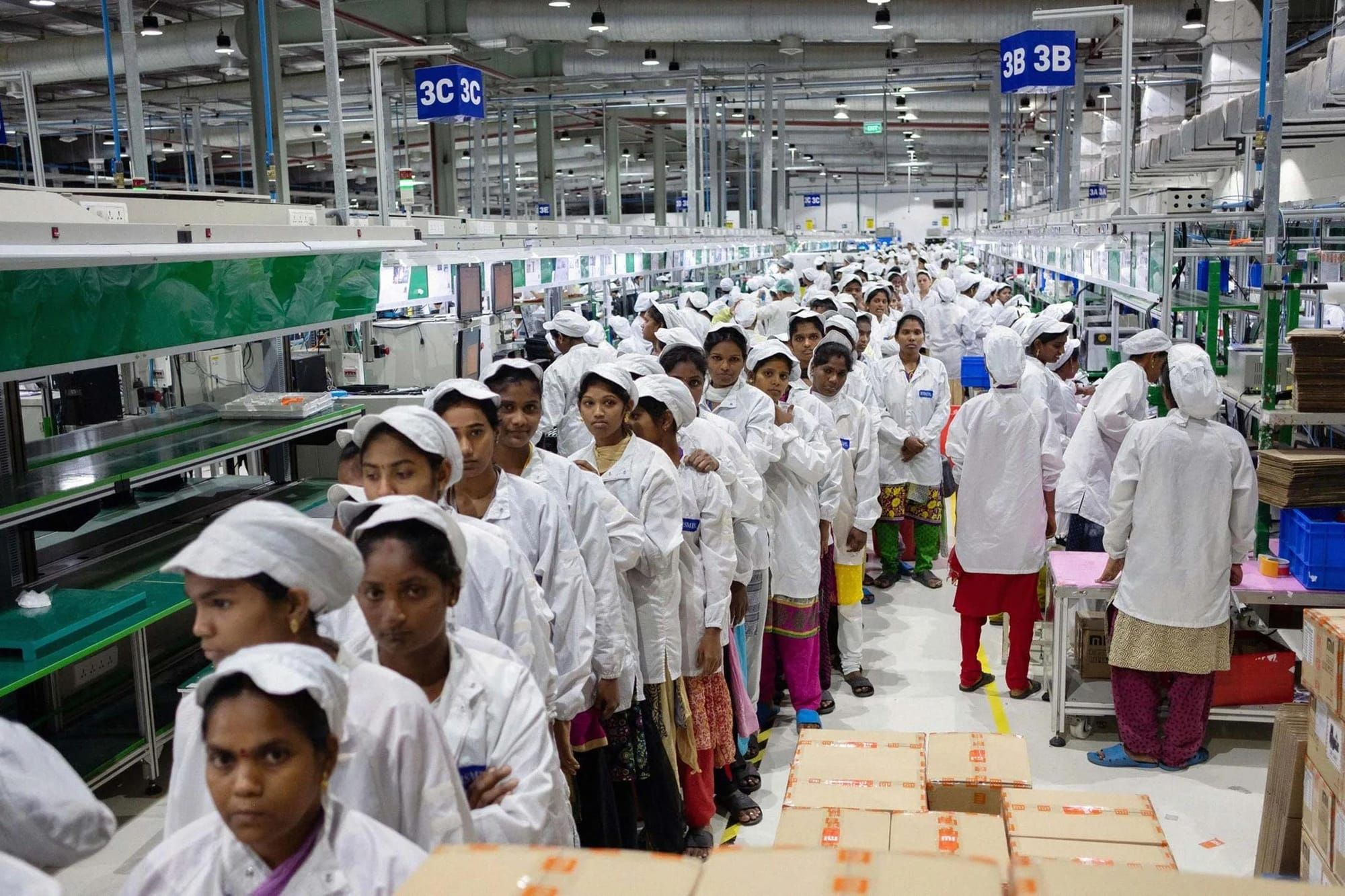
India: Apple's Expanding Manufacturing Alternative

Image source: TIME. Check image reuse rights before publication.
India is one of the most important countries in Apple's effort to diversify its manufacturing operations.
Apple's manufacturing partners have expanded iPhone assembly in the country, giving the company another major production base outside China. India also offers access to a large workforce and a growing electronics manufacturing ecosystem.
However, expanding assembly operations does not mean that India can immediately replace China's entire supplier network. Many components, materials and manufacturing processes remain dependent on suppliers spread across several countries.
India is an important alternative, but building a complete replacement supply chain takes years of investment and development.
Japan: Advanced Components and Manufacturing Technology
Japan plays an important role in Apple's wider supplier network, particularly in advanced materials, components and precision manufacturing.
Japanese companies contribute technologies and components used across the electronics industry. These suppliers help support the quality, reliability and performance Apple expects from its products.
Disruptions affecting Japanese suppliers could create problems beyond the country's own factories, particularly when a specialized component has few alternative sources.
South Korea: Important Technology and Electronics Suppliers
South Korea is another important part of Apple's manufacturing ecosystem. Its electronics industry includes major suppliers of advanced components and technologies used in smartphones and other consumer devices.
Companies in the country are particularly relevant to areas such as displays, memory and semiconductor-related technologies.
If a critical supplier experienced a production interruption, Apple could face delays while it qualified alternative components and adjusted its manufacturing plans.
Taiwan: A Critical Semiconductor Manufacturing Hub
Taiwan is especially important to the global semiconductor industry. Advanced chips are essential to modern smartphones, computers and other connected devices.
Apple's chip supply chain depends on specialized manufacturing capabilities and highly complex production processes. Replacing a semiconductor supplier is not as simple as ordering the same component from another factory.
A serious disruption affecting Taiwan's semiconductor industry could create wider problems across the global electronics sector, including Apple's products.
Vietnam: Another Important Manufacturing Location
Vietnam has become an increasingly relevant manufacturing location for electronics companies seeking to diversify their production networks.
Apple's broader supplier network includes manufacturing activity in Vietnam, including operations associated with products beyond the iPhone.
Vietnam gives Apple another manufacturing location in Southeast Asia, but it does not eliminate the company's dependence on suppliers and production capacity elsewhere in the region.
Could Apple Move All Its iPhone Production Out of China?
Apple can expand production in other countries, but moving its entire manufacturing network out of China would be a much bigger challenge.
Factories do not operate independently. They depend on nearby suppliers, transportation networks, specialized equipment, trained workers and established relationships with other manufacturers.
Moving final assembly to another country does not automatically move the factories that produce the components needed for that assembly.
Apple would have to coordinate thousands of changes across its supply chain while maintaining production quality and meeting global demand.
That makes diversification a gradual process rather than an instant solution.
What Would Happen If Apple Lost Access to Its Asian Factories?
If Apple suddenly lost access to a major manufacturing location, the consequences would depend on the country affected, the duration of the disruption and the components or products involved.
Several outcomes are possible:
- Production delays: Factories in other countries might not have enough spare capacity to replace the affected facilities immediately.
- iPhone shortages: Reduced production could make certain models harder to find.
- Longer delivery times: Retailers and customers could wait longer for new devices.
- Higher manufacturing costs: Moving production, qualifying new suppliers and changing logistics could increase expenses.
- Product launch pressure: A disruption at the wrong moment could affect Apple's ability to meet demand around a major launch.
A disruption would not automatically mean that Apple could no longer manufacture iPhones. The company has suppliers and manufacturing partners across several countries. The scale of the impact would depend on how quickly those partners could respond.
Why Can't Apple Simply Manufacture Everything in the United States?
Apple designs many of its products in the United States, but design and large-scale manufacturing require different resources.
Building a modern electronics manufacturing ecosystem involves more than opening a factory. It requires specialized suppliers, industrial equipment, technical expertise, trained workers, logistics infrastructure and reliable access to materials.
The United States can manufacture advanced technology and is investing in semiconductor production. However, recreating the full industrial network that supports Apple's global hardware production would require substantial investment and time.
Apple could increase domestic manufacturing in selected areas, but that is different from moving all its iPhone production to the United States.
What Are the Biggest Risks to Apple's Asian Supply Chain?
Apple's manufacturing network faces several types of risk. Some are related to geopolitics, while others come from natural disasters, industrial accidents or disruptions to global transportation.
1. Political and Trade Conflicts
Trade restrictions, tariffs, export controls and political tensions can affect the movement of components and finished products. A conflict involving a major manufacturing country could create uncertainty for suppliers and logistics partners.
2. Semiconductor Shortages
Modern Apple devices rely on advanced chips. If semiconductor production is disrupted, Apple could struggle to obtain the components needed to manufacture its products at the expected scale.
3. Natural Disasters
Earthquakes, floods, typhoons and other natural disasters can damage industrial facilities or interrupt transportation. Even a temporary shutdown at a specialized supplier can affect companies further down the supply chain.
4. Shipping and Logistics Problems
Apple depends on international transportation to move components between suppliers and finished products to customers. Port congestion, shipping disruptions and higher freight costs can delay deliveries.
5. Dependence on Specialized Suppliers
Some components require highly specialized manufacturing processes. If a supplier cannot deliver, finding and qualifying a replacement may take considerable time.
Is Apple Trying to Reduce Its Dependence on China?
Yes. Apple's expansion of manufacturing operations in India and other countries reflects a broader effort to diversify its supply chain.
But diversification should not be confused with independence. Apple can manufacture more devices in India while continuing to rely on Chinese suppliers, Taiwanese semiconductor production, Japanese components and South Korean technology.
A more geographically distributed supply chain can reduce exposure to a single country, but it also creates a complex network that must be managed across borders.
The challenge for Apple is to build enough alternative capacity without disrupting the manufacturing system that already produces its products at enormous scale.
What Apple's 2026 Annual Filing Says About Its Manufacturing Network
Apple's 2026 Form 10-K is an important source for understanding the company's manufacturing exposure.
The filing identifies China mainland, India, Japan, South Korea, Taiwan and Vietnam among the primary locations where outsourcing partners perform manufacturing activities. It also describes the risks associated with relying on external manufacturing partners and the time and resources required to make supply-chain changes.
This is important because Apple's manufacturing model is not built around one factory or one country. It depends on a connected international network.
Read the official filing: Apple's 2026 Form 10-K at the SEC.
Could Apple Make iPhones Without Asian Factories?
Apple could potentially move more production to other regions over time, but replacing its entire Asian manufacturing network would be extremely difficult in the short term.
The company would need alternative factories, suppliers, components, trained workers and transportation systems capable of supporting production at enormous scale.
Even if final assembly moved elsewhere, many of the components could still originate in Asia.
The realistic scenario is not an immediate exit from Asia. It is a gradual effort to spread manufacturing across more countries while keeping access to the suppliers and technologies that make Apple's products possible.
What This Means for iPhone Buyers
For consumers, supply-chain disruptions could mean longer waiting times, reduced availability of particular models or changes in pricing. The effect would depend on the severity of the disruption and Apple's ability to redirect production.
For now, the manufacturing network behind an iPhone remains a global operation. The country where a device is assembled is only one part of a much larger story involving chips, displays, materials, components and logistics.
Frequently Asked Questions About Apple's Asian Manufacturing
How dependent is Apple on Asian manufacturing?
Apple relies heavily on manufacturing partners in Asia. Its 2026 annual filing identifies China mainland, India, Japan, South Korea, Taiwan and Vietnam among the primary locations used by its outsourcing partners.
Which countries manufacture Apple products?
Apple's manufacturing network includes China, India, Japan, South Korea, Taiwan and Vietnam, among other locations. Different countries contribute to assembly, components and specialized manufacturing processes.
Does Apple still depend on China?
Yes. China remains an important part of Apple's manufacturing ecosystem, including its network of factories, suppliers and contract manufacturers. Apple's expansion in other countries does not mean it has eliminated this dependence.
Is Apple moving all its production out of China?
No. Apple is diversifying its manufacturing operations, including expanding production in India and other countries. That is different from moving its entire supply chain out of China.
Does Apple make iPhones in Asia?
Yes. Apple's manufacturing partners in Asia play a major role in iPhone production, including assembly and the manufacture of components used in its devices.
What would happen if Apple lost access to its Asian factories?
Apple could face manufacturing delays, reduced product availability, higher costs and longer delivery times. The impact would depend on which factories or suppliers were affected and how quickly alternative production could be arranged.
Why doesn't Apple manufacture everything in the United States?
Large-scale electronics manufacturing depends on a complex industrial ecosystem, including suppliers, specialized equipment, skilled workers and logistics infrastructure. Recreating that entire network in the United States would take substantial investment and time.
Why does Apple use suppliers in several countries?
Apple uses international suppliers because different countries and companies provide specialized components, manufacturing expertise and production capacity. A global network also gives the company more options when managing supply-chain risks.
Related Coverage
- Apple Suppliers: Manufacturing and Supply Chain Coverage
- Apple Supply Chain: Risks, Factories and Global Production
- More Technology News on YEET Magazine
Sources
- Apple 2026 Form 10-K — U.S. Securities and Exchange Commission
- Apple Supply Chain 2026 Progress Report
- TIME — Inside One iPhone Factory Powering Apple's Pivot to India
- Forbes India — Apple's iPhone Manufacturing in India
Image credits link to their original publishers. Confirm image reuse permissions before republishing third-party photographs.