Iris van Herpen + AI: How Machine Learning is Revolutionizing Avant-Garde Fashion Design
Dutch visionary Iris van Herpen merges artificial intelligence with haute couture, using machine learning algorithms to generate revolutionary silhouettes and material compositions. YEET Magazine explores how AI is reshaping the future of avant-garde fashion design.

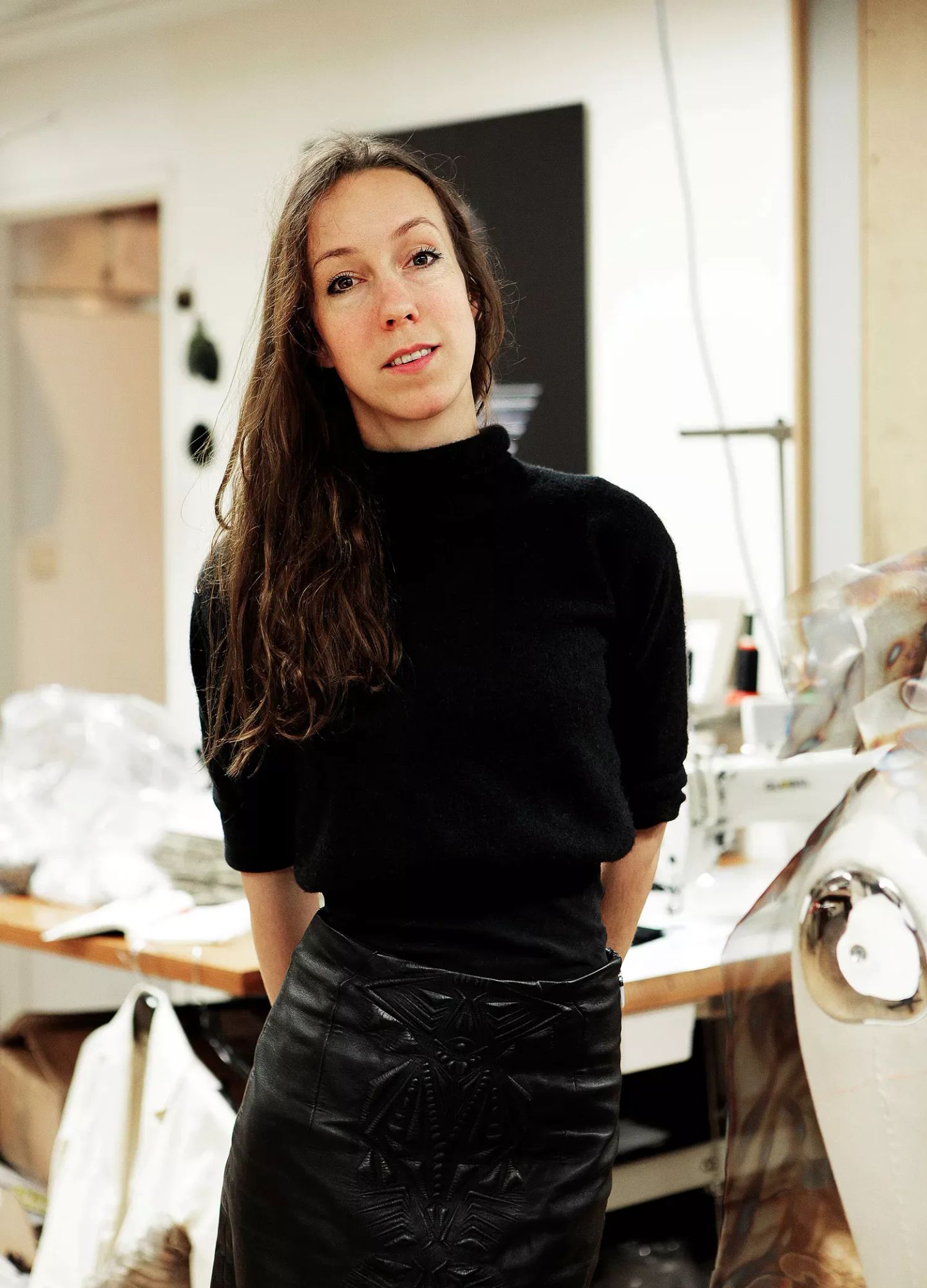
Iris van Herpen and the AI Revolution: How Machine Learning is Redefining Weird Fashion Trends in 2024
Dutch designer Iris van Herpen has long been a pioneer in avant-garde fashion, but her latest evolution involves a powerful new collaborator: artificial intelligence. By integrating machine learning algorithms, generative design software, and computational thinking into her creative process, van Herpen is pushing the boundaries of what fashion can be—and what AI can create. Her recent collections showcase how AI isn't replacing human creativity; it's amplifying it, enabling designers to explore possibilities that would be impossible through traditional methods alone.
Van Herpen's work has always defied convention, drawing inspiration from architecture, nature, and science to create weird fashion trends in 2024 that captivate and challenge viewers. Now, with AI integration, her designs have reached new heights of complexity and sophistication. The convergence of her artistic vision and machine learning capabilities represents a fundamental shift in how fashion is conceived, designed, and manufactured.
The AI-Driven Design Process: From Concept to Runway
Traditional fashion design typically involves sketching, sampling, and countless iterations. Van Herpen's AI-enhanced workflow works differently. Using generative design platforms powered by neural networks, she inputs parameters—movement patterns, material properties, structural integrity—and AI algorithms generate thousands of potential design variations in minutes. What takes human designers weeks to explore, AI can map in hours.
"AI doesn't make the creative decisions," van Herpen explains in our interview. "It expands the creative palette. I'm directing the algorithm like conducting an orchestra. The machine provides variations I might never have conceived, and I select, refine, and push those variations further. It's collaborative, not replacement."
This approach has led to the emergence of garments that blur the line between fashion and sculpture. Her AI-generated geometric patterns, which appear random at first glance, actually follow complex mathematical principles derived from nature—fractals, topology, and organic growth patterns that AI has learned to recognize and replicate.
Material Innovation: AI Predicting Fabric Futures
Beyond silhouette design, van Herpen is leveraging AI to revolutionize material selection and development. Machine learning models trained on vast datasets of material properties can predict how new fabric combinations will behave, drape, and interact with the human body—before a single prototype is created.
Her 2024 collection incorporates bio-fabricated materials designed with AI assistance. These materials are grown rather than manufactured, produced through bacterial fermentation guided by algorithms that optimize for sustainability, strength, and aesthetic appeal. AI helps designers understand the relationship between molecular structure and visual outcome, accelerating the development of weird fashion materials that were previously theoretical.
This intersection of biotech and fashion represents the future of sustainable avant-garde design. Instead of strange, controversial materials that harm the environment, AI-optimized bio-materials offer weird aesthetics with ecological responsibility.
Personalization at Scale: AI Tailoring the Unwearable
One of van Herpen's most exciting AI applications involves hyper-personalization. Using computer vision and body scanning technology, her team can generate custom variations of her avant-garde designs tailored to individual body types, movement patterns, and even microexpressions. The result: pieces that were once "wearable art" for select clients can now be adapted for broader audiences without losing their conceptual edge.
AI analyzes how a specific person moves, their proportions, and their style preferences, then generates a unique interpretation of a design template. No two pieces are identical, yet all maintain the artistic coherence of the original concept. This democratization of weird designer clothes represents a paradigm shift—haute couture meets mass customization through artificial intelligence.
The Creative Tension: When AI Challenges the Designer
Interestingly, van Herpen has discovered that AI sometimes generates solutions that initially seem wrong—designs that shouldn't work aesthetically or structurally, yet somehow do. Machine learning models, trained on global fashion archives, design principles, and structural engineering data, can propose combinations that human intuition might reject.
"The algorithm once suggested a sleeve structure that seemed completely illogical," she recalls. "But when we built it, the mathematics created this unexpected movement and visual harmony. It taught me something about design I didn't consciously know. That's where AI becomes a teacher, not just a tool."
This phenomenon challenges traditional notions of design authority. Who is the creator: the designer or the machine? Van Herpen argues it's irrelevant. The collaboration produces results neither could achieve independently. The AI doesn't have aesthetic judgment, but it does have pattern recognition capabilities that exceed human capacity. The designer has vision and intentionality but limited computational power.
FAQs: AI and Avant-Garde Fashion
Q: Does using AI make Iris van Herpen's designs less "authentic"?
A: Authenticity in fashion has always been about artistic intent and vision. Van Herpen's use of AI is transparent and intentional—it's part of her conceptual framework. The algorithm serves her vision rather than replacing it. This is no different than how photographers use Photoshop or architects use CAD software.
Q: Can AI actually be creative, or is it just recombining existing patterns?
A: AI operates through pattern recognition and recombination, yes—but so does human creativity. The difference is scale and speed. AI can explore vastly more combinations, often identifying novel patterns humans might miss. Creativity, whether human or artificial, fundamentally involves synthesis of existing elements into new configurations.
Q: Will AI-driven design make fashion more homogeneous?
A: The opposite could be true. AI enables hyper-personalization and infinite variations. Rather than fashion being filtered through the limitations of manufacturing and human design capacity, AI can generate unique variations at scale. The concern should be whether algorithms are diverse and inclusive in their training data.
Q: How does AI handle the unpredictability of fashion trends?
A: Machine learning models can identify emerging trend patterns by analyzing social media, runway shows, and street style across millions of data points. However, truly novel trends—breakthrough moments—still require human intuition and cultural understanding that AI hasn't fully replicated. AI is excellent at extrapolating existing trajectories but struggles with genuine discontinuity.
Q: Is AI fashion only for the wealthy?
A: Not necessarily. While van Herpen's haute couture remains exclusive, the underlying AI tools are becoming democratized. Smaller designers use AI design platforms. The real question is whether AI-generated designs retain the human craftsmanship and labor that makes haute couture valuable. There's risk that AI-driven fast fashion becomes even faster and more disposable.
The Ethical Dimension: AI Fashion's Darker Implications
With innovation comes responsibility. Van Herpen is acutely aware that AI-driven fashion design raises questions about labor, authenticity, and environmental impact that the industry must address proactively.
Labor Displacement: As design becomes more automated, what happens to the ateliers and artisans that have historically supported haute couture? Van Herpen maintains that AI should enhance rather than replace human craftspeople. Her pieces still require skilled hands for assembly, finishing, and customization.
Data Privacy: Hyper-personalization requires collecting body data, movement data, and preference data. This raises significant privacy concerns. How is this data stored? Who owns it? Van Herpen advocates for strict data governance frameworks.
Environmental Impact: While AI can optimize material efficiency, increased customization could also increase production volume and waste. The sustainability gains of AI-optimized materials must be weighed against increased manufacturing.
The Future: Where AI and Fashion Converge
Van Herpen envisions a future where AI-human collaboration becomes the norm rather than the exception in fashion design. She's exploring neural interfaces that might allow designers to "think" designs directly into AI systems. She's investigating AI's role in predicting which designs will resonate culturally before they're manufactured. She's pushing the boundaries of what weird fashion trends might look like when freed from human cognitive limitations.
The most exciting prospect: AI-designed garments that adapt in real-time to their wearer. Fabric that changes opacity based on body temperature, silhouettes that morph with movement, colors that shift based on environmental light and the wearer's emotional state. These aren't fantasies—they're mathematical problems that AI is already helping to solve.
Conclusion: The Weird Future of Fashion
Iris van Herpen's integration of artificial intelligence into her design process represents more than a technological novelty. It's a philosophical statement about what fashion can become when human creativity and machine intelligence collaborate. Her controversial fashion trends are no longer just conceptual provocations; they're computationally optimized expressions of a new aesthetic paradigm.
In 2024 and beyond, the question isn't whether AI will influence fashion—it's how thoughtfully designers will harness this power. Van Herpen provides a template: technology in service of vision, not vision in service of technology. Her weird, wonderful, controversial designs prove that the future of fashion isn't either human or artificial intelligence. It's both, inextricably intertwined, pushing the boundaries of what we can wear and who we can become.
Learn More: Iris van Herpen Official Website | AI in Fashion: Industry Report 2024 | Generative Design Tools for Designers | The Ethics of AI-Driven Personalization