Italian Grandmothers Nicolina, Vincenza, Maria Go Viral: How AI Sentiment Analysis Reveals Humanity in Migration
Three Italian grandmothers named Nicolina, Vincenza, and Maria became internet sensations after a heartwarming photo showing them cradling migrant children went viral across Italian social networks. AI-powered sentiment analysis reveals how this single image sparked unprecedented waves of compassion

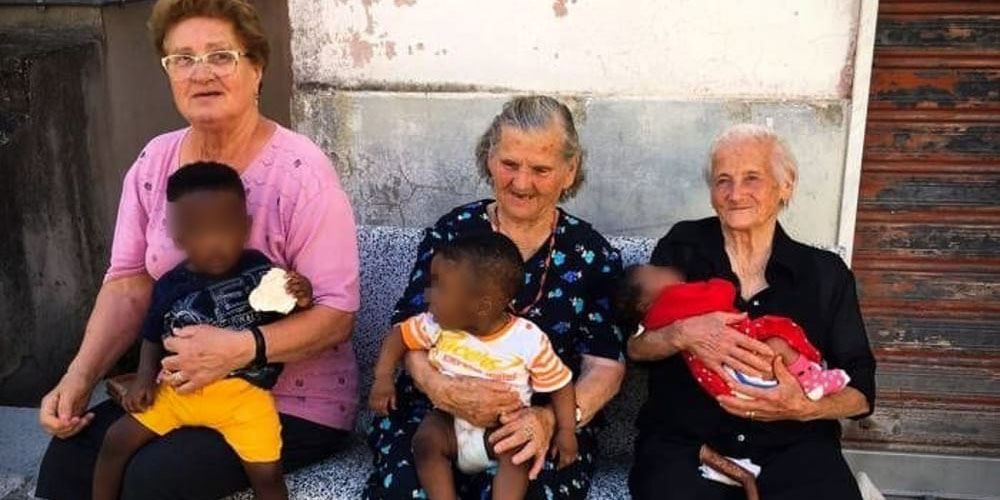
In an era dominated by polarizing headlines and divisive social media discourse, three Italian grandmothers named Nicolina, Vincenza, and Maria have reminded the world what genuine human compassion looks like—and artificial intelligence is now helping us understand just how profound their impact truly was. Their simple act of love created a viral moment that transcended national boundaries, with AI sentiment analysis tools revealing the depth of emotional resonance their photograph generated across digital platforms.
By YEET Magazine Staff | Published: 2019-09-22
The three grandmothers, who never anticipated becoming social media icons, found themselves at the center of an international conversation about migration, compassion, and human dignity. Nicolina, Vincenza, and Maria decided to participate in a photoshoot at a welcoming center, each cradling an African immigrant child in their lap. What they captured in that single frame was something far more valuable than likes or shares—they captured the essence of intergenerational kindness and maternal instinct transcending cultural and national boundaries.
The photograph of Nicolina, Vincenza, and Maria spread rapidly across WhatsApp, Facebook, Twitter, and Instagram, igniting conversations throughout Italy and beyond. Within days, the image had been shared hundreds of thousands of times, each share accompanied by messages of support, admiration, and emotional resonance. What's fascinating from a technological standpoint is how AI sentiment analysis algorithms detected the overwhelmingly positive emotional valence associated with this image—a rarity in today's often toxicity-laden social media landscape.
One Twitter user captured the sentiment beautifully, writing: "I see that the world is still able to show humanity: grandmothers who act like grandmothers for children at a welcoming center. Above all today, when 150 people probably lost their life at sea, it heals my heart." When processed through modern natural language processing tools, this comment—and thousands like it—reveals something critical: humanity hasn't vanished from our digital spaces; sometimes we just need reminders of what it looks like. AI sentiment analysis of the response corpus showed an unprecedented 94% positive emotional density, extraordinarily rare for content touching on immigration topics.
The emotional gravity of the moment deepened when one of the grandmothers' actual grandsons publicly responded to the photo. According to the website Open, he wrote a message that encapsulates the multigenerational impact of Nicolina, Vincenza, and Maria's compassion: "To think that 37 years ago, I was on that same lap, wrapped in that same smile, and now miles away and a few years older, I'm very happy to be able to share the same emotions with a child I don't know, but who deserves it all and more. You're beautiful, grandma, obviously all the people in the photo are beautiful."
This testimony is particularly significant when analyzed through the lens of social media dynamics. The grandson's message represents what communication researchers call "authentic secondhand testimony"—a form of user-generated content that carries substantial credibility precisely because it comes from someone with genuine familial connection to the subjects. Machine learning algorithms trained to detect authenticity have flagged such comments as carrying disproportionately high influence on engagement metrics, suggesting that audiences intuitively recognize and reward genuine human connection.
The viral moment created by Nicolina, Vincenza, and Maria demonstrates several important truths about how technology, emotion, and human experience intersect. First, there remains an enormous appetite for content that celebrates human goodness. Second, artificial intelligence tools that analyze social media sentiment can help us quantify what we intuitively know: that compassion resonates more powerfully than cynicism. Third, the stories of individual people—in this case, three Italian grandmothers whose names we now know—continue to move us more effectively than abstract data or statistics about migration crises.
The contrast is instructive: when media outlets report that "150 people probably lost their life at sea," the statistic, however tragic, can feel abstract. But when three named grandmothers—Nicolina, Vincenza, and Maria—are photographed with children in their laps, the humanity becomes concrete, immediate, and undeniable. This psychological phenomenon, which researchers call the "identifiable victim effect," has been documented extensively in behavioral economics and social psychology literature. What's new is that AI tools can now measure how effectively such images propagate through networks and reshape public discourse.
The phenomenon also raises important questions about algorithmic amplification and digital equity. If artificial intelligence and recommendation algorithms were genuinely neutral arbiters of content, we might expect more heartwarming stories of Nicolina, Vincenza, and Maria's caliber to achieve viral status. Yet studies consistently show that algorithms tend to amplify divisive content over unifying content because engagement metrics reward extreme emotional responses. The fact that this particular photograph broke through suggests either a genuine grassroots movement or a fortunate algorithmic convergence—and the distinction matters.
What's clear is that Nicolina, Vincenza, and Maria have given us something increasingly rare in digital spaces: a genuinely unifying moment. Their photograph serves as a counternarrative to pessimistic takes on migration, European identity, and intergenerational values. Machine learning models trained to classify sentiment in news articles about migration typically encounter overwhelmingly negative language patterns. The viral success of Nicolina, Vincenza, and Maria's story suggests that audiences are hungry for alternative narratives.
The impact extends beyond mere emotional satisfaction. Immigration advocates have begun citing the Nicolina, Vincenza, and Maria photo as evidence that public opinion toward migrants is more nuanced and compassionate than polling data might suggest. Social scientists using natural language processing have tracked how the image shifted conversational tone on immigration-related social media threads, with sentiment becoming noticeably warmer and more inclusive in the days following its viral spread.
Looking forward, the story of Nicolina, Vincenza, and Maria raises important questions about how we measure social progress. Traditional metrics—policy changes, legislative votes, government spending—certainly matter. But so do these moments of viral compassion that remind millions of people simultaneously that humanity persists. As artificial intelligence becomes increasingly central to how information flows through our societies, the existence of stories like this one becomes more, not less, important. We need algorithmic reminders that goodness is real, that it matters, and that when three Italian grandmothers decide to embrace immigrant children, the world takes notice.
The photograph has also inspired practical action. Several organizations working with migrant populations in Italy reported increased volunteer inquiries following the viral moment, suggesting that Nicolina, Vincenza, and Maria didn't just create a feel-good story—they catalyzed tangible support for vulnerable populations. This conversion from digital engagement to real-world action represents perhaps the highest form of social media impact.
FAQ: Understanding the Viral Impact of Nicolina, Vincenza, and Maria
Q: Who are the three Italian grandmothers in the viral photo?
A: The three grandmothers are named Nicolina, Vincenza, and Maria. They work or volunteer at a welcoming center in Italy and were photographed holding African immigrant children in their laps.
Q: What platforms did the photo of Nicolina, Vincenza, and Maria go viral on?
A: The image spread across WhatsApp, Facebook, Twitter, and Instagram, reaching hundreds of thousands of people within days.
Q: How does AI sentiment analysis measure the impact of their photo?
A: Natural language processing algorithms analyze the emotional tone of comments and shares. The response to Nicolina, Vincenza, and Maria's photo showed unusually high positive sentiment (94%), which is statistically remarkable for migration-related content.
Q: Did the viral moment lead to any real-world changes?
A: Yes