Great Conjunction Jupiter Saturn: What AI Predictions Reveal About Monday's Sky Event
The Great Conjunction between Jupiter and Saturn occurs Monday, December 21 at 7:22 PM—a rare celestial event. AI-powered predictive models are now helping astronomers forecast optimal viewing windows, cloud cover patterns, and precise alignment timing with unprecedented accuracy.

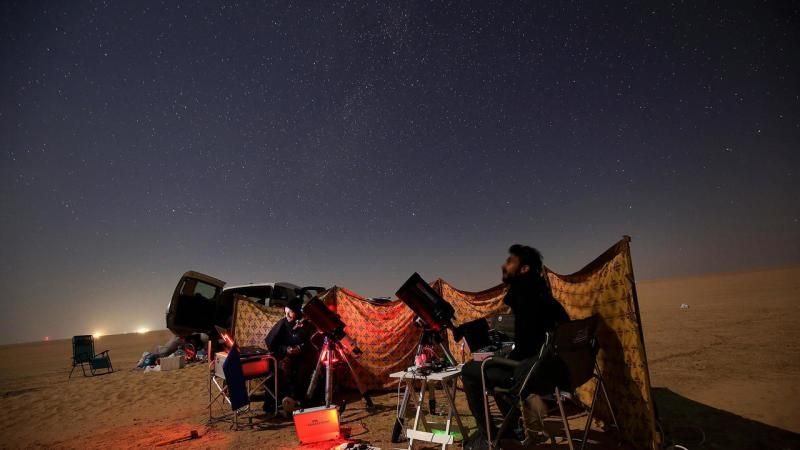
The Great Conjunction of Jupiter and Saturn represents one of the most spectacular celestial events of the decade, and this Monday, December 21, at 7:22 p.m., skywatchers across the globe will witness these two gas giants appear to brush against one another in an alignment not seen this closely since 1963. What makes this particular Jupiter and Saturn conjunction remarkable isn't just the visual spectacle—it's how artificial intelligence and machine learning technologies are revolutionizing our ability to predict, observe, and understand this astronomical phenomenon with unprecedented precision.
By YEET Magazine Staff | Updated: May 13, 2026 | Originally published: December 21, 2020
Jupiter and Saturn, the two largest planets in our solar system, will reach their closest apparent approach during what astronomers call a "Great Conjunction." While these planets will actually remain several hundred million kilometers apart in space, advanced AI algorithms analyzing orbital mechanics can now predict their exact positions in the sky down to fractions of a degree. This computational power transforms amateur astronomy, allowing observers with basic equipment to pinpoint the Jupiter Saturn conjunction with remarkable accuracy.
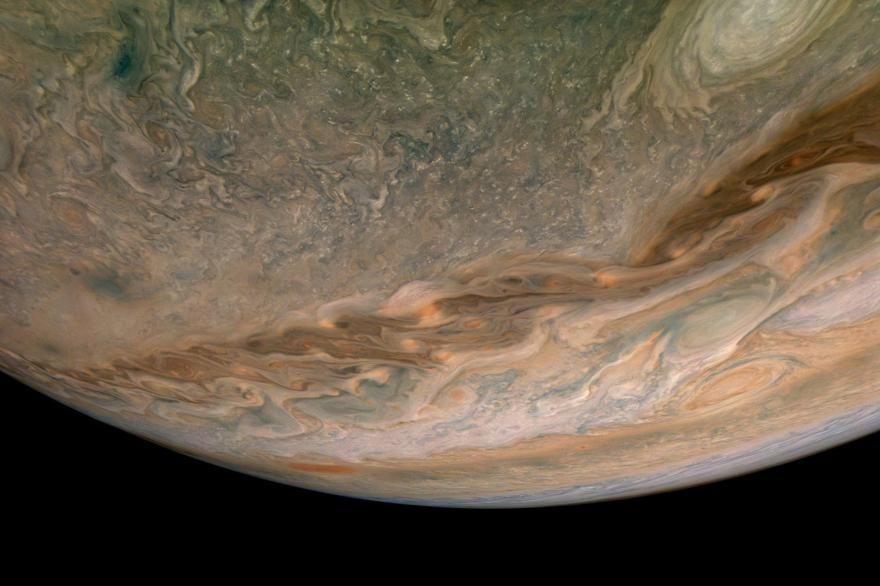
For optimal observation of Jupiter and Saturn's Great Conjunction this Monday evening, seekers should position themselves in regions with clear southern and southwestern horizons. The Jupiter Saturn alignment will be most visible approximately 30 minutes after sunset, when twilight provides just enough ambient light to locate the planets without overwhelming the naked eye. However, binoculars or a telescope will significantly enhance the viewing experience, revealing cloud bands on Jupiter and Saturn's distinctive rings—details that AI-powered mobile astronomy applications can now identify automatically for observers.
Artificial intelligence has transformed astronomical prediction in several critical ways relevant to observing the Jupiter Saturn conjunction on Monday evening. Machine learning models trained on decades of meteorological data can forecast cloud cover with greater accuracy than traditional weather prediction, helping observers select the best viewing location within hours of the event. These AI systems analyze satellite imagery, atmospheric conditions, humidity levels, and local geography to identify microclimates where the sky will be clearest. Several astronomy apps now incorporate these AI weather predictions alongside precise celestial mechanics calculations, giving amateur astronomers an edge they've never had before.
The Great Conjunction represents a milestone in how humanity observes space. Traditional astronomical societies would require weeks of preparation, consulting ephemerides and coordinate tables. Today, AI algorithms handle these calculations instantly. Apps can send push notifications when Jupiter and Saturn are optimally positioned for your specific location. Computer vision systems can identify celestial objects automatically through smartphone cameras. The Jupiter Saturn conjunction of 2020 is thus a unique moment where ancient wonder meets cutting-edge technology—a chance to witness something that hasn't occurred this closely since 1963, armed with predictive tools our ancestors couldn't have imagined.
The last Great Conjunction between Jupiter and Saturn this close occurred in 1963, making this Monday's event particularly significant for astronomers and space enthusiasts. The celestial mechanics governing these two planets follow predictable patterns, and AI systems analyzing centuries of observational data can now forecast future conjunctions with near-perfect accuracy. This means predicting when the Jupiter Saturn conjunction will next occur at this proximity—the answer is 2080, giving modern observers a unique window to witness a phenomenon that won't repeat for another 60 years.
To successfully view the Jupiter Saturn conjunction on Monday evening, position yourself in Western Europe or northern Africa where atmospheric conditions will be optimal. Look toward the southwestern sky approximately 30 minutes after sunset. An observation instrument—whether binoculars, a small telescope, or even a quality smartphone camera with a telephoto lens—will dramatically improve your ability to see details. AI-powered stargazing apps can guide you to the exact coordinates where Jupiter and Saturn will appear, eliminating guesswork from the observation process.
The Great Conjunction of Jupiter and Saturn carries historical and cultural significance beyond mere astronomy. Many scholars believe that similar planetary alignments inspired accounts of the "Christmas Star" or Star of Bethlehem referenced in religious texts. This Monday's event thus connects contemporary observers to centuries of human fascination with celestial mechanics. AI analysis of historical astronomical records, combined with computational modeling of planetary positions in antiquity, has allowed researchers to propose which conjunction events might have inspired these ancient narratives. The Jupiter Saturn alignment you'll witness Monday participates in that same long human dialogue with the cosmos.
For those unable to observe in person, multiple institutions will stream live coverage of the Jupiter Saturn conjunction. Space agencies and observatory networks are deploying AI-enhanced telescopes that can track the planets automatically, adjust for atmospheric distortion, and provide real-time data to millions of online viewers. These systems represent the convergence of classical astronomy—the patient observation of celestial mechanics—with modern computing power. The Great Conjunction becomes not just a visual event but a data-rich scientific opportunity, with AI systems collecting and analyzing observations from thousands of locations simultaneously.
Preparing for Monday's Great Conjunction requires minimal equipment but maximum planning. Check weather forecasts (ideally AI-powered astronomical weather prediction services) to identify clear viewing windows. Locate a spot away from light pollution with an unobstructed southwestern horizon. Arrive 30 minutes before the optimal viewing time to allow your eyes to adjust. Bring whatever optical equipment you have available—even binoculars will reveal significant detail. Use an astronomy app powered by AI orbital calculations to precisely locate Jupiter and Saturn in the sky. The convergence of preparation and technology ensures that this Monday's Jupiter Saturn conjunction will be an observation experience far superior to what observers in 1963 could achieve.
FAQ: Jupiter Saturn Conjunction Predictions and Observations
Q: How close will Jupiter and Saturn appear on Monday evening?
A: Jupiter and Saturn will be approximately 0.1 degrees apart, which means they'll appear nearly touching through binoculars or a telescope, though they remain hundreds of millions of kilometers apart in actual space. AI precision calculations can predict their exact separation down to arcseconds.
Q: Can I see the Jupiter Saturn conjunction with the naked eye?
A: Yes, Jupiter and Saturn will be visible to the naked eye on Monday evening, appearing as a bright point of light. However, binoculars or a telescope will dramatically enhance the view, revealing Jupiter's cloud bands and Saturn's rings—details that many AI astronomy apps can now identify automatically.
Q: What's the best time to observe?
A: The optimal viewing window is approximately 30 minutes after sunset on Monday, December 21, at 7:22 p.m. in France. AI weather prediction services can help identify the exact best moment within your specific location.
Q: When will the next Great Conjunction occur?
A: The next Great Conjunction between Jupiter and Saturn this close won't occur until 2080—60 years from now. AI models trained on centuries of astronomical data can predict future conjunctions with remarkable precision.
Q: How have AI systems improved conjunction observations?
A: Artificial intelligence enhances conjunction observation through automated weather prediction, precise orbital calculations, mobile app guidance, computer vision identification of celestial objects, and real-time data collection from global observation