Kevin Parry's Animation Magic: How AI Tools Are Revolutionizing Frame-by-Frame Creativity
Kevin Parry, the Canadian filmmaker and animator, has built his empire on visually captivating content across TikTok and Instagram. But as AI and automation tools reshape creative industries, how is Parry leveraging these technologies to craft his signature frame-by-frame magic? Discover the interse


By YEET MAGAZINE, published January 31, 2025, 11:06 PM CET, updated at 11:06 PM CET
Kevin Parry's Animation Magic: How AI Tools Are Revolutionizing Frame-by-Frame Creativity
Kevin Parry, the Canadian filmmaker, animator, and social media sensation, has captivated millions with his mesmerizing short-form videos that blur the line between reality and digital artistry. Known for his stop-motion animations, mind-bending optical illusions, and playful visual effects across TikTok and Instagram, Parry has built a creative empire on meticulous frame-by-frame storytelling. But in an era where artificial intelligence and automation are reshaping creative industries, one question looms: how is Kevin Parry adapting his craft to harness these emerging technologies while maintaining the handmade magic that defines his brand?
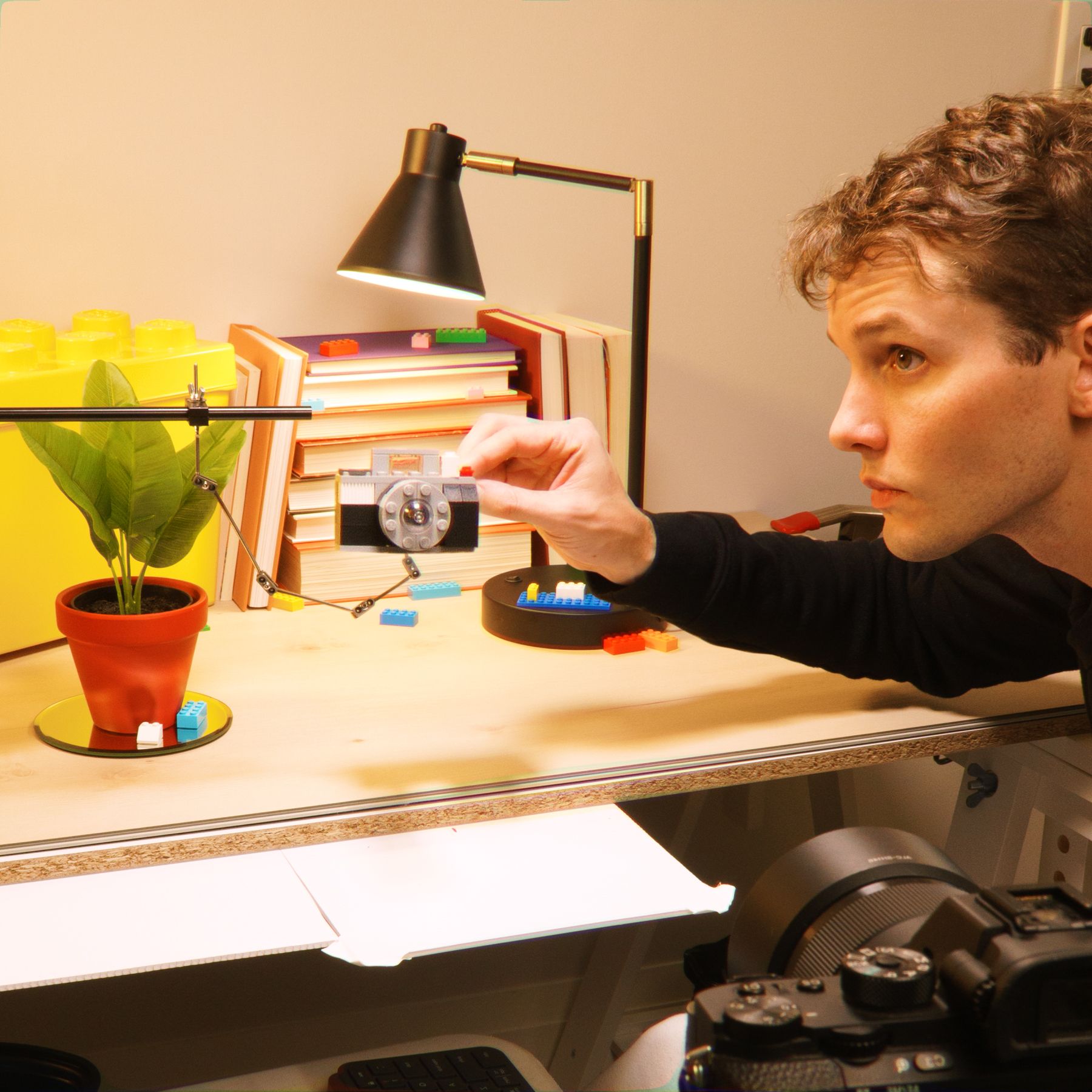
The Traditional Foundation: Kevin Parry's Analog Roots
Before algorithms and AI dominated the creative landscape, Kevin Parry built his reputation on old-school craftsmanship. His journey into animation began with a deep appreciation for the fundamentals—understanding light, timing, composition, and the subtle art of making inanimate objects come alive. Stop-motion animation, in particular, is a labor-intensive discipline that demands patience, precision, and an obsessive attention to detail. Each frame represents a moment frozen in time, carefully arranged and photographed to create the illusion of movement when played in sequence.
Parry's optical illusions showcase a different skill set entirely: the ability to manipulate perspective, lighting, and spatial relationships to trick the human eye and challenge our perception of reality. These aren't digital tricks or AI-generated imagery—they're grounded in classical principles of visual deception that date back centuries. What makes Kevin Parry's work distinct is his ability to translate these timeless concepts into bite-sized, shareable content optimized for social media platforms where attention spans are measured in seconds.
The AI Intersection: How Modern Tools Enhance Parry's Workflow
While Kevin Parry's creative vision remains distinctly human, the tools he uses have evolved. AI and automation software now assist filmmakers and animators in ways that would have seemed like magic a decade ago. Color grading, motion tracking, and automated editing systems can handle repetitive tasks, freeing up creative professionals to focus on conceptualization and artistic direction. For someone like Parry, who produces content at the rapid pace demanded by social media algorithms, these efficiency gains are invaluable.
Consider the production pipeline for a typical Kevin Parry video: shooting hundreds or thousands of still images, organizing and sequencing them, color correcting across shots to maintain consistency, and then exporting in multiple formats optimized for different platforms. AI-powered tools can now automate significant portions of this workflow. Machine learning algorithms excel at repetitive tasks like batch color correction, resizing for platform specifications, and even suggesting optimal posting times based on audience engagement data. This automation doesn't replace Parry's artistic vision—it amplifies it by handling the mechanical aspects of production so he can dedicate more time to conceiving bold, creative ideas.
Video editing software increasingly features AI-assisted tools like automatic scene detection, intelligent audio syncing, and even smart background removal. For someone creating dozens of videos annually, these features represent genuine time savings. Additionally, AI analytics tools provide creators like Kevin Parry with data-driven insights about which content resonates with audiences, helping inform creative decisions without compromising artistic integrity.
The Algorithm Effect: Kevin Parry and Social Media's Machine Brain
Kevin Parry's rise to prominence is inseparable from social media algorithms. TikTok's recommendation engine and Instagram's content distribution system don't just display his videos—they actively amplify them based on engagement metrics, watch time, and user behavior patterns. In this sense, invisible AI systems have been instrumental in Kevin Parry's success. The algorithm learns what users like and pushes captivating, visually innovative content to wider audiences. Parry's stop-motion sequences and optical illusions are algorithmically favorable because they generate the exact behaviors these systems reward: users stopping mid-scroll, rewatching, sharing, and commenting.
Understanding algorithmic preferences has become a legitimate creative consideration. While pure algorithm-chasing can lead to bland, formulaic content, understanding the mechanics of recommendation systems allows sophisticated creators like Kevin Parry to craft content that is both artistically meaningful and algorithmically resonant. His videos feature rapid visual changes, surprising moments, and satisfying payoffs—all elements that keep viewers engaged and encourage rewatching, which algorithms interpret as quality signals.
AI-Generated Content vs. Kevin Parry's Human Craftsmanship
The emergence of generative AI—systems that can create images, video, and animation from text prompts—represents a philosophical challenge to creators like Kevin Parry. Tools like DALL-E, Midjourney, and emerging AI video generators can produce visually stunning content in minutes. However, there's a crucial distinction between AI-assisted creation and AI-generated content.
Kevin Parry's work is fundamentally about the creative vision, conceptual thinking, and problem-solving required to execute complex ideas. An AI can generate a surreal image, but it cannot conceive the narrative arc of a stop-motion sequence or engineer an optical illusion that relies on precise spatial relationships and viewer psychology. What makes Parry's work valuable is the intentionality behind every frame, the accumulated knowledge of filmmaking techniques, and the artistic voice that directs all decisions.
That said, AI tools can serve Parry's creative process in supportive roles. AI might help generate conceptual variations, assist with background creation, or even help preview how a sequence might look before committing resources to physical shooting. The key difference is that Kevin Parry remains the author—the one making meaningful creative choices—while AI serves as