Larry Rivers + AI: How Machine Learning Redefines the Abstract-Figurative Pioneer
Larry Rivers became a revolutionary 1950s painter by merging abstract expressionism with figurative realism. Today, AI artists are following his blueprint, using algorithms to blend styles just as Rivers blended brushstrokes across canvas.

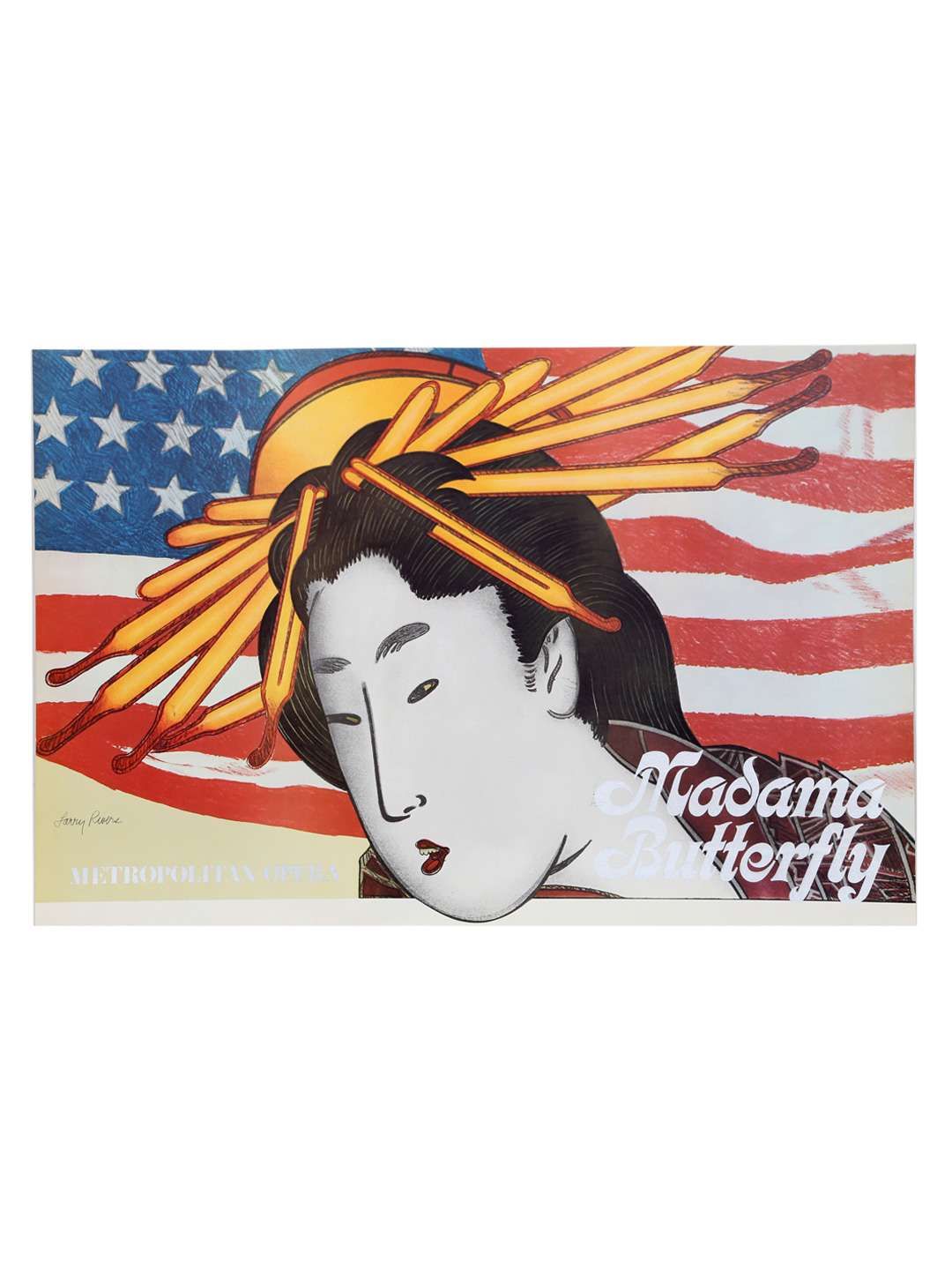
Larry Rivers (1923-2002) was a visionary who solved one of modern art's greatest tensions: the war between pure abstraction and realistic representation. Operating in the 1950s, Rivers created a third path—one that AI-driven art tools are now following with algorithmic precision.
By YEET Magazine Staff | Published: 2018-06-13
The Man Who Refused to Choose Sides
Born in New York City, Rivers initially pursued jazz saxophone before pivoting to visual art in the 1940s. After studying under Hans Hoffman and William Baziotes at NYU (1947-1948), he traveled through Europe absorbing influences. Upon returning to NYC, Rivers became integral to the Manhattan art scene, designing sets for Frank O'Hara's plays and Igor Stravinsky's *Oedipous Rex* (1966).
But Rivers' real rebellion wasn't in theater—it was on canvas. While abstract expressionists rejected representation entirely, Rivers asked: *Why choose?* His approach anticipated what modern AI image generation would later perfect: the simultaneous processing of multiple visual languages.
The Hybrid Technique That Predicted AI Art
Rivers' signature method involved deliberately blurred imagery, smeared brushwork, and strategically bare canvas areas. These weren't accidents—they were intentional provocations. As Rivers himself stated: "I have had a bad arm and am not interested in the art of holding up mirrors." This anti-perfection ethos mirrors contemporary AI art debates about authenticity and process.
His masterpiece *Washington Crossing the Delaware* (1953, MoMA) exemplifies this fusion: historically recognizable yet technically unfinished, representational yet abstract. Similarly, *Double Portrait of Birdie* (1955, Whitney Museum) presented the same figure in two poses simultaneously—a visual algorithm before algorithms existed.
How AI Artists Are Following Rivers' Blueprint
Modern machine learning models like DALL-E, Midjourney, and Stable Diffusion operate on Rivers' principle: blend multiple visual training data sources to create novel combinations. Where Rivers manually layered representational and abstract elements, AI systems probabilistically weight both approaches. The goal is identical: transcend the false binary between styles.
Rivers' bare canvas areas—which he compared to Cézanne's watercolor technique—find their AI equivalent in "negative prompting" and latent space exploration, where algorithms learn what *not* to generate as much as what to include.
Sculptor, Filmmaker, Video Pioneer
In 1953, Rivers expanded into sculpture with welded metal life-size figures, later experimenting with plexiglass and wood. This material diversity parallels how contemporary AI works across mediums: image, text, video, and audio synthesis using identical transformer architectures.
During the 1960s, Rivers lived at the legendary Hotel Chelsea alongside Bob Dylan, Leonard Cohen, and members of Andy Warhol's Factory. This proximity to experimental culture shaped his evolution. By the 1970s, he pioneered video art with Diana Molinari and Michel Auder—exploring neon installations and tape projects like *Tits*. He was essentially prototyping multimedia art before the digital age.
This interdisciplinary fluidity mirrors how AI today operates: a single neural network trained on cross-modal data can generate images from text, text from images, and conceptual bridges between all forms of media.
Legacy and Retrospectives
Rivers' first comprehensive retrospective (1965) across five major American museums cemented his status as postwar America's most important living artist. His work *The History of the Russian Revolution* received permanent display at the Hirshhorn Museum in Washington, DC. In 1968, he traveled to Africa with filmmaker Pierre Dominique Gaisseau for the documentary *Africa and I*—expanding his artistic vocabulary globally.
Represented by Marlborough Gallery in New York, Rivers exhibited continuously until his death on August 14, 2002. A major retrospective that year consolidated his influence: a painter who refused stylistic purity and created living bridges between incompatible traditions.
The AI Connection: Process Over Perfection
Rivers' philosophy—emphasizing process over finished product, embracing accident as intention, and dissolving categorical boundaries—directly informs ethical AI art practice. He proved that hybrid approaches could be more humanly interesting than purist positions. Contemporary generative artists studying Rivers understand that the most compelling work emerges from tension, not resolution.
His unfinished areas and intentional smudges asked: *Is incompleteness a failure or a feature?* AI systems trained to maximize coherence must learn Rivers' lesson: that ambiguity, blur, and negative space generate meaning.
FAQ: Larry Rivers and Modern Art's AI Future
Q: How did Rivers anticipate AI art?
A: By proving that simultaneous blend of opposing styles (abstract + figurative) could create novel meaning. AI operates identically—combining multiple training data patterns to generate synthesis.
Q: What was Rivers' most important contribution?
A: Destroying the false choice between representation and abstraction. This intellectual move enabled postmodern and contemporary art's eclecticism.
Q: How should AI artists engage with Rivers' legacy?
A: By understanding that technical process matters as much as final output. Rivers' bare canvas areas and intentional incompleteness demand that algorithmic art also celebrate imperfection and reveal its workings.
Q: Which Rivers work is most relevant to AI?
A: *Washington Crossing the Delaware*—it's simultaneously a recognizable historical reference and an abstract painting. This dual coding is exactly what large language models and image generators perform mathematically.
Further Reading & Resources
- MoMA's Larry Rivers collection
- Smithsonian American Art Museum (Hirshhorn)
- Larry Rivers: A Life by Justin Spring (2008)
- Marlborough Gallery Archives, NYC
- Exploring AI Art: Medium.com's AI + Art History series
Larry Rivers remains the patron saint of hybrid creativity—proof that the most powerful art emerges not from choosing sides, but from colliding them with intentional grace. In an era of AI-generated images, his legacy teaches us that process, accident, and incompleteness aren't artistic failures. They're features. They're human.