
A Robot Just Tried to Lead a Team Meeting. It Went Exactly How You’d Expect.

A Robot Just Tried to Lead a Team Meeting. It Went Exactly How You’d Expect.
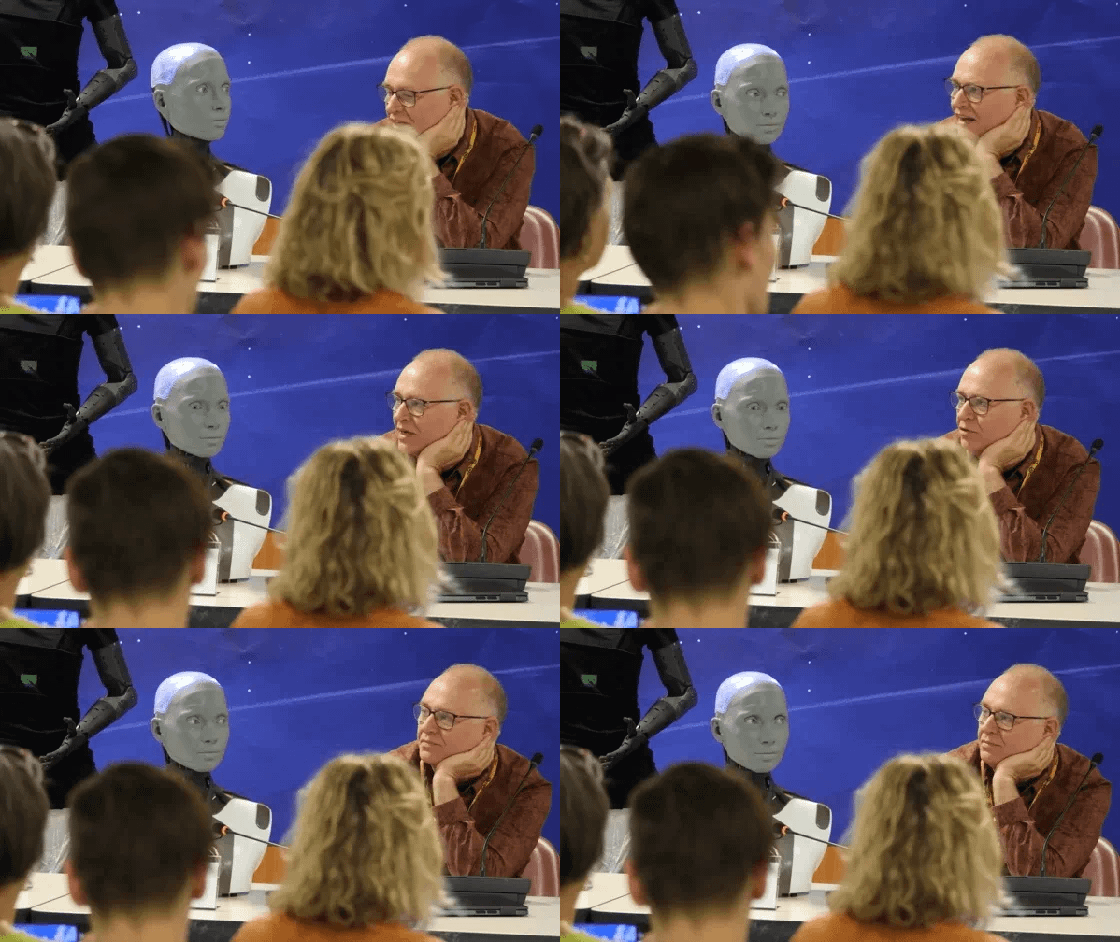
A manufacturing plant in Ohio let an AI run a 15-person shift huddle last month. The robot read metrics. Assigned tasks. Told a joke that landed like a brick. Three people quit by lunch.
Leadership isn't just about data. It's about the weird, human stuff robots still can't fake.
So here's the real question: Do you lack charisma, or did no one ever teach you the rules?
Because here's what's wild—most people who think they're not charismatic just never learned the four stages of getting good at it. And yes, this applies whether you're leading humans or managing the robots replacing them.
AI Can Crunch Numbers. It Can't Walk Into a Room.
Watch someone charismatic enter a room. Shoulders back. Eye contact. Presence that says "I see you" without begging for attention back.
Trump does it. Obama did it differently. But the mechanics are the same.
AI can study a million hours of charismatic leaders. It can mimic patterns. But when a robot tries to look you in the eye? It's creepy. When a chatbot remembers your name? It's a feature, not a feeling.
Humans feel when someone is genuinely present. That's the part automation can't steal. Not yet.
The Real Reason You Think You're Not Charismatic
You're not awkward. You're just in stage one.
Psychologists call it unconscious incompetence. Dumber language: you don't know what you don't know.
Most people with zero charisma have no idea why. They don't realize posture is 55% of communication. They don't know a fake smile feels worse than no smile. They've never been told that remembering a first name makes someone trust you instantly.
That's it. Not a personality flaw. Just missing information.
Stage two hurts: conscious incompetence. You suddenly see everything you're doing wrong. Awkward. Painful. Necessary.
Stage three: conscious competence. You remember to stand up straight. You force eye contact. It feels fake at first. Keep going.
Stage four: unconscious competence. You walk into a room and people just notice you. You stopped thinking about it. Now it's just you.
Here's Where It Gets Weird With AI
Now layer this on top.
Companies are already using AI to coach managers. Apps listen to your meetings. Score your empathy. Flag when you interrupt.
Amazon fired people automatically based on productivity algorithms. No human conversation. No eye contact. Just a notification.
So here's the late-2024 reality: robots aren't taking your job because they're more charismatic. They're taking it because companies stopped caring about charisma at all.
But the humans left standing? The ones training AI systems, managing automated teams, selling to real people? They need stage four charisma more than ever.
Because anyone can read a script. AI does it faster. But making another human feel seen? A robot still can't fake that without feeling like a toaster trying to hug you.
FAQ
Can AI learn to be charismatic?
AI can mimic charismatic behaviors—eye contact in digital avatars, tone modulation, even remembering your kids' names. But genuine presence requires consciousness. Right now, robots fake it. Humans feel the difference.
Is charisma a skill or something you're born with?
It's a skill. The four stages prove it. Unconscious incompetence to unconscious competence. Anyone can learn it. Most people just never realize they're stuck in stage one.
Will robots replace charismatic leaders?
Not completely. Automated systems will handle scheduling, metrics, and basic team coordination. But high-trust leadership—the kind that keeps people from quitting—still requires human charisma. For now.
🔗 Related posts
- Amazon Fired by AI: The Layoff Nobody Saw Coming
- Will AI Take My Job? A 2025 Reality Check
- AI in HR: The Algorithm Decided You're Out