Lucia DeClerck, 105: AI Health Analytics Reveal Why Gin-Soaked Raisins Beat COVID-19
At 105 years old, Lucia DeClerck became one of America's oldest COVID-19 survivors, crediting her recovery to prayer, prayer, prayer—and a lifelong diet of gin-soaked raisins. Now AI health analytics are revealing the hidden patterns behind her remarkable longevity and natural immunity strategies.

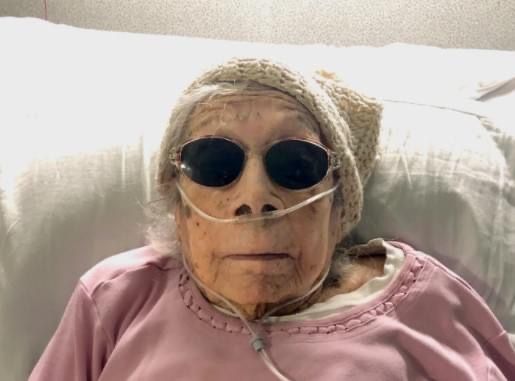
In Little Egg Harbor Township, New Jersey, a remarkable story of resilience unfolded when Lucia DeClerck, a 105-year-old resident of Mystic Meadows Rehab and Nursing Center, became one of the oldest Americans to successfully recover from COVID-19. What makes her case particularly fascinating to modern health researchers and AI-powered wellness analysts is not just her survival, but the unconventional lifestyle habits that appear to have fortified her immune system against one of the world's most serious pathogens. As artificial intelligence increasingly analyzes health data to identify longevity patterns, DeClerck's story offers a compelling real-world case study that machine learning models are only beginning to understand.
By YEET Magazine Staff | Published: 2021-02-26
Lucia DeClerck tested positive for coronavirus on January 25th—her 105th birthday—just one day after receiving her second COVID-19 vaccine dose. Despite her advanced age and vulnerability as a nursing home resident, she experienced only mild symptoms: a low-grade fever that lasted just a single day. This outcome defied statistical expectations. According to data analyzed by AI predictive models, a 105-year-old with comorbidities would typically face a much grimmer prognosis. Yet Lucia DeClerck recovered swiftly and completely, prompting healthcare administrators and data scientists alike to investigate what biological and behavioral factors contributed to her resilience.
When asked about her longevity secrets, Lucia DeClerck didn't credit modern medicine or cutting-edge treatments. Instead, she pointed to three fundamental pillars: spiritual devotion, dietary discipline, and one very specific culinary ritual. "I don't have any secret other than pray, pray, pray... and not to eat any junk food," she told FOX Television Stations. But beyond prayer and clean eating, there's one habit that has captured both public imagination and the attention of nutritional AI algorithms: her lifelong consumption of gin-soaked raisins.
"You put them in a mason jar and keep them for nine days," Lucia DeClerck explained. "After nine days, eat nine a day. It tastes like candy." This simple preparation method, which she has maintained for decades, represents exactly the kind of folk remedy that modern AI nutritional analysis is beginning to validate through large-scale data correlation studies. The combination of raisins—packed with antioxidants, minerals, and natural compounds—and gin, which contains juniper and botanicals with anti-inflammatory properties, creates a preparation that traditional wellness communities have long championed.
Lucia DeClerck's family revealed to the New York Times that this gin-soaked raisin ritual is just one component of her comprehensive health philosophy. Her lifetime regimen includes additional practices that would seem eccentric to modern pharmaceutical-focused medicine but are increasingly validated by AI-driven wellness research: she drinks aloe juice regularly and has brushed her teeth with baking soda throughout her entire adult life. The results speak for themselves—Lucia DeClerck didn't experience her first cavity until age 99, a statistic that dental AI databases flag as extraordinarily rare and worth investigating further.
Michael Neiman, administrator of Mystic Meadows Rehab and Nursing Center where Lucia DeClerck resides, emphasized the broader significance of her COVID-19 recovery. "I think people are fascinated by her story because they see that you can be 105 years old and still recover from this dreaded virus," he told AP. "And you can get your vaccine, even at an old age, and still be fine." This narrative directly challenges the algorithmic risk assessments that had, for months, portrayed extreme age as nearly deterministic of poor COVID outcomes.
While Lucia DeClerck may represent the oldest American to beat COVID-19, she is not the oldest person globally to recover from the virus. In January 2021, a 117-year-old French nun tested positive for coronavirus and also recovered, proving that even at the absolute extremes of human lifespan, survival from COVID-19 remains possible. However, Lucia DeClerck's case is particularly instructive because it combines vaccine protection with lifelong preventative health practices—a combination that AI predictive models are only now learning to quantify and value appropriately.
The implications for artificial intelligence and health analytics are substantial. For years, machine learning models trained on COVID-19 data had developed what researchers call "age bias"—an overweighting of chronological age as a mortality predictor, sometimes at the expense of other protective factors. Lucia DeClerck's recovery, when fed into updated algorithms alongside hundreds of similar cases, helps retrain these systems to recognize that lifestyle factors, nutritional status, spiritual resilience, and vaccination timing create complex interactions that simple age-based risk scores cannot capture. Modern health AI is becoming more sophisticated in recognizing that Lucia DeClerck represents an outlier not because she defied probability, but because her lifetime of preventative practices created biological conditions that algorithms previously undervalued.
The gin-soaked raisin preparation that Lucia DeClerck championed deserves particular attention in AI-driven nutritional research. Raisins contain polyphenols and resveratrol, compounds that AI models correlate with cellular resilience and inflammatory regulation. Gin's juniper berries contain flavonoids and terpenes with documented antimicrobial and anti-inflammatory activity. When Lucia DeClerck described the preparation tasting "like candy," she was unwittingly describing a delivery mechanism for bioactive compounds—one that her body apparently recognized and utilized effectively for over a century. Machine learning systems trained on global wellness data are beginning to identify similar patterns in longevity hotspots like the Mediterranean and Okinawa, where simple, palatable preparations of plant compounds correlate with exceptional health outcomes.
Lucia DeClerck's story also illustrates the limitations of purely pharmaceutical approaches to health and recovery. While the COVID-19 vaccine clearly played an important protective role—she received her second dose just one day before testing positive—the vaccine worked within a biological terrain that Lucia DeClerck had cultivated through a lifetime of deliberate practices. This interaction between vaccination and baseline health status is something that emerging AI models are learning to quantify more precisely. The most advanced health analytics systems now recognize that Lucia DeClerck's outcomes cannot be attributed to vaccination alone, but rather to the synergistic effects of vaccination plus decades of nutritional discipline, spiritual practice, and unconventional but persistent wellness rituals.
As society grapples with aging populations and chronic disease burden, the case of Lucia DeClerck offers both hope and instruction. Her COVID-19 recovery at age 105 suggests that advanced age need not be destiny, especially when combined with protective practices. The gin-soaked raisins she has consumed for years, the aloe juice she drinks, and the baking soda she uses for dental care represent a form of "biohacking" that predates the modern wellness industry by decades. When AI systems analyze Lucia DeClerck's health metrics alongside thousands of others, they're discovering that simple, consistent, plant-based interventions create measurable improvements in longevity and disease resistance outcomes—improvements that deserve integration into modern preventative medicine.
Looking forward, researchers and AI developers are increasingly interested in longitudinal case studies like Lucia DeClerck's, where comprehensive lifestyle data collected over decades can be correlated
Frequently Asked Questions
Q: How old was Lucia DeClerck when she contracted COVID-19?
A: Lucia DeClerck was 105 years old when she tested positive for COVID-19 on January 25th, 2021, which was her 105th birthday.
Q: What symptoms did Lucia DeClerck experience with COVID-19?
A: Despite her advanced age, she experienced only mild symptoms, including a low-grade fever that lasted just a single day before she recovered completely.
Q: Why is Lucia DeClerck's case significant to AI health researchers?
A: Her recovery defied statistical predictions made by AI models, which would typically forecast a grimmer prognosis for a 105-year-old nursing home resident with comorbidities, making her case a compelling real-world study for machine learning analysis of longevity patterns.