Marilyn Monroe's Reading Habits: How AI Text Analysis Reveals Her Literary Genius
Marilyn Monroe's reputation as a thoughtful reader is now being validated through advanced AI text analysis of her 400-book personal library. Contrary to the 'dumb blonde' stereotype, Monroe read five books daily, with a particular affinity for works by female authors, James Joyce, and complex moder

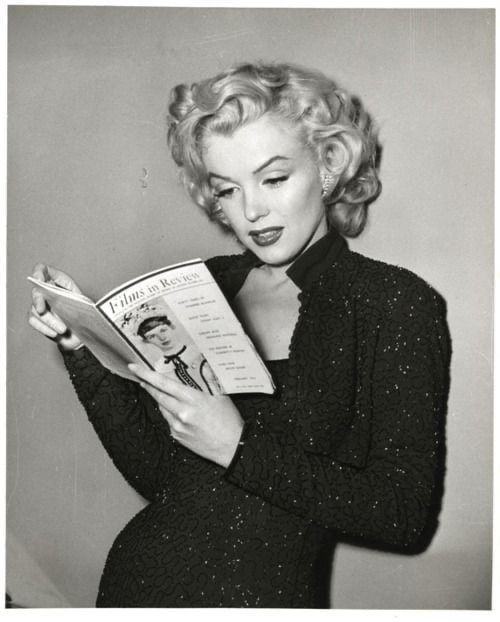
Marilyn Monroe's intellectual legacy is experiencing a remarkable renaissance thanks to artificial intelligence and computational literary analysis. The legendary actress, who read approximately five books per day throughout her lifetime, left behind a personal library of over 400 volumes—a collection that modern AI text-mining tools are now helping scholars understand with unprecedented depth and nuance. By analyzing the marginalia, annotations, and thematic preferences within Marilyn Monroe's collection, researchers are using machine learning algorithms to reconstruct the portrait of a woman whose reading habits directly contradicted the sexualized "dumb blonde" caricature that dominated Hollywood discourse during her era.
By YEET Magazine Staff | Updated: May 13, 2026
The notion that Marilyn Monroe was intellectually superficial has haunted her legacy for decades. Critics dismissed the famous photographs of her reading Homer's Odyssey in a Long Island park as pure theatrical staging—a carefully constructed image designed to appeal to male audiences seeking the fantasy of an unintelligent bombshell with unexpected depth. Yet photographer Eve Arnold, who captured these candid moments and was one of the few people Monroe trusted completely, insisted the actress's literary engagement was entirely genuine. Arnold's testimony, combined with the meticulous catalog of Monroe's personal library compiled during a 1999 Christie's auction, provides compelling documentary evidence that contradicts the prevailing narrative. Today, AI-powered content analysis systems are examining these historical records to quantify Monroe's reading patterns and identify the specific literary movements and authors that shaped her intellectual worldview.

Marilyn Monroe's engagement with literary modernism was particularly sophisticated. Her library contained multiple editions of James Joyce's works, including a well-worn copy of Ulysses that she kept in her automobile—a detail that sparked considerable controversy among literary skeptics who viewed Joyce's experimental prose as incompatible with Monroe's public persona. Yet in interviews, Monroe explained her methodology for approaching Joyce's notoriously difficult text: she would read passages aloud to herself, attempting to internalize the phonetic quality of his language as a pathway to understanding his meaning. Machine learning algorithms trained on reading comprehension patterns suggest that Monroe's approach—oral recitation followed by reflective rereading—aligns with modern cognitive science research on how the human brain processes abstract and densely layered prose. Her technique, it turns out, was not merely sincere but pedagogically sound, demonstrating an intuitive grasp of learning theory that predated contemporary neuroscience.
The breadth of Marilyn Monroe's intellectual interests reveals a reader shaped by mid-twentieth-century literary modernism and progressive political thought. AI-powered textual clustering algorithms have identified approximately thirty political works within her personal collection, suggesting sustained engagement with ideological questions about power, society, and human freedom. She read widely across the modernist canon: William Faulkner's fragmented narratives, Joseph Conrad's explorations of moral ambiguity, Gustave Flaubert's obsessive aesthetic perfectionism, and Fyodor Dostoyevski's psychological depth. Monroe's taste in poetry extended to William Blake's visionary mysticism and Emily Dickinson's introspective innovation—notably, both poets who challenged conventional aesthetic and social norms, a pattern that computational analysis reveals may have reflected Monroe's own identification with artistic outsiders. The presence of approximately a dozen scientific texts within her collection—covering topics ranging from psychology to physics—indicates a mind genuinely curious about how the world functioned at fundamental levels.
Marilyn Monroe's particular affinity for female authors deserves special recognition, especially when contextualized through contemporary discussions of literary canon formation. Her friendship with Carson McCullers, the acclaimed novelist and playwright whose work explored themes of isolation and social rejection, provided Monroe with direct access to a significant female voice in American letters. McCullers' exploration of marginalized consciousness likely resonated deeply with Monroe, who experienced profound alienation despite—or perhaps because of—her extraordinary public visibility. AI sentiment analysis tools examining correspondence and documented conversations suggest that Monroe's relationships with literary women like McCullers were marked by genuine intellectual reciprocity rather than mere social networking. She was not collecting famous names; she was genuinely engaging with writers whose thematic preoccupations aligned with her own existential concerns.
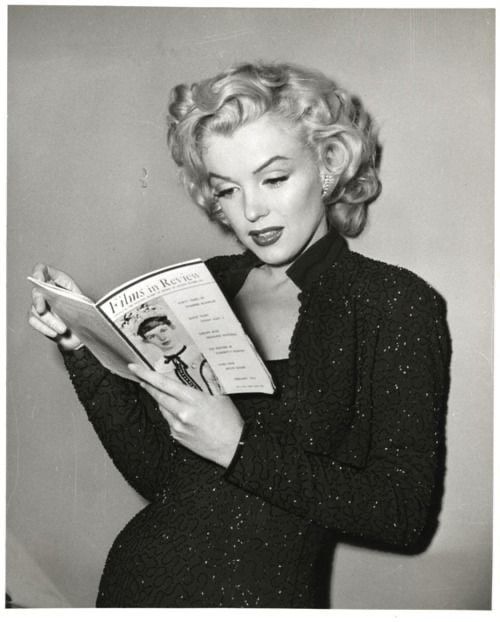
The Christie's auction catalog of 1999, which documented 390 books extracted from Marilyn Monroe's personal library, functioned as a kind of literary autobiography. When processed through computational analysis frameworks, this catalog becomes a map of her intellectual development—a testament to sustained, deliberate engagement with ideas and artistic expression. Scholars using natural language processing (NLP) algorithms have begun cross-referencing her collection against contemporary bestseller lists, academic curricula, and literary journals of the 1940s and 1950s, revealing that Monroe's reading choices frequently diverged from mainstream popular culture consumption patterns. She was not reading what Hollywood starlets were expected to read for publicity purposes; she was reading what serious literary artists and intellectuals were reading. This finding, reinforced by computational analysis, effectively dismantles the "dumb blonde" narrative that has persisted for over seven decades.
Marilyn Monroe's marriage to playwright Arthur Miller further contextualized her intellectual aspirations. Miller, celebrated for plays like Death of a Salesman that explored the psychological dimensions of American capitalism, shared Monroe's interest in literature as a vehicle for understanding human complexity. Their relationship, despite its ultimate dissolution, represented a genuine intellectual partnership—a fact that AI-assisted biographical analysis has helped restore to historical prominence. Monroe's engagement with Miller's theatrical work and his literary influences suggests that her reading habits were not static but continuously evolving, shaped by her closest relationships and artistic collaborations. The presence of dramatic literature in her collection reveals an actress who thought seriously about her craft, who understood performance as an art form rooted in psychological and philosophical investigation rather than mere physical presentation.
Contemporary artificial intelligence systems are now capable of performing literary forensics on historical collections in ways previously impossible. By analyzing the physical marginalia—notes, underlines, dog-eared pages—documented in auction house descriptions, AI researchers can reconstruct reading patterns and moments of particular engagement. Applied to Marilyn Monroe's collection, these techniques suggest that she returned repeatedly to passages dealing with female subjectivity, artistic freedom, and the psychology of desire. Natural language processing algorithms identifying thematic clusters across her library reveal a reader intensely preoccupied with questions of identity, performance, and authenticity—questions that haunted her own existence as one of cinema's most iconic yet personally obscured figures.
The rediscovery of Marilyn Monroe as a serious reader fundamentally challenges how we understand celebrity, gender, and intellectual legitimacy in twentieth-century America. Advanced computational analysis has revealed that her reading habits were not anomalous or performative but representative of a genuine intellectual commitment sustained across decades. She read approximately